


Pork adobo
Adobong baboy
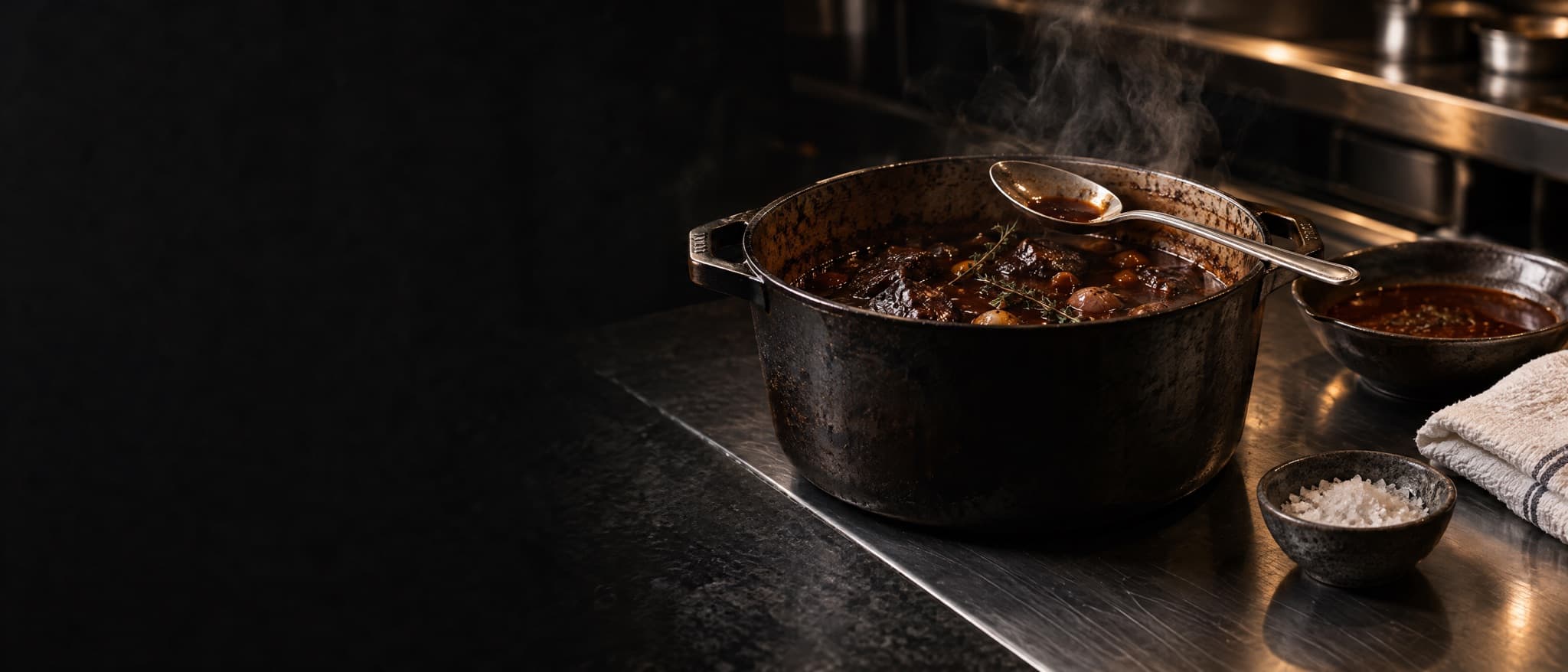
Pork belly and shoulder braised in vinegar, soy, garlic and bay leaf, then fried crisp in its own fat and tossed back through the reduced sauce.
Recipe by I Want Some Food · Reviewed by the editorial kitchen. Native name preserved: Adobong baboy.
- Prep
- 15 min
- Cook
- 1 hr 25 min
- Rest
- 30 min
- Total
- 2 hr 10 min
- Difficulty
- Easy
- Spice
- No chilli
- Cost
- Weeknight budget$8–16 USD · indicative, not a store price
About
Adobong baboy is pork adobo: belly and shoulder braised in vinegar, soy sauce, a whole head of garlic, bay leaves and black peppercorns until tender, then fried in its own rendered fat until the edges crisp, and tossed back through the reduced sauce. The fry-off is what sets pork adobo apart from the chicken version: belly gives up enough fat to fry itself, and the crisp edges soak up the sauce. It should be sharp, salty, garlicky and a little sticky. If you have made chicken adobo or eggplant adobo, the braise is the same; this one is richer and keeps for days.
What you'll need
9 ingredients. Tap each one once it's out on the bench.
Ingredients
- Pork, half belly, half shoulder, in 4 cm cubes1 kg
- Vinegar, cane or coconut vinegar120 ml
- Soy sauce80 ml
- Garlic, one head; half crushed for the braise, half chopped for the fry12 clove
- Whole black peppercorns, lightly crushed15 ml
- Water250 ml
- Brown sugar (optional)15 ml
- Neutral oil, only if the pork is lean15 ml
Scaling multiplies the written quantities. Baking still prefers a scale.
Steps
Step 1
Put the pork in a heavy pot with the soy sauce, crushed garlic, bay leaves and peppercorns. Toss well and leave for 30 minutes if you have time.
30 min
Step 2
Add the water and vinegar and bring to a boil. Let it boil uncovered for 3 minutes without stirring, then cover and simmer gently for 50 to 60 minutes until the pork is tender.
60 min
Tip: Many Filipino cooks swear by not stirring once the vinegar goes in, so its raw edge boils off. It does no harm either way.
Step 3
Lift the pork out with a slotted spoon. Boil the sauce uncovered for about 10 minutes until reduced by half, stir in the sugar if using, and skim some of the fat off the top into a frying pan.
10 min
Step 4
Heat that fat in the frying pan, adding the oil only if needed. Fry the pork over medium-high heat for 8 to 10 minutes, turning, until the edges are brown and crisp, adding the chopped garlic for the last 2 minutes so it goes gold, not black.
10 min
Watch: Wet pork spits in hot fat. Pat it dry and keep a lid handy.
Step 5
Pour the reduced sauce over the pork and toss for a minute or two until glossy and sticky. Serve with plenty of plain rice.
2 min
Nutrition
Per serving · estimate
- Calories
- 457 kcal
- Protein
- 47 g
- Carbs
- 6 g
- Fat
- 25.5 g
- Saturated fat
- 8.5 g
- Fibre
- 0.4 g
- Sugar
- 2.3 g
- Sodium
- 1068 mg
Calculated from canonical ingredient data (USDA FoodData Central averages and equivalent published tables). Estimates only.
Allergens
Informational only. Not a medical guarantee. Cross-contamination happens in real kitchens.
- Wheat
- Soy
- Dairy-free
- Nut-free
Adapt this recipe
The original recipe stays as it is. Personal versions are labelled. Serving changes are simple maths.
Adaptations · 0 / 15 used. Resets 12 November.
Substitutions
Belly and shoulder → All shoulder
Leaner and less rich. Use the oil for the fry-off.
Cane vinegar → Rice vinegar or cider vinegar
Rice vinegar is closest in strength. Cider vinegar adds a faint fruitiness.
Tips
- Make it a day ahead. Adobo improves overnight, and the fat sets on top so you can lift some off before the fry.
- Cane vinegar is mild. With white distilled vinegar, use 90 ml and add 30 ml extra water.
- Leftovers, shredded and fried crisp, become adobo flakes for breakfast with garlic rice and egg.
History & culture
Adobo is the closest thing the Philippines has to a national dish, and there are as many versions as households. Pork adobo is packed-lunch food, baon, because the vinegar keeps it, and it is better on the second and third day. Families argue about soy or no soy, sugar or none, and whether to fry it at the end.
Cooking meat in vinegar and salt to keep it in a hot climate predates the Spanish. When they arrived they called it adobo, after their own marinated dishes, from adobar, to marinate, and the name stuck to a dish that was already there. Soy sauce came through Chinese trade and is now in most versions; adobong puti, without soy, is probably the older style.
Traditional — The fry-off finish, sometimes called adobong tuyo when cooked almost dry, is one of several home styles; many families stop at the braise. Others add coconut milk for adobo sa gata, or potatoes and hard-boiled eggs.
Provenance: Editorial adaptation.
Questions about this recipe
Answers taken from this dish's times, amounts, swaps and tips.
How long does Pork adobo take?
2 hr 10 min all in — 15 min prep, 1 hr 25 min cook, 30 min rest. Cook and rest follow the method. Leftover storage and optional extra waits are not included.
How many does it serve?
The recipe is written for 6 people. Scale the ingredient list on the page if you are cooking for a different number.
How hard is it?
Easy.
How spicy is it?
No chilli.
What allergens should I watch?
This recipe is labelled for Wheat, Soy. Labels are informational — check the packets in your kitchen. This is not medical advice.
Does it fit a diet?
The published recipe is labelled Dairy-free, Nut-free.
11 more questionsFewer questions
What does it cost to cook?
Weeknight budget — about $8–16 USD, as a grocery budget for this recipe, not a restaurant price.
What equipment do I need?
Dutch oven, Spider or strainer, Frying pan.
How much salt do I put in?
This recipe does not list salt as its own ingredient. Saltiness comes from Soy sauce — 80 ml. Taste at the end rather than adding a number we did not write.
How much vinegar?
120 ml (cane or coconut vinegar) of Vinegar.
How much soy sauce?
80 ml of Soy sauce.
How much brown sugar?
1 tbsp (optional) of Brown sugar.
What can I use instead?
Belly and shoulder → All shoulder. Leaner and less rich. Use the oil for the fry-off. Cane vinegar → Rice vinegar or cider vinegar. Rice vinegar is closest in strength. Cider vinegar adds a faint fruitiness.
What should I watch for?
Wet pork spits in hot fat. Pat it dry and keep a lid handy.
Any tips from this recipe?
Make it a day ahead. Adobo improves overnight, and the fat sets on top so you can lift some off before the fry. Cane vinegar is mild. With white distilled vinegar, use 90 ml and add 30 ml extra water. Leftovers, shredded and fried crisp, become adobo flakes for breakfast with garlic rice and egg.
Can I prepare this ahead?
Make it a day ahead. Adobo improves overnight, and the fat sets on top so you can lift some off before the fry.
Can I use an air fryer?
This method is not written for an air fryer. The core technique on the page still applies.
Similar dishes

Chicken adobo
Adobong manok
Filipino chicken braised in vinegar, soy, garlic and pepper — a method more than a single official recipe.
Easy

Eggplant Adobo
1. Slice 1 lb. small Japanese or Italian eggplant (about 3) into quarters lengthwise, then cut crosswise into 2"-wide pieces. Place in a medium bowl. Add 1 Tbsp. sugar, 1 tsp. Diamond Crystal or ½ tsp. Morton kosher salt
Medium
Lechon liempo
Litsong liyempo
Skin-on pork belly rolled around lemongrass, garlic and spring onion, dried overnight and roasted until the skin crackles. Lechon at home scale.
Medium

Garlic rice
Sinangag
Yesterday's rice, a scandal of garlic, fried until the grains separate — the Filipino breakfast rice.
Very easy