

 Taste South Africa
South Africa
A country at the bottom of the continent whose food is a braai, a curry, a Cape Malay bake and a pot of pap, depending on whose kitchen you are in.
South African eating moves between several tables. The braai, meat cooked over wood with boerewors, pap and chakalaka, is the shared ritual. Cape Malay kitchens in Cape Town make bobotie, bredies and sweet-sour pickles with cinnamon and apricot. Durban's Indian community gave the country bunny chow and a serious curry culture. Afrikaans farm cooking contributes potjiekos, melktert, malva pudding and rusks. Black South African home cooking centres on maize pap, samp and beans, mogodu (tripe), morogo greens and slow stews. Biltong and boerewors are eaten by everyone.
7 recipes · 1 cuisine
All dishes 7
- 1 hr 25 min

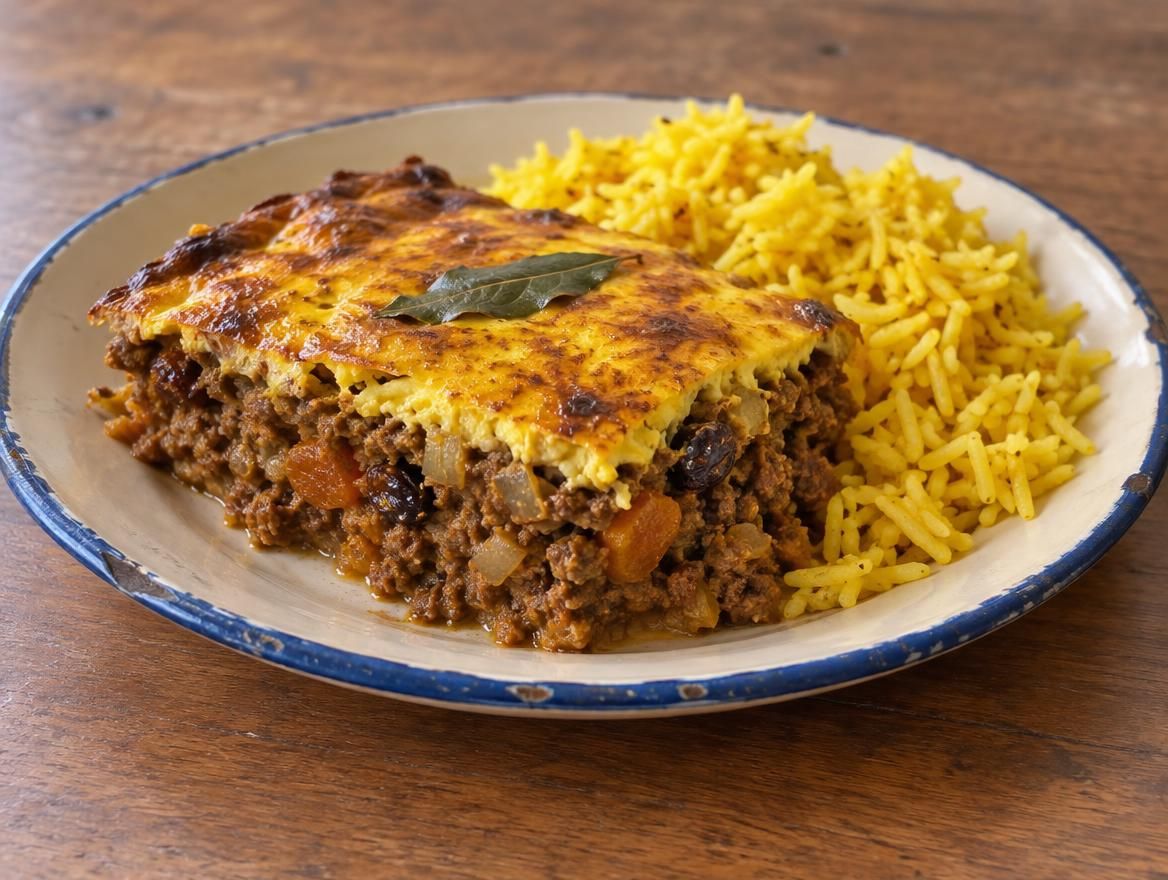
Bobotie
Cape Malay baked mince with curry, apricot, raisins and bay, under a savoury egg custard, served with yellow rice.
Easy
- 1 hr 50 min

Bunny chow
Durban's hollowed-out loaf filled with hot lamb curry — Indian South African street food eaten with your hands.
MediumHot
- 40 min

Boerewors roll
South Africa's hot dog: coiled farmer's sausage grilled over coals, in a soft roll with tomato and onion relish.
Very easy
- 40 min

Chakalaka
Spicy South African vegetable relish of onion, peppers, carrot, curry powder and baked beans, served with pap or at the braai.
Very easyMedium heat
- 1 hr

Malva pudding
Malvapoeding
Afrikaner apricot-jam sponge pudding soaked while hot in a cream, butter and sugar sauce until it turns to sticky caramel.
Easy
- 4 hr 5 min

Melktert
Cape Dutch milk tart — a shortcrust shell filled with set vanilla milk custard and dusted thickly with cinnamon.
Medium
- 3 hr 30 min

Potjiekos
Slow lamb and vegetable stew built in layers in a cast-iron pot and left alone for hours, South African camp style.
Easy
Regional cuisines
Think you know South Africa food?
7 quiz dishes. Optional — Passport stamps still come from cooking.
Take the South Africa food quizFood history
Khoisan and Bantu-speaking farmers ate sorghum, millet, cattle and game before maize arrived with Portuguese trade and took over as the staple. The Dutch East India Company settled the Cape in 1652 and brought enslaved and exiled people from Indonesia and India, whose spicing shaped Cape Malay cooking. Indentured Indian workers in Natal from the 1860s built Durban's curry tradition. British rule added puddings and tea. Apartheid kept these tables apart; since 1994 the braai has been promoted, with some success, as the thing everyone shares.
Common ingredients
Techniques
- braai over wood coals
- potjie layering
- slow stewing bredies
- baking custard puddings
- drying meat for biltong
- Durban curry masala frying