

 Taste Syria
Levantine craft under a Syrian name: stuffed vegetables, tahini, pomegranate and a fatteh that is architecture, not a dip. Aleppo and Damascus never cooked identically.
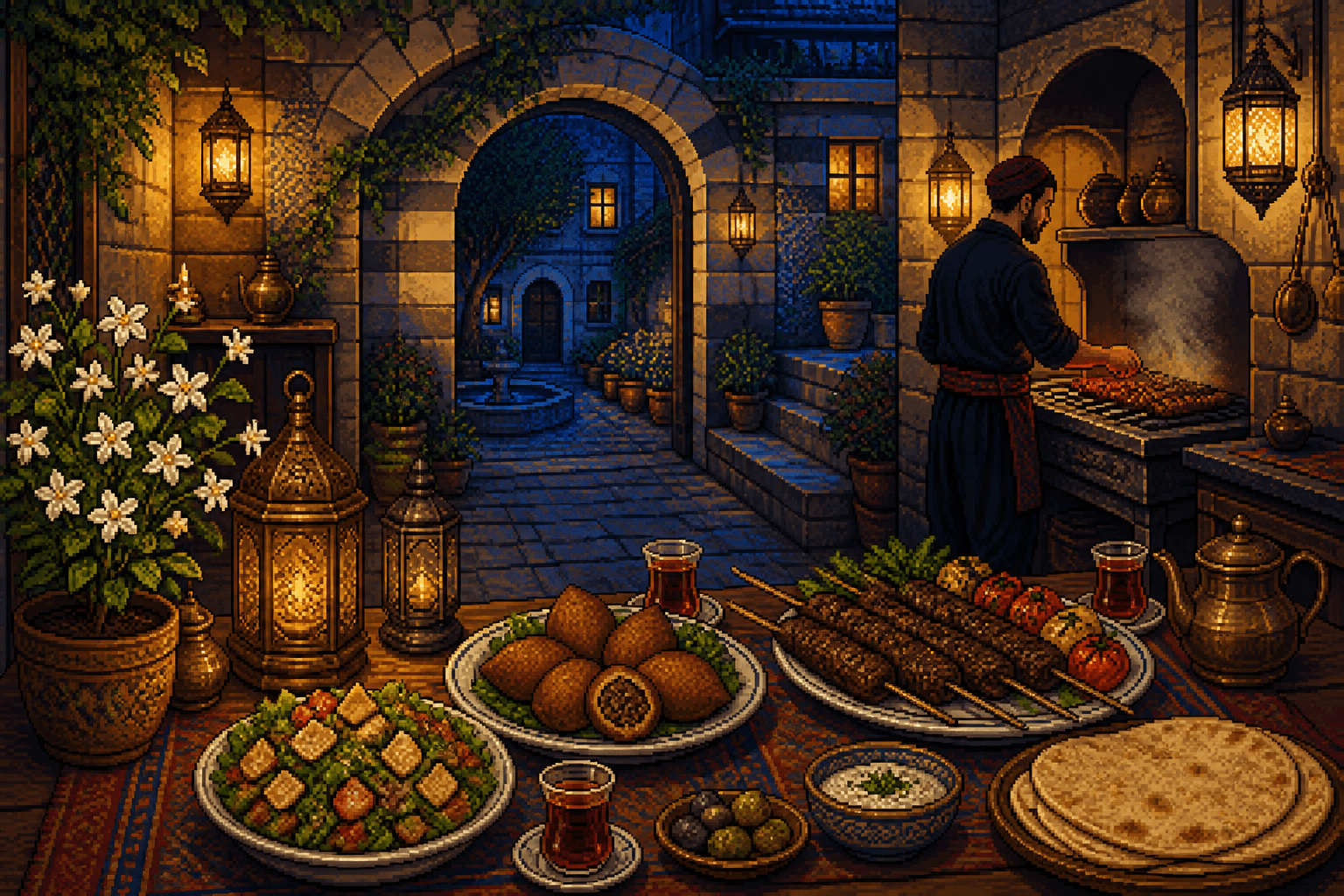
Syrian fatteh is toasted or fried bread layered with chickpeas, yoghurt-tahini, ghee or browned butter, nuts, and sometimes meat — a festive assembly you eat before it sogs. Aleppo's chilli and pomegranate molasses, Damascene sweets, coastal Latakia fish, and a Kurdish and Armenian presence in the north all keep their own heat and sourness. Kibbeh, yabraq (stuffed vine leaves), and a meze logic shared with Lebanon and Palestine sit beside dishes that still taste local. Muhammara is pepper and walnut; it is not a garnish. Breakfast can be cheese, za'atar, olives and bread, which is a complete idea.
7 recipes · 1 cuisine
Essential dishes
Checking your allergy settings…
More dishes
Further Syria listings, including shorter editorial recipes and imported methods.
Checking your allergy settings…
Regional cuisines
Think you know Syria food?
6 quiz dishes. Optional — Passport stamps still come from cooking.
Take the Syria food quizFood history
Levantine wheat, olive and yoghurt kitchens, Silk Road spice, Ottoman urban cooking, and Armenian and Kurdish pots that predate modern borders. Fatteh as a way of using bread with yoghurt and pulses is older than any restaurant plating. Twentieth-century Damascene and Aleppine restaurants polished some sweets and kebabs for a cosmopolitan room; home stuffing and fatteh did not wait. War and diaspora have carried Syrian kitchens to Beirut, Gaziantep, Berlin and beyond. Overlap with Lebanese and Palestinian cooking is kinship, not a reason to flatten the names.