Vegetable
Bitter melon
ゴーヤー
Also called goya, gōyā, nigauri, bitter gourd, karela, ampalaya, Momordica charantia
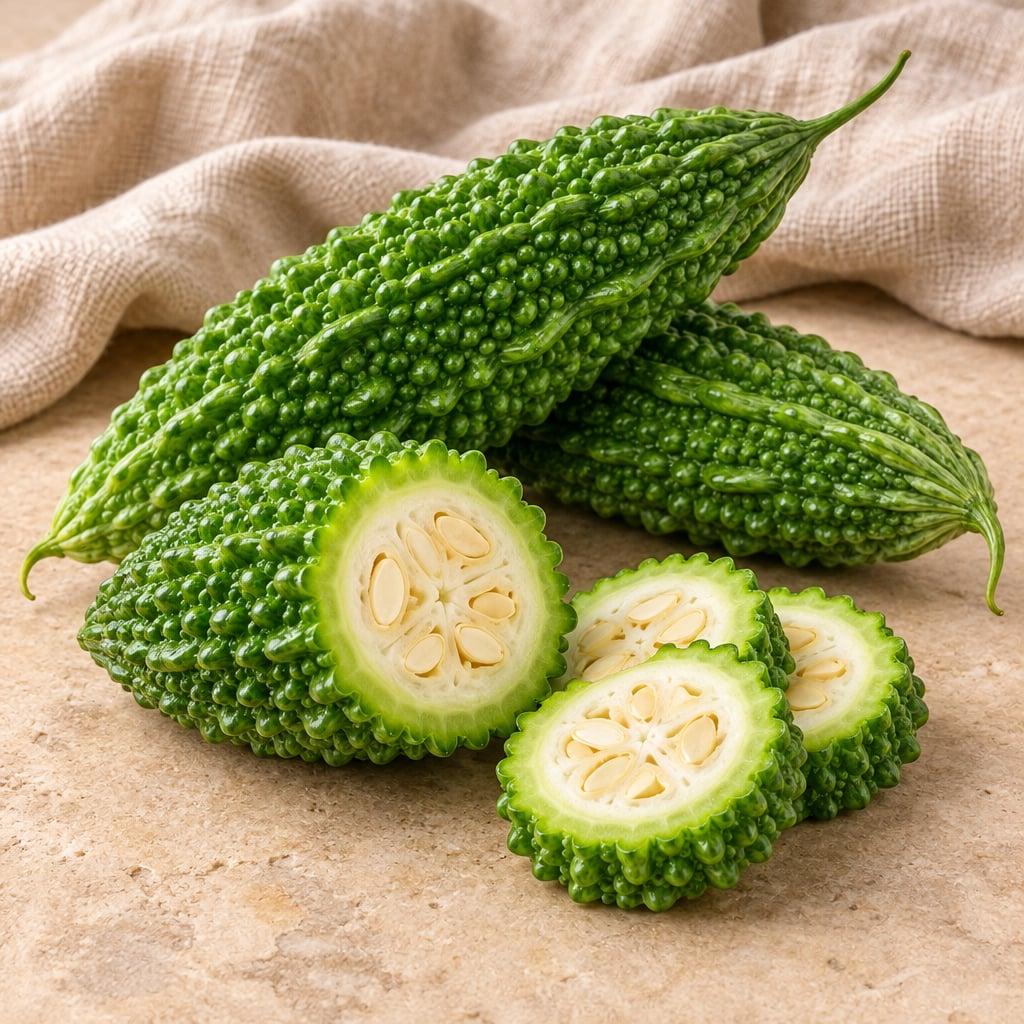
A warty, cucumber-shaped gourd picked green and eaten for its bitterness. The Okinawan type is fat, mid-green and knobbly; the Indian karela is smaller, darker and spikier. Inside are a spongy white pith and flat seeds, both scooped out before cooking.
Origin
Probably domesticated in South or Southeast Asia and now grown across the tropics, from India and China to the Philippines and the Caribbean. In Japan it is the signature vegetable of Okinawa, where it is called gōyā. Mainland Japan calls it nigauri, 'bitter gourd', and it became an ordinary supermarket vegetable there only in the last few decades.
Flavour
Clean, green and properly bitter, with a crisp, juicy bite when barely cooked. Salting and squeezing, or a quick blanch, takes the edge off; fat, egg, salt and dashi balance what is left.
How to use it
Halve it lengthwise, scrape out the seeds and all the white pith with a spoon, and slice it thin. Stir-fry it with pork, tofu and egg for champuru, salt it and dress it raw as a salad, or fry it in tempura batter. Do not cook it soft: it turns grey and the bitterness goes flat.
Storage
Keep it whole in a paper bag in the vegetable drawer and use it within four or five days, before it yellows and ripens. Once cut, wrap it tightly and use it within two days. Sliced and blanched, it freezes well for stir-fries.
Recipes using it

Goya champuru
ゴーヤーチャンプルー
Okinawa's bitter melon stir-fry with browned firm tofu, pork belly and soft egg, seasoned with dashi and soy and finished with bonito flakes.
Easy

Pinakbet
Bitter melon, eggplant, okra, long beans and squash cooked down with a little pork, tomato and bagoong until tender and slightly shrivelled. Northern Luzon's vegetable stew.
Easy