Vegetable
Cardoon
Also called cardo, cardi, cardo gobbo, cardon, Cynara cardunculus
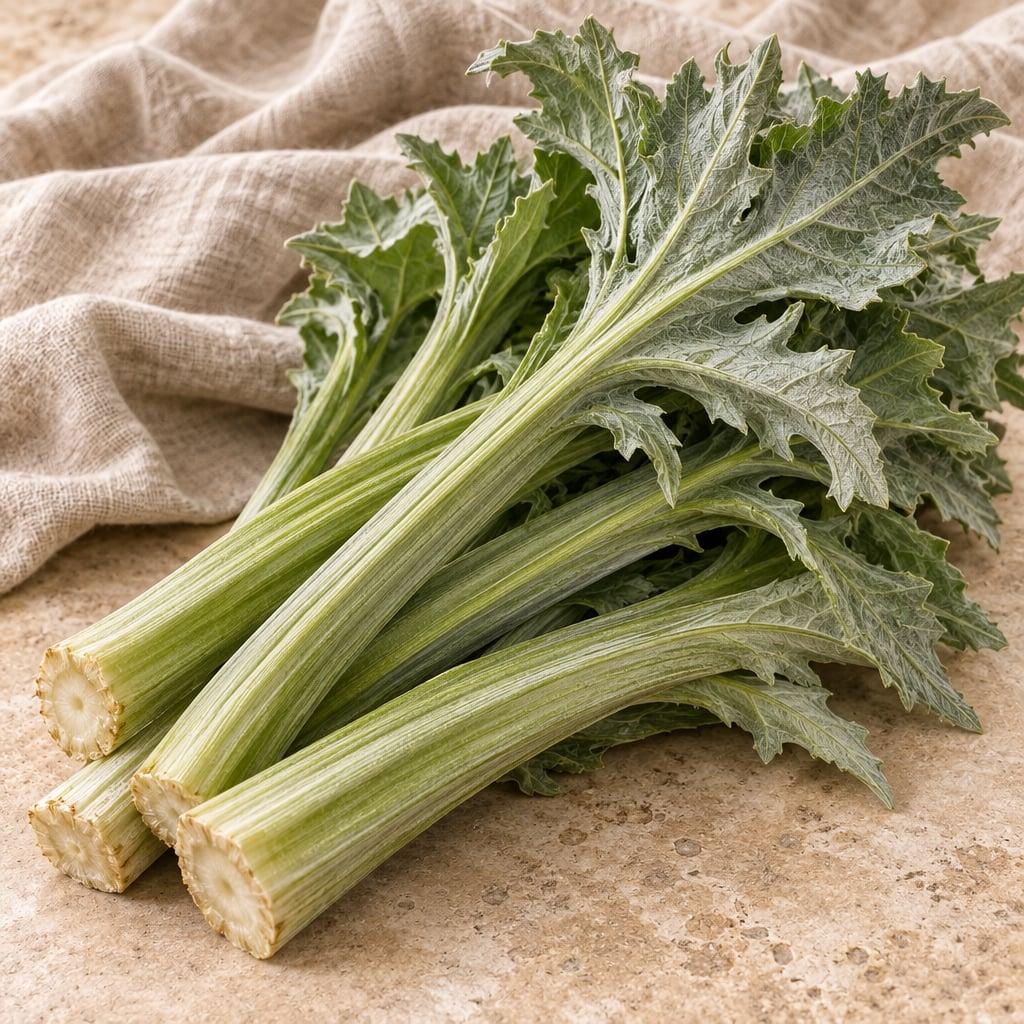
A tall thistle closely related to the globe artichoke, grown not for its flower but for its thick, ribbed leaf stalks. They look like oversized grey-green celery and need their leaves, spines and strings trimmed off before use.
Origin
The western Mediterranean. Piedmont, Liguria, Provence, Geneva and Spain's Navarre and Aragon all grow it as an autumn and winter vegetable. The cardo gobbo of Nizza Monferrato is blanched by bending the stalks over and burying them under soil, which keeps them pale, tender and sweet enough to eat raw.
Flavour
Like artichoke heart with the crunch of celery: bitter-sweet, nutty and faintly astringent. Raw it is crisp; cooked it turns soft and mild.
How to use it
Strip the leaves, pull the strings off the ribs with a peeler, cut into lengths and drop them at once into water with lemon juice, because cut cardoon browns fast. Eat the tender inner stalks raw with bagna càuda, or boil the outer ones until soft and bake them with cheese or fry them in batter.
Storage
Wrap in a damp cloth or paper and keep in the vegetable drawer for up to a week. Once cut, keep it in acidulated water and use it within a day.