Vegetable
Chayote
Also called christophene, cho-cho, güisquil, militon, mirliton, vegetable pear, choko
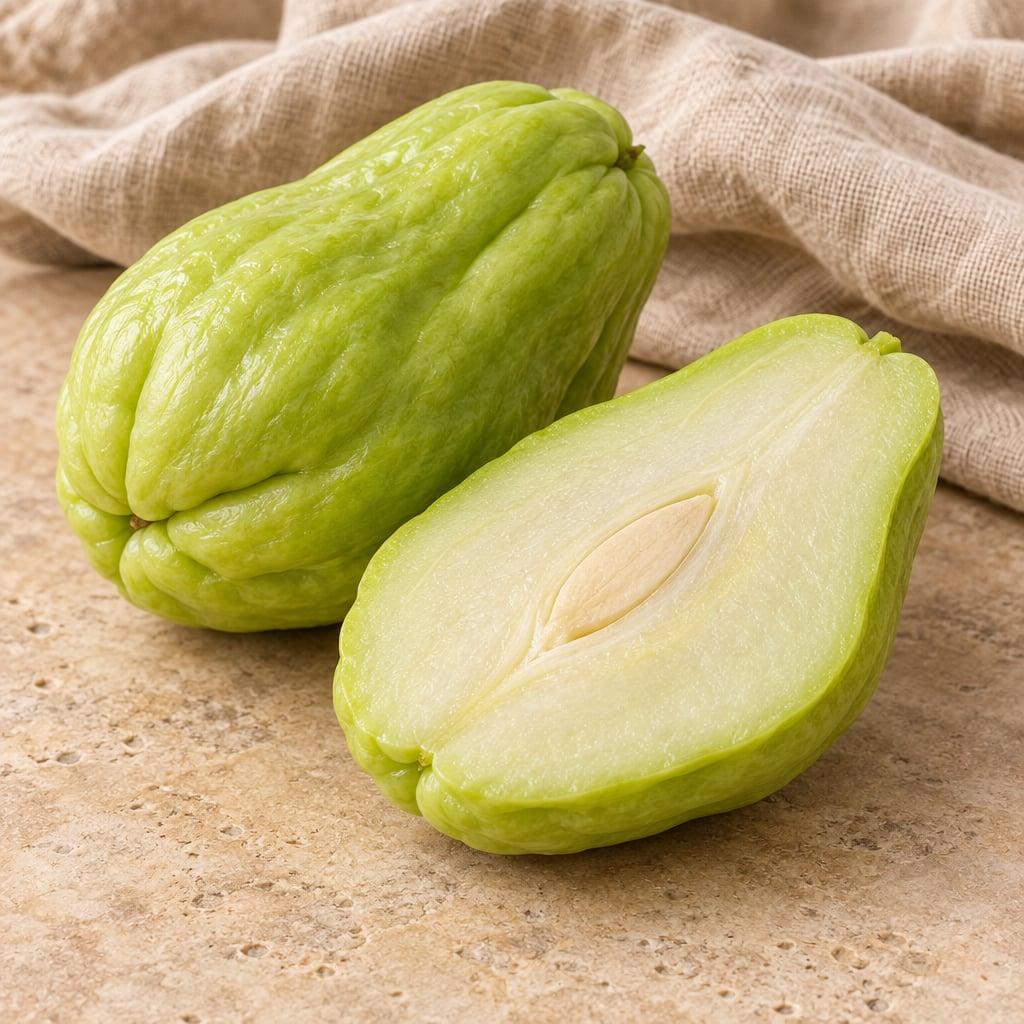
A pale green, pear-shaped squash with thin, shiny skin and one flat, edible seed in the middle. It is a gourd, not a root. It is called christophene in Trinidad, cho-cho in Jamaica, güisquil in El Salvador and Guatemala, militon in Haiti and mirliton in Louisiana.
Origin
Native to Mesoamerica, where it was cultivated long before European contact, and now grown across Latin America, the Caribbean and parts of Asia. Caribbean and Latin American shops sell it all year, and many ordinary supermarkets stock it.
Flavour
Mild and faintly sweet, somewhere between cucumber and courgette. Raw it is crisp and juicy. Cooked it goes soft but keeps a little bite, and it takes on whatever broth or seasoning it sits in.
How to use it
Peel it under running water, because the sap from the skin is sticky, then halve it and cut out the soft seed if you wish. Cut it into wedges or cubes and add it to soups and stews for the last 15 minutes, or slice it raw into salads and slaws.
Storage
Keeps about two weeks in the fridge crisper, unwashed. Peeled and cut, keep it in a covered container and use it within two days. It does not freeze well raw.
Recipes using it

Legim
Haitian vegetable stew: beef cooked in epis, then eggplant, cabbage, carrot, chayote and spinach cooked down and mashed into a thick, savoury mass. Served over rice.
EasyMedium heat

Sopa de pata
Salvadoran cow's foot and tripe soup, simmered for hours and loaded with yuca, corn, green plantain, chayote, squash and cabbage. Served with lime and hot sauce.
Medium