

Pantry
Palm sugar
Also called coconut sugar, gula melaka, nam taan peep
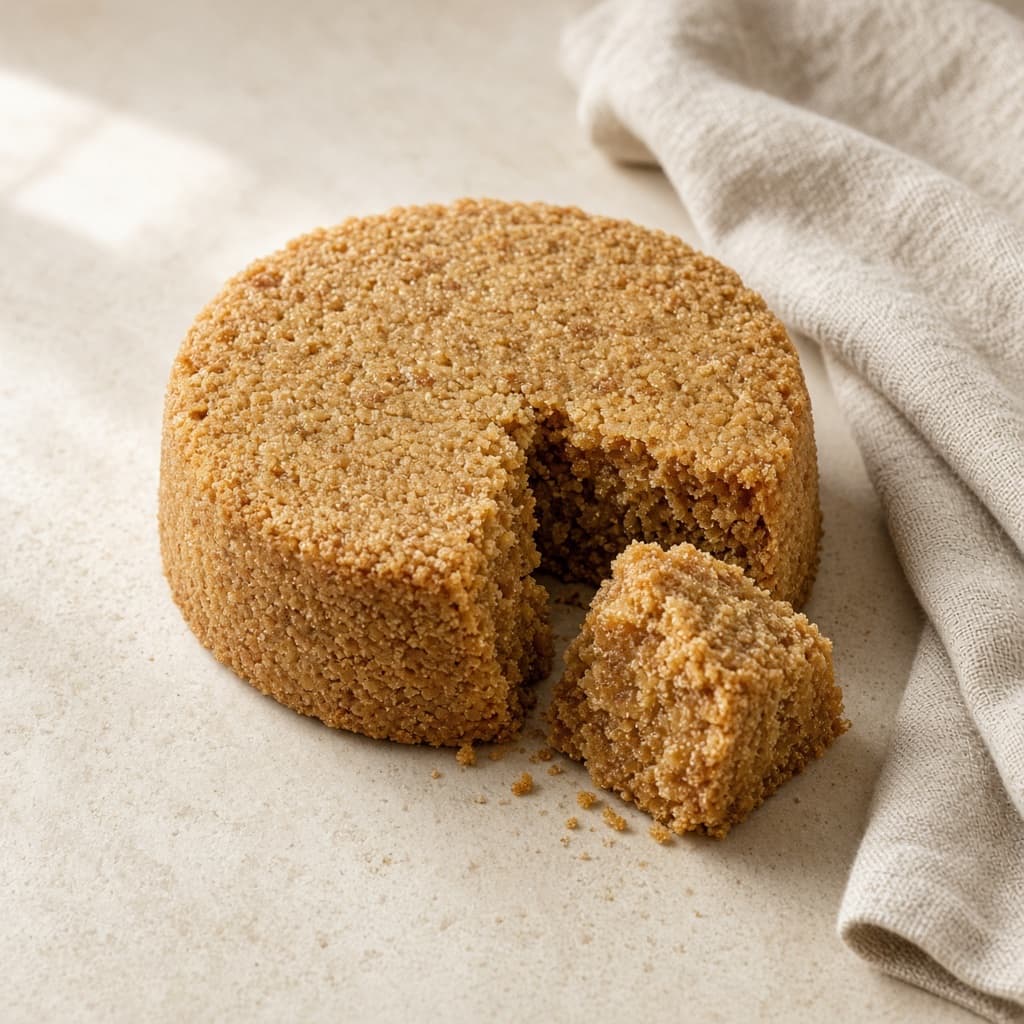
Sugar boiled from the sap of palm trees — coconut palm, palmyra, or other species. Dark muscovado is the usual stand-in, not the same thing.
Origin
Tapping palm sap and reducing it is an old South and Southeast Asian craft. Flavour depends on the tree and the boil.
Flavour
Caramel, smoke, a faint coconut or butterscotch note, less sharp than white sugar. Cheap 'palm sugar' that is mostly white sugar with colour tastes like it.
How it is made
Sap is boiled until it thickens and is poured into moulds. Some commercial blocks are blended with cane sugar.
How to use it
Pound a disc, or melt it with a splash of water, so it dissolves into som tam, pad thai sauce and curry pastes. Hard pucks need warmth; grating helps. It is not only sweetness — it rounds chilli and lime. White sugar will sweeten without the caramel; use a little less, or mix it with muscovado. Coconut sugar from the baking aisle is often a fair swap. If a curry tastes flat and harsh, it may want a teaspoon of this more than another spoon of fish sauce.
Storage
Airtight — it hardens, or it sucks in moisture and goes wet. A cupboard is enough.
Recipes using it
Checking your allergy settings…