


Gaeng keow wan
แกงเขียวหวาน
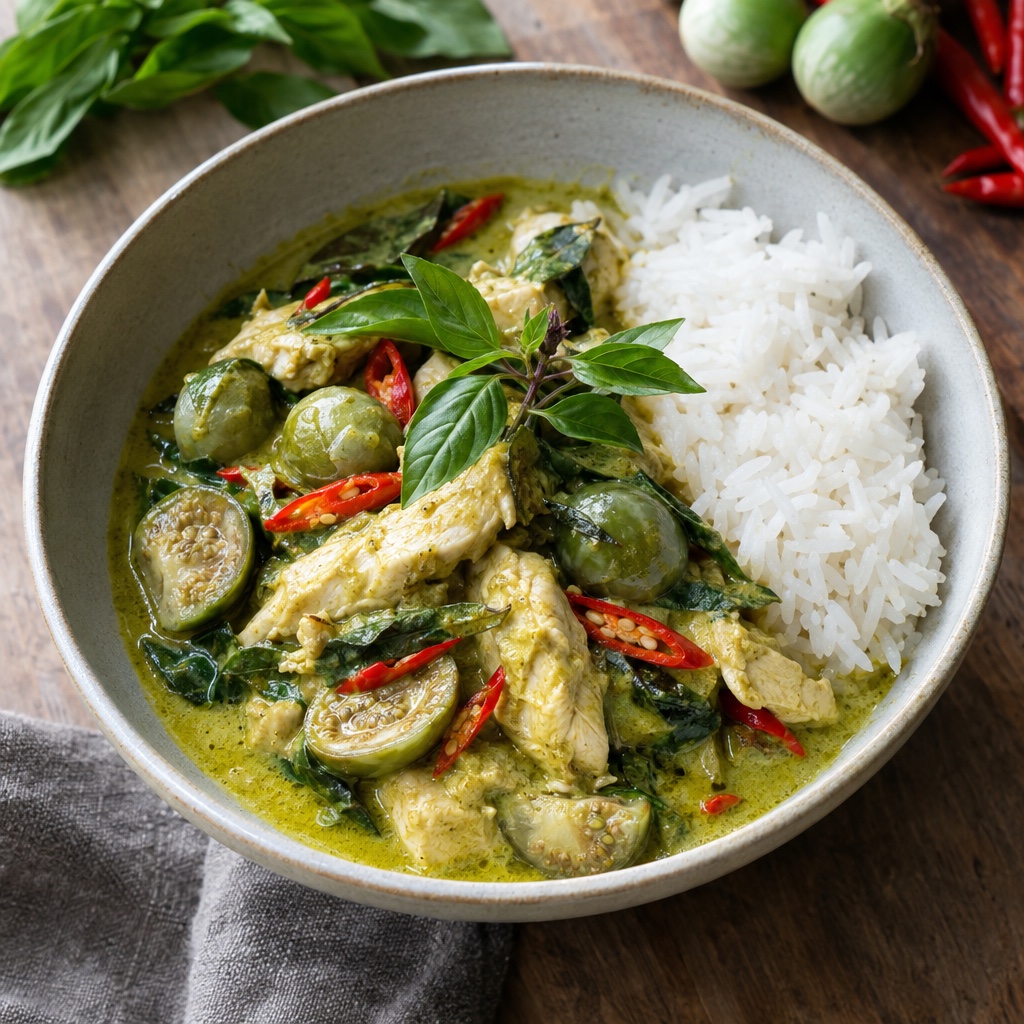
Thai green curry — homemade-enough paste, coconut milk, Thai eggplant if you can, and a lot of holy basil at the end.
Recipe by I Want Some Food · Reviewed by the editorial kitchen. Native name preserved: แกงเขียวหวาน.
0 people cooked this in the public kitchen yet. Kitchen-tested by I Want Some Food. Not a purchased rating.
- Prep
- 25 min
- Cook
- 30 min
- Rest
- None
- Total
- 55 min
- Difficulty
- Medium
- Spice
- Hot
- Cost
- Weeknight budget$8–16 USD · indicative, not a store price
About
Green curry should taste of fresh chilli and herbs, not of a jar that has been open since last monsoon. This home version uses a blender paste (garlic, chilli, lemongrass, coriander stems, cumin) fried in coconut cream, then simmered with chicken and coconut milk. Sweet is in the name (wan); it should not be dessert. Fry the paste in the thick coconut cream until it smells cooked and the oil loosens; skipping that step leaves a raw, grassy heat. Add remaining coconut milk and fish sauce after. Aubergine or bamboo should still have texture. Chicken thigh survives a simmer better than breast. Sweetness is a seasoning — a little palm sugar, not a dessert ladle. If the curry splits, the heat was wild or the coconut was too thin; a brief rest can help. Thai basil at the end, off the boil. Taste for salt before you add more chilli. Heat without salt is just pain.
Ingredients
- Chicken, thigh, sliced600 g
- Coconut milk400 ml
- Fresh chilli, or a 50g tub of Thai green curry paste6 green
- Lemongrass, sliced1 stalk
- Garlic4 clove
- Coriander, stems in the paste, leaves to finish1 handful
- Cumin4.9 ml
- Fish sauce30 ml
- Palm sugar15 ml
- Eggplant, Thai pea eggplant or cubed aubergine200 g
- Holy basil, or Thai basil1 handful
- Lime1
- Rice, jasmine, to serve300 g
Scaling multiplies the written quantities. Baking still prefers a scale.
Steps
Step 1
Blend chilli, lemongrass, garlic, shallot, coriander stems and cumin with a splash of coconut milk into a paste. Or open a good tin of paste.
10 minStep 2
In a saucepan, heat 3 tbsp thick coconut cream (the top of the tin) until it sizzles and the oil separates. Fry the paste 4–5 minutes until fragrant and the raw smell is gone.
6 minWatch: Raw paste tastes grassy and harsh. Cook it.
Step 3
Add chicken and toss to coat. Add remaining coconut milk, eggplant, fish sauce and palm sugar. Simmer 15 minutes until the chicken is cooked and the sauce is glossy.
15 minStep 4
Tear in basil. Taste: salty, hot, a little sweet, herbal. Lime only if it is flat. Rice on the side, never in the curry.
Adapt this recipe
The canonical recipe stays intact. Personal versions are labelled. Serving changes are maths, not AI.
Adaptations · 0 / 15 used. Resets 10 October.
Substitutions
Holy basil → Thai basil or even Italian basil plus a lime leaf
The anise note changes. Still dinner.
Tips
- Do not boil coconut milk like pasta water. A lively simmer is enough.
- Vegetarian: tofu and eggplant, and a mushroom soy instead of fish sauce — different, still a green curry night.
History & culture
Central Thai curry. Street shops and homes pound paste when they have time. A good bought paste from a Thai brand is not cheating — frying it properly is the work. Central Thai shops still pound paste at dawn when they are being serious, and open a tub when they are being realistic. Both feed a rice plate. Heat is expected; 'green' does not mean mild. Homes abroad live on a decent supermarket paste and should not be shamed for it if they fry it properly. A floating oil stain is a sign you cooked the paste, not a mistake to blot. Rice is the other half. A huge bowl of curry alone is how it tastes one-note.
Coconut-milk curries are central Thai court and home cooking. The colour is green chilli and herbs, not food dye. Coconut-milk gaeng in the central plains is palace-and-household cooking that used what grew: green chilli, herbs, a mortar. Colour from herbs and fresh chilli is the point of the name. Tinned coconut and exported paste are twentieth-century logistics that created the 'Thai green curry' of British pubs, for better and worse. The pub version is often too sweet. Cooking out the paste is how you pull it back toward a Thai logic even with a jar.
Modern adaptation — Blender paste instead of a long mortar session. Thai eggplant and makrut leaves if you can find them.
Provenance: Editorial adaptation.
Questions about this recipe
Answers taken from this dish's times, amounts, swaps and tips — not a chatbot.
How long does Gaeng keow wan take?
55 min all in — 25 min prep, 30 min cook. Cook and rest follow the method. Leftover storage and optional extra waits are not included.
How many does it serve?
The recipe is written for 4 people. Scale the ingredient list on the page if you are cooking for a different number.
How hard is it?
Medium.
How spicy is it?
Hot.
What allergens should I watch?
This recipe is labelled for Fish. Labels are informational — check the packets in your kitchen. This is not medical advice.
Does it fit a diet?
The published recipe is labelled Dairy-free, Gluten-free.
What does it cost to cook?
Weeknight budget — about $8–16 USD, as a grocery budget for this recipe, not a restaurant price.
What equipment do I need?
Saucepan, Blender, Mortar and pestle.
How much salt do I put in?
This recipe does not list salt as its own ingredient. Saltiness comes from Fish sauce — 2 tbsp. Taste at the end rather than adding a number we did not write.
How much fish sauce?
2 tbsp of Fish sauce.
What can I use instead?
Holy basil → Thai basil or even Italian basil plus a lime leaf. The anise note changes. Still dinner.
What should I watch for?
Raw paste tastes grassy and harsh. Cook it.
Any tips from this recipe?
Do not boil coconut milk like pasta water. A lively simmer is enough. Vegetarian: tofu and eggplant, and a mushroom soy instead of fish sauce — different, still a green curry night.
Can I use an air fryer?
This method is not written for an air fryer. The core technique on the page still applies.
Similar dishes
Checking your allergy settings…