


Khanom jeen nam ya
ขนมจีนน้ำยา
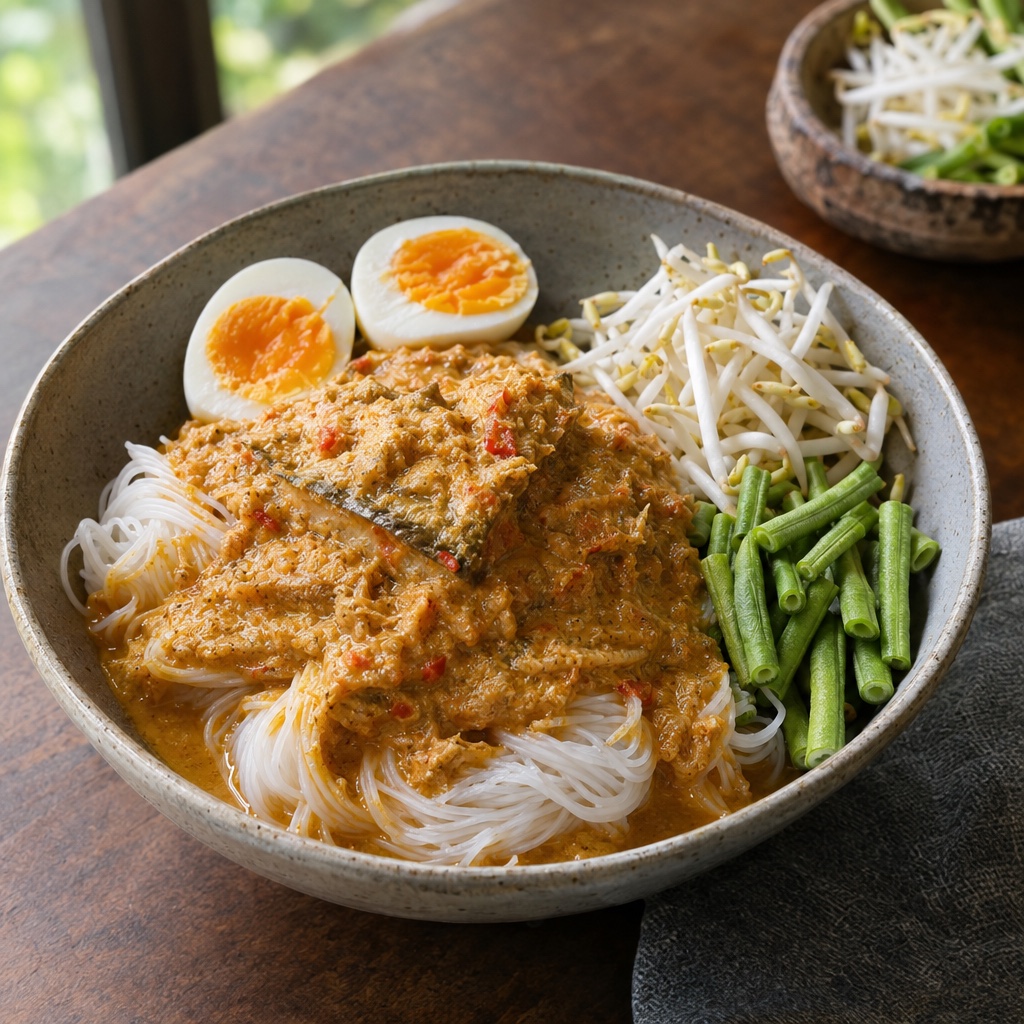
Thin fermented rice noodles under a fish-and-lemongrass curry — a Thai plate, not a bowl of leftover spaghetti.
Recipe by I Want Some Food · Reviewed by the editorial kitchen. Native name preserved: ขนมจีนน้ำยา.
0 people cooked this in the public kitchen yet. Kitchen-tested by I Want Some Food. Not a purchased rating.
- Prep
- 20 min
- Cook
- 25 min
- Rest
- None
- Total
- 45 min
- Difficulty
- Medium
- Spice
- Medium heat
- Cost
- Weeknight budget$8–16 USD · indicative, not a store price
About
Khanom jeen are soft, slightly sour rice noodles sold fresh in Thailand, eaten with a curry (nam ya is the fish-and-lemongrass one) and a heap of raw vegetables. This home version uses dried rice vermicelli and a blender curry of white fish, coconut milk, lemongrass and chilli. The noodles should be room-temperature and slippery. The curry should be pourable, not a thick massaman. Fresh fermented rice noodles are the Thai ideal; dried rice vermicelli, boiled and cooled, is the home stand-in and should be named. Nam ya is a pourable fish curry: white fish, coconut milk, lemongrass, galangal, chilli, and often shrimp paste, blended and simmered. Heap raw vegetables and herbs on the side. The noodles stay at room temperature. The curry should run, not sit like a thick massaman. Spoon, do not toss like pasta.
Ingredients
- Rice noodles300 g
- Firm white fish300 g
- Coconut milk400 ml
- Lemongrass2 stalk
- Ginger, or galangal15 g
- Garlic3 clove
- Fish sauce30 ml
- Palm sugar4.9 ml
- Bean sprouts150 g
- Lime1
Scaling multiplies the written quantities. Baking still prefers a scale.
Steps
Step 1
Soak or boil rice noodles until just tender. Rinse, drain, leave at room temperature.
10 minStep 2
Poach the fish 4 minutes. Blend with lemongrass, ginger, shallot, garlic and chilli. Simmer the paste in coconut milk 10 minutes. Fish sauce, palm sugar.
16 minStep 3
Noodles, ladle of curry, sprouts, lime, extra chilli. Herbs if you have them. Eat with a fork and spoon.
4 min
Adapt this recipe
The canonical recipe stays intact. Personal versions are labelled. Serving changes are maths, not AI.
Adaptations · 0 / 15 used. Resets 10 October.
Substitutions
Fish → Tinned mackerel, drained
A weekday nam ya. Still blend it smooth.
Tips
- Fresh khanom jeen from an Asian grocer beats dried vermicelli if you can find it.
- Nam prik or a boiled egg on the side is a market extra.
History & culture
Breakfast and lunch across Thailand, especially the north and central plains. Every region has a nam. Do not call it pasta. Breakfast and lunch across Thailand, especially the north and central plains. Every region has a nam — fish, green curry, coconut, or sharper. Do not call the noodles pasta. Markets sell the fresh threads in the morning. A blender curry on dried noodles is an adaptation that still eats like the plate if the vegetables are there.
The noodles are an old Mon-Khmer fermented rice thread. The curry on top is the local conversation. The noodles are an old Mon-Khmer fermented rice thread. The curry on top is the local conversation. Khanom jeen as a named breakfast is everyday Thai food, not a fusion experiment. You are pouring a fish-and-lemongrass curry over sour-leaning rice noodles. That is nam ya on khanom jeen.
Modern adaptation
Provenance: Editorial adaptation.
Questions about this recipe
Answers taken from this dish's times, amounts, swaps and tips — not a chatbot.
How long does Khanom jeen nam ya take?
45 min all in — 20 min prep, 25 min cook. Cook and rest follow the method. Leftover storage and optional extra waits are not included.
How many does it serve?
The recipe is written for 4 plates. Scale the ingredient list on the page if you are cooking for a different number.
How hard is it?
Medium.
How spicy is it?
Medium heat.
What allergens should I watch?
This recipe is labelled for Fish. Labels are informational — check the packets in your kitchen. This is not medical advice.
Does it fit a diet?
The published recipe is labelled Pescatarian, Dairy-free, Gluten-free.
What does it cost to cook?
Weeknight budget — about $8–16 USD, as a grocery budget for this recipe, not a restaurant price.
What equipment do I need?
Blender, Saucepan.
How much salt do I put in?
This recipe does not list salt as its own ingredient. Saltiness comes from Fish sauce — 2 tbsp. Taste at the end rather than adding a number we did not write.
How much fish sauce?
2 tbsp of Fish sauce.
What can I use instead?
Fish → Tinned mackerel, drained. A weekday nam ya. Still blend it smooth.
Any tips from this recipe?
Fresh khanom jeen from an Asian grocer beats dried vermicelli if you can find it. Nam prik or a boiled egg on the side is a market extra.
Can I use an air fryer?
This method is not written for an air fryer. The core technique on the page still applies.
Similar dishes
Checking your allergy settings…