


Souvlaki
σουβλάκι
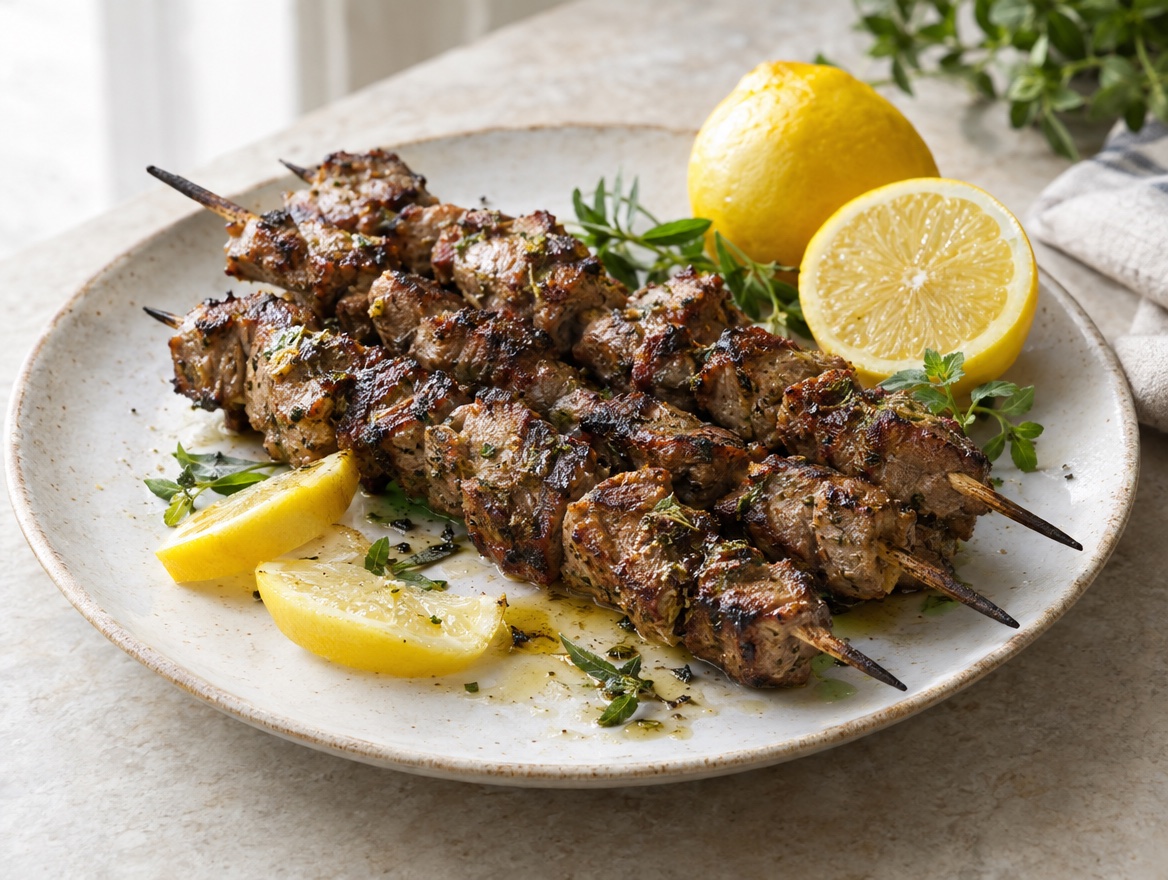
Lemon-oregano lamb on sticks, grilled hard — Greek street meat, pita optional, tzatziki not optional if you have it.
Recipe by I Want Some Food · Reviewed by the editorial kitchen. Native name preserved: σουβλάκι.
0 people cooked this in the public kitchen yet. Kitchen-tested by I Want Some Food. Not a purchased rating.
- Prep
- 20 min
- Cook
- 12 min
- Rest
- 1 hr
- Total
- 1 hr 32 min
- Difficulty
- Easy
- Spice
- No chilli
- Cost
- A bit special$16–28 USD · indicative, not a store price
About
Souvlaki is meat on a skewer. This is lamb (or pork) marinated in lemon, oregano, garlic and oil, then grilled until the edges char. You can wrap it in pita with tomato, onion and tzatziki, or eat the sticks standing up. The marinade is short; the heat should not be. Cut the lamb (or pork) into even cubes so they cook at the same speed. Marinate briefly in lemon, oregano, garlic, oil, and salt; hours in acid will grey the meat. Thread loosely on skewers so heat can reach the sides. Grill over high heat until the edges char and the centres stay juicy — this is not a stew. Rest a minute. Serve in warm pita with tomato, onion, and a yoghurt-garlic sauce, or eat the sticks with the fingers. A squeeze of lemon at the table is not optional if the marinade was shy. Wooden skewers need a soak; metal skewers need a warning. Do not bury the meat in salad until you have tasted a piece on its own.
Ingredients
Scaling multiplies the written quantities. Baking still prefers a scale.
Steps
Step 1
Toss lamb with lemon, oil, garlic, oregano, salt and pepper. Rest 1 hour.
10 minStep 2
Thread onto skewers. Grill or sear in a ripping-hot pan 8–10 minutes, turning, until charred at the edges and still pink if you like lamb that way.
10 minStep 3
Rest 3 minutes. Pita, tomato, onion, tzatziki. Lemon on the side.
Adapt this recipe
The canonical recipe stays intact. Personal versions are labelled. Serving changes are maths, not AI.
Adaptations · 0 / 15 used. Resets 10 October.
Substitutions
Lamb → Chicken thigh
Different meat, same marinade. Cook through.
Tips
- Pork shoulder is the other national skewer.
- Wooden sticks need a soak or they become incense.
History & culture
Street windows, beach tavernas, backyard charcoal. Gyro is a different spit. Souvlaki is the stick. Greek street windows sell souvlaki as walking food; beach tavernas serve it as a plate with chips and a salad. Gyro is a different architecture: a vertical spit, shaved. Souvlaki is the stick, and people are pedantic about the word because tourists blur them. Pork is as common as lamb in Greece; this site's lemon-lamb version is a house choice. Diaspora shops in Melbourne, Chicago and London built late-night trades on pita wraps. At home, a ridged grill pan is enough. It is social food: someone stands at the heat while others cut tomatoes. Tzatziki on lamb is ordinary, not a fusion stunt. After football matches the wrap is standing food; at a family grill it becomes a plate with lemon wedges and a village salad. Melbourne's Greek shops helped teach Australia the difference between a stick and a spit, then blurred it again on late-night menus. Order clearly. At home, you are the stall.
Skewered meat is ancient in the eastern Mediterranean. The lemon-oregano pork/lamb stick is the modern Greek street default. Skewered meat over fire is ancient around the Aegean and Near East; Homer's heroes already knew a stick. The lemon-oregano marinade and the pita wrap are modern Greek street defaults, shaped by urbanisation, tourism, and cheaper pita bakeries in the twentieth century. The word souvlaki is diminutive for skewer. Ottoman and eastern Mediterranean grill cultures overlap here; nationalist menu copy that claims a single inventor is doing politics, not archaeology. Postwar migration carried the wrap abroad. Home gas grills made it a backyard habit. What you are cooking is a contemporary Greek street plate with very old fire logic. Char is the historical through-line; the paper wrapping is new. Tourist boards like Bronze Age continuity; cooks know that oregano-heavy marinades, pita bakeries, and the wrapped sandwich are modern Greek urban food. Ancient fire is real. The paper parcel is not Mycenaean. Hold both facts. Cheap holiday-grill versions still taught millions the flavour of lemon on charred lamb.
Traditional
Provenance: Editorial adaptation.
Questions about this recipe
Answers taken from this dish's times, amounts, swaps and tips — not a chatbot.
How long does Souvlaki take?
1 hr 32 min all in — 20 min prep, 12 min cook, 1 hr rest. Cook and rest follow the method. Leftover storage and optional extra waits are not included.
How many does it serve?
The recipe is written for 4 people. Scale the ingredient list on the page if you are cooking for a different number.
How hard is it?
Easy.
How spicy is it?
No chilli.
What allergens should I watch?
This recipe is labelled for Wheat. Labels are informational — check the packets in your kitchen. This is not medical advice.
Does it fit a diet?
The published recipe is labelled Dairy-free, Gluten-free.
What does it cost to cook?
A bit special — about $16–28 USD, as a grocery budget for this recipe, not a restaurant price.
What equipment do I need?
Frying pan.
How much salt do I put in?
The recipe lists Salt at 1 tsp.
What can I use instead?
Lamb → Chicken thigh. Different meat, same marinade. Cook through.
Any tips from this recipe?
Pork shoulder is the other national skewer. Wooden sticks need a soak or they become incense.
Can I use an air fryer?
This method is not written for an air fryer. The core technique on the page still applies.
Similar dishes
Checking your allergy settings…