


Adana kebab
Adana kebabı
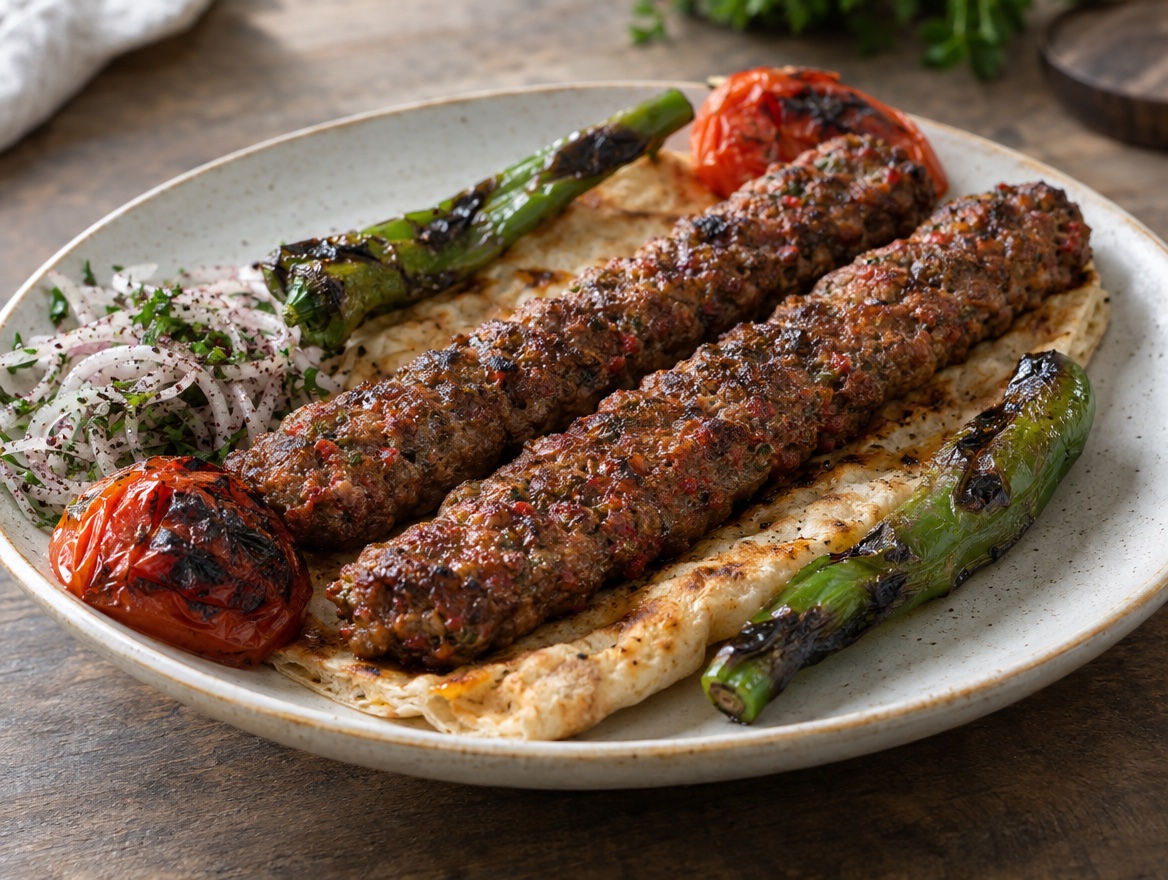
Hand-minced chilli lamb on a wide skewer — smoky, fatty, from the south-east, not a generic kofta.
Recipe by I Want Some Food · Reviewed by the editorial kitchen. Native name preserved: Adana kebabı.
0 people cooked this in the public kitchen yet. Kitchen-tested by I Want Some Food. Not a purchased rating.
- Prep
- 25 min
- Cook
- 15 min
- Rest
- 30 min
- Total
- 1 hr 10 min
- Difficulty
- Medium
- Spice
- Medium heat
- Cost
- Weeknight budget$8–16 USD · indicative, not a store price
About
Adana kebab is lamb minced by hand with chilli flakes and salt, kneaded until sticky, then pressed onto a wide flat skewer and grilled over charcoal. You do not have a mangal. A hot grill pan and a flattened sausage shape still get you close. Serve with sumac onions and bread. Use fatty lamb mince, or mix lean mince with chopped tail fat or a little extra fat from the butcher. Knead with salt and chilli flakes until the paste turns sticky and holds together; this is the whole technique. Wet your hands, form long flat sausages, and press them onto wide skewers if you have them, or onto a hot grill pan in flattened logs if you do not. High heat, turn once the crust sets, and do not fuss. Serve with sumac onions, grilled pepper and tomato, and bread to scrape the juices. If the mix falls apart, it needed more kneading or more fat. Mild mince without chilli is a different kebab. Pul biber should taste fruity and warm, not only dusty-hot. If you are using a pan, flatten the logs well so they get crust rather than steaming as fat meatballs. Rest the cooked kebab a minute so the juices stay in when you bite. Bread is the napkin.
Ingredients
Scaling multiplies the written quantities. Baking still prefers a scale.
Steps
Step 1
Knead mince with chilli and salt 5 minutes until sticky. Chill 30 minutes.
10 minStep 2
With wet hands, form long flat koftas. Grill or pan-sear over high heat 8–12 minutes, turning, until cooked through and blistered.
12 minStep 3
Toss sliced onion with sumac and parsley. Serve kebab with bread and the onion.
5 min
Adapt this recipe
The canonical recipe stays intact. Personal versions are labelled. Serving changes are maths, not AI.
Adaptations · 0 / 15 used. Resets 10 October.
Substitutions
Lamb → Beef mince plus a spoon of olive oil
Less Adana, still a spicy skewer.
Tips
- Lean mince falls off the stick. Fat is structural.
- If it crumbles, you under-kneaded.
History & culture
A protected name in Türkiye when made in Adana to spec. Elsewhere it is a style: spicy, hand-minced, flat. Eat with grilled pepper and tomato. Ocakbaşı tables put the meat next to raw onion, parsley, and a grilled vegetable. Eat with your hands and bread. Home cooks without a mangal still get a useful crust on a cast-iron pan. It is not a health plate. Ayran or a sharp salad is the usual cooler. Tourists sometimes expect a sauced 'kebab shop' pile; this is drier, spicier, and more about the mince. Leftover cooked kebab makes a sandwich; leftover raw mix should be cooked the same day. In Turkish cities people specify Adana when they want heat and a flat mince kebab, then argue whether the shop used the right chilli. Home versions will not match a charcoal ocak, and they still feed a table. A grilled pepper is not decoration; it is how you eat the fat. Ayran cools the mouth between bites.
Southeast Anatolian grill culture. The restaurant trademark is modern; the minced-meat skewer is older. Southeast Anatolian grill culture long predates restaurant trademarks. Hand-minced meat on a flat skewer is older than the protected geographical name, which is a modern legal layer on a regional craft. Chilli flakes (pul biber) became central after New World peppers naturalised in Anatolian cooking. Urban ocakbaşı restaurants in the twentieth century standardised the plate for city diners. Migrant grill houses in Europe sell 'Adana' as a menu word that may or may not match Adana's rules. Treat the trademark as a reminder that the original is specific, and treat your home version as a spicy minced kebab in that family. Charcoal is traditional; gas is what most balconies have. Geographical indication laws in Türkiye are a twenty-first-century tool for protecting a regional craft from generic menu words. That legal history matters, and so does the older mince-and-fire habit that the law is trying to name. Your grill pan is a translation, not a counterfeit of a court dish that never existed.
Modern adaptation — Home grill pan, no sheep-tail fat. Pul biber stands in for Adana isot.
Provenance: Editorial adaptation.
Questions about this recipe
Answers taken from this dish's times, amounts, swaps and tips — not a chatbot.
How long does Adana kebab take?
1 hr 10 min all in — 25 min prep, 15 min cook, 30 min rest. Cook and rest follow the method. Leftover storage and optional extra waits are not included.
How many does it serve?
The recipe is written for 4 people. Scale the ingredient list on the page if you are cooking for a different number.
How hard is it?
Medium.
How spicy is it?
Medium heat.
What allergens should I watch?
This recipe is labelled for Wheat. Labels are informational — check the packets in your kitchen. This is not medical advice.
Does it fit a diet?
The published recipe is labelled Dairy-free.
What does it cost to cook?
Weeknight budget — about $8–16 USD, as a grocery budget for this recipe, not a restaurant price.
What equipment do I need?
Frying pan, Mixing bowl.
How much salt do I put in?
The recipe lists Salt at 1½ tsp.
What can I use instead?
Lamb → Beef mince plus a spoon of olive oil. Less Adana, still a spicy skewer.
Any tips from this recipe?
Lean mince falls off the stick. Fat is structural. If it crumbles, you under-kneaded.
Can I use an air fryer?
This method is not written for an air fryer. The core technique on the page still applies.
Similar dishes
Checking your allergy settings…