


Pumpkin pie
Pumpkin pie
Spiced pumpkin custard in a pastry shell — a November tart, not a latte, and better with evaporated milk than with vibes.
Recipe by I Want Some Food · Reviewed by the editorial kitchen. Native name preserved: Pumpkin pie.
0 people cooked this in the public kitchen yet. Kitchen-tested by I Want Some Food. Not a purchased rating.
- Prep
- 25 min
- Cook
- 55 min
- Rest
- 2 hr
- Total
- 3 hr 20 min
- Difficulty
- Medium
- Spice
- No chilli
- Cost
- Cheap nightUnder $8 USD · indicative, not a store price
About
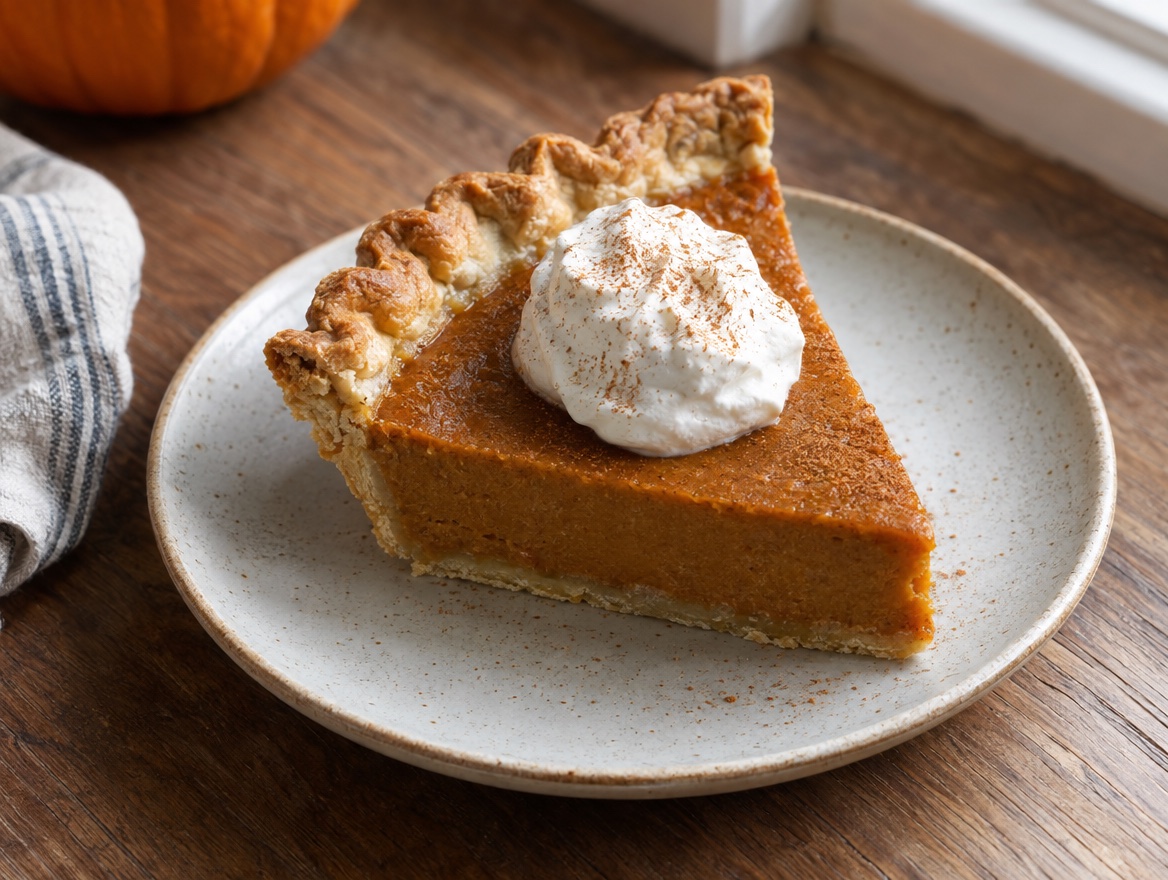
Pumpkin pie is a blind-ish pastry shell filled with pumpkin purée, egg, sugar, warm spice and evaporated or cream-thickened milk, baked until the centre barely wobbles. Canned pumpkin is how most of America actually does this. That is not a moral failure. Cool it completely or you invent soup. Blind-bake a pastry shell until it is pale gold if you want a less soggy bottom, then fill with pumpkin purée beaten with egg, sugar, evaporated milk or cream, salt, and warm spice. A can of pumpkin is how most American ovens actually do this; roasting your own squash is allowed and sometimes wetter. Bake until the centre barely wobbles; it will finish as it cools. Cool completely or you invent soup when you cut. The spice should be a background, not a candle shop. If the filling cracks, you overbaked it; serve it anyway. A dollop of cream is ordinary. Leftovers keep chilled. Reheating a slice is a breakfast that needs no apology. Do not call a pumpkin cheesecake a pie and expect this paragraph to still apply.
Ingredients
Scaling multiplies the written quantities. Baking still prefers a scale.
Steps
Step 1
Rub butter into flour with a pinch of salt, add a splash of cold water, chill 30 minutes. Line a tin, dock, bake 12 minutes at 190°C.
25 min190°CStep 2
Whisk pumpkin, eggs, sugar, milk, spices and salt until smooth. Pour into the shell.
8 minStep 3
Bake at 180°C 40–50 minutes until the centre jiggles like set jelly. Cool 2 hours. Cream if you want it.
50 min180°C
Adapt this recipe
The canonical recipe stays intact. Personal versions are labelled. Serving changes are maths, not AI.
Adaptations · 0 / 15 used. Resets 10 October.
Substitutions
Evaporated milk → Cream thinned with milk
Richer. Watch the bake time.
Tips
- Crack on the top means it went a little far. Still slice it.
- Butternut purée is a fine stand-in for pie pumpkin.
History & culture
Thanksgiving tables and diner slices. Indigenous pumpkin and squash cookery predates the pie; the custard tart is a settler form. Thanksgiving tables and diner slices keep the pie in American life even among people who do not cook otherwise. It is dessert, breakfast, and a fridge raid. Some families prefer sweet potato pie, which is a related, not identical, African American table classic. Store-bought shells are common and not a moral failure. Eat it cold. A contest about whose spice mix is 'correct' is seasonal sport. It is not a health food. It is a calendar food. Diaspora Friendsgiving tables abroad still produce one because the can travels. Office potlucks in November produce more pies than ovens should hold, which is how the dessert functions as social glue. Take one slice and mean it. Whipped cream from a can is ordinary American practice and not a scandal next to a homemade filling.
European pie pastry plus New World squash. Amelia Simmons printed a pumpkin pie in 1796. Libby's made the can a national habit. Schoolbook Pilgrim myths over-assign the dish to a single feast. Squash as food is Indigenous; this custard in a crust is Anglo-American. Nineteenth-century cookbooks sweetened and spiced it into the profile people now expect. Canned evaporated milk is a twentieth-century texture tool. Cooking it from a can is therefore historically typical, not a cheat against a farm past most bakers did not have. Keep the myth out of the filling. Keep the squash and the pastry. New England and Midwestern dairying, cheap sugar, and a canning industry made the custard repeatable far from any patch of squash. That is why the pie feels national. Repeatability is the historical achievement, not a log-cabin fantasy. A 1796 printed pie and later canning companies, especially the big pumpkin can, made the filling repeatable far from any patch. Schoolbook Pilgrim stories over-assign a holiday. Using a can is therefore typical of the pie's real past, not a cheat against a log cabin most bakers never had.
Traditional
Provenance: Editorial adaptation.
Questions about this recipe
Answers taken from this dish's times, amounts, swaps and tips — not a chatbot.
How long does Pumpkin pie take?
3 hr 20 min all in — 25 min prep, 55 min cook, 2 hr rest. Cook and rest follow the method. Leftover storage and optional extra waits are not included.
How many does it serve?
The recipe is written for 8 slices. Scale the ingredient list on the page if you are cooking for a different number.
How hard is it?
Medium.
How spicy is it?
No chilli.
What allergens should I watch?
This recipe is labelled for Wheat, Eggs, Milk. Labels are informational — check the packets in your kitchen. This is not medical advice.
Does it fit a diet?
The published recipe is labelled Vegetarian.
What does it cost to cook?
Cheap night — about Under $8 USD, as a grocery budget for this recipe, not a restaurant price.
What equipment do I need?
Oven, Mixing bowl.
How much salt do I put in?
The recipe lists Salt at ½ tsp.
How much sugar?
150 g of Sugar.
What can I use instead?
Evaporated milk → Cream thinned with milk. Richer. Watch the bake time.
Any tips from this recipe?
Crack on the top means it went a little far. Still slice it. Butternut purée is a fine stand-in for pie pumpkin.
Can I use an air fryer?
This method is not written for an air fryer. The core technique on the page still applies.
Similar dishes
Checking your allergy settings…