


Chicken congee
鸡粥
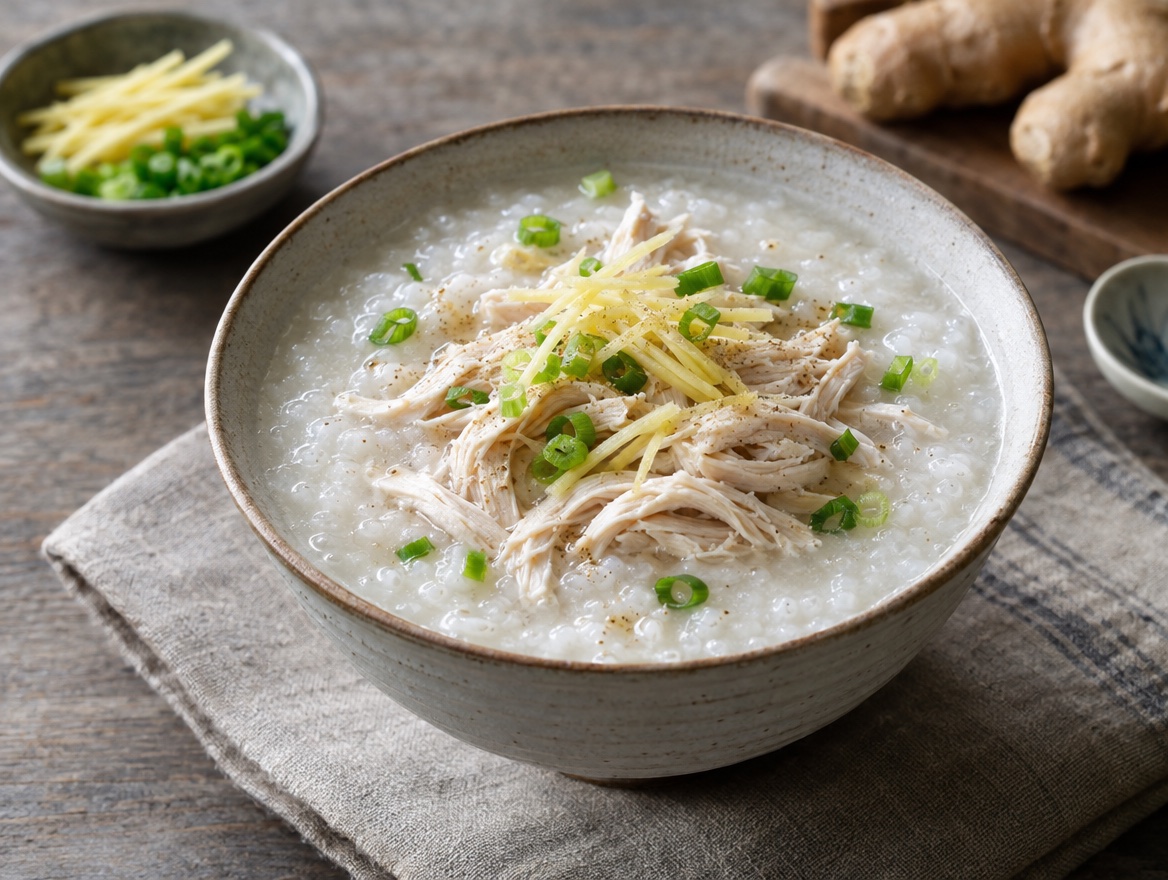
Rice cooked past rice into a savoury porridge — ginger, shredded chicken, spring onion, white pepper.
Recipe by I Want Some Food · Reviewed by the editorial kitchen. Native name preserved: 鸡粥.
0 people cooked this in the public kitchen yet. Kitchen-tested by I Want Some Food. Not a purchased rating.
- Prep
- 10 min
- Cook
- 1 hr 15 min
- Rest
- None
- Total
- 1 hr 25 min
- Difficulty
- Easy
- Spice
- No chilli
- Cost
- Cheap nightUnder $8 USD · indicative, not a store price
About
Congee (jook) is rice simmered in a lot of water until the grains burst and the pot goes silky. This version uses chicken (a carcass, or thigh) and ginger. Toppings are the personality: spring onion, soy, white pepper, a fried doughnut stick if you can get one. It is sick-day food and breakfast food and the opposite of fried rice. Rinse the rice once if you want a cleaner pot, or skip the rinse if you want more body from surface starch. Use a generous ratio of water or light stock to grain and simmer until the kernels burst and the spoon leaves a slow trail. A chicken carcass, wings, or thighs give collagen; ginger slices keep it from tasting flat. Skim only if you mind the fat; many households keep a little. Finish with white pepper, soy, spring onion, and maybe a thread of sesame oil. Youtiao, century egg, or shredded iceberg are toppings, not requirements. Salt at the end. The pot thickens as it sits; loosen with hot water at the table. It should taste of chicken and rice, not of stock powder.
Ingredients
Scaling multiplies the written quantities. Baking still prefers a scale.
Steps
Step 1
Bring rice, chicken, ginger and water to a boil. Skim. Simmer gently 60–75 minutes, stirring so the bottom does not catch, until the rice has burst.
70 minStep 2
Lift chicken, shred the meat, discard bones and skin if you want. Return meat. Season with salt and a little soy.
8 minStep 3
Ladle. Spring onion, white pepper, sesame oil, more soy at the table.
3 min
Adapt this recipe
The canonical recipe stays intact. Personal versions are labelled. Serving changes are maths, not AI.
Adaptations · 0 / 15 used. Resets 10 October.
Substitutions
Chicken → Just ginger and dried scallop or mushroom
A vegetarian-leaning jook. Use mushroom soy.
Tips
- Day-old rice shortens the cook if you mash it as it simmers.
- A century egg or leftover roast chicken are both correct toppings.
History & culture
Cantonese breakfast, temple food, and the bowl you make when someone in the house is unwell. Texture is a family setting — some want soup, some want custard-thick. Cantonese breakfast shops sell jook with a dozen condiments; temples and homes make a quieter pot when someone is ill. Texture is a family argument: soup-like versus almost custard. It is also leftover technology — last night's rice can go in, though raw rice gives a silkier burst. In Singapore, Malaysia and Vietnam, related rice porridges take different names and toppings. Diaspora kitchens cook it for new parents and for hangovers. It is not glamorous and that is the point. Serve it in deep bowls with spoons, not chopsticks, unless you are fishing for chicken. A fried egg on top is a house extra some aunties would side-eye and then eat. Hong Kong cafés put pickled vegetables and soy on the table so each bowl can be seasoned twice. At home, a quiet pot with ginger and shredded chicken is the version people cook when they do not want to talk. Both are correct.
Rice porridge is older than any restaurant brand, across southern China and much of Asia. The chicken-ginger pot is a home default. Rice porridge is older than restaurant brands, written into southern Chinese foodways and across monsoon Asia as a way to stretch grain and feed the sick. Chicken and ginger is a home default rather than a single inventor's recipe. Imperial kitchens had luxurious congees; the household pot stayed plain. Twentieth-century urban breakfast culture put it next to fried dough sticks and pickled vegetables. Instant packets exist and taste of powder; they are a convenience, not a substitute for simmering. The English word congee comes through Tamil and colonial trade, which is why menus disagree with jook. What you are cooking is a rice-and-water technology that predates any café. Medical folklore treats rice porridge as recovery food across southern China, which is cultural practice rather than a clinical claim. What the history actually supports is thrift: a little grain, a lot of water, and whatever protein the house had, simmered until it agreed to be silk.
Traditional
Provenance: Editorial adaptation.
Questions about this recipe
Answers taken from this dish's times, amounts, swaps and tips — not a chatbot.
How long does Chicken congee take?
1 hr 25 min all in — 10 min prep, 1 hr 15 min cook. Cook and rest follow the method. Leftover storage and optional extra waits are not included.
How many does it serve?
The recipe is written for 4 bowls. Scale the ingredient list on the page if you are cooking for a different number.
How hard is it?
Easy.
How spicy is it?
No chilli.
What allergens should I watch?
This recipe is labelled for Soy. Labels are informational — check the packets in your kitchen. This is not medical advice.
Does it fit a diet?
The published recipe is labelled Dairy-free, Gluten-free.
What does it cost to cook?
Cheap night — about Under $8 USD, as a grocery budget for this recipe, not a restaurant price.
What equipment do I need?
Stockpot.
How much salt do I put in?
The recipe lists Salt at 1 tsp.
How much soy sauce?
2 tbsp of Soy sauce.
How much toasted sesame oil?
1 tsp (optional) of Toasted sesame oil.
What can I use instead?
Chicken → Just ginger and dried scallop or mushroom. A vegetarian-leaning jook. Use mushroom soy.
Any tips from this recipe?
Day-old rice shortens the cook if you mash it as it simmers. A century egg or leftover roast chicken are both correct toppings.
Can I prepare this ahead?
A century egg or leftover roast chicken are both correct toppings.
Can I use an air fryer?
This method is not written for an air fryer. The core technique on the page still applies.
Similar dishes
Checking your allergy settings…