

 Taste China
中国
A civilisation of regional cuisines, not a single takeaway menu. Wok, steam, braise and ferment are shared tools; produce and chilli habits are not.
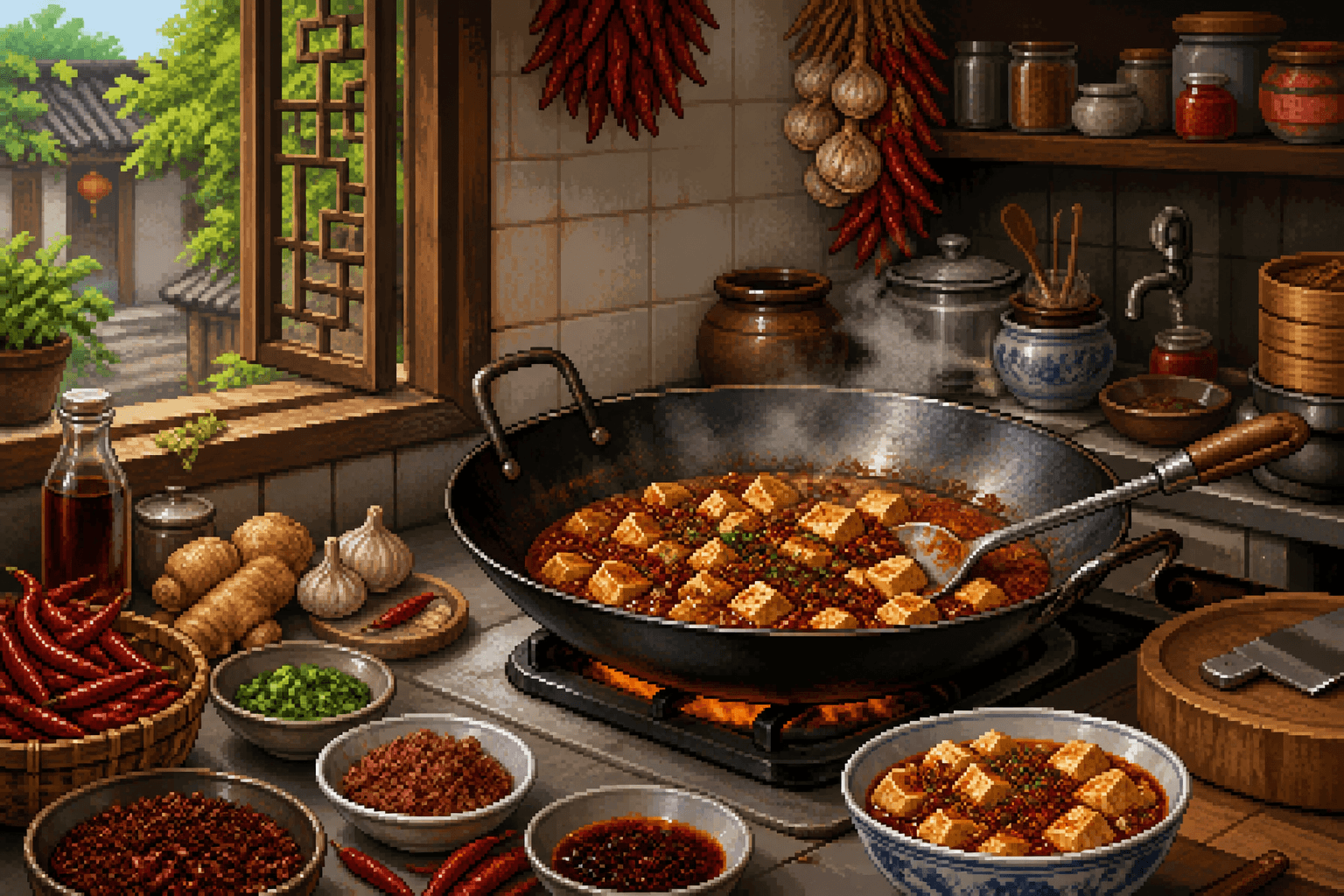
Sichuan's mala, Cantonese wok hei, Shandong's wheat and seafood, Jiangsu's sweetness, Hunan's dry heat, Fujian's broths: a family of cuisines with fiercely local pantries. Mapo tofu is Sichuan home cooking that restaurants made famous — doubanjiang, Sichuan pepper, minced pork, soft tofu. Dan dan mian is a dryish chilli-and-sesame noodle, not a soup. Tomato egg stir-fry is the weeknight pan that students actually cook. Chicken congee is rice cooked past porridge into comfort. Egg fried rice is day-old grains and a hot wok, judged on separation not colour. Smashed cucumber salad is garlic, vinegar and a knife used as a mallet. Naming the province is more useful than arguing about authenticity in the abstract.
33 recipes · 2 cuisines
Essential dishes
Checking your allergy settings…
More dishes
Further China listings, including shorter editorial recipes and imported methods.
Checking your allergy settings…
Regional cuisines
Think you know China food?
32 quiz dishes. Optional — Passport stamps still come from cooking.
Take the China food quizFood history
Imperial courts, regional trade, chilli's arrival from the Americas, and twentieth-century migration all shaped what people cook now. Sichuan mala is unthinkable without New World chilli meeting older peppercorn and bean paste. Cantonese kitchens prized freshness and steam long before stir-fry became the world's shorthand for 'Chinese'. Diaspora cooking — in Southeast Asia, North America, Britain — is part of the story, not a dilution of it. A respectful approach is to name the region, the technique, and the cook's choices.
Common ingredients
Techniques
- wok tossing
- velveting
- steaming
- braising
- mala blooming