


Mandu
만두
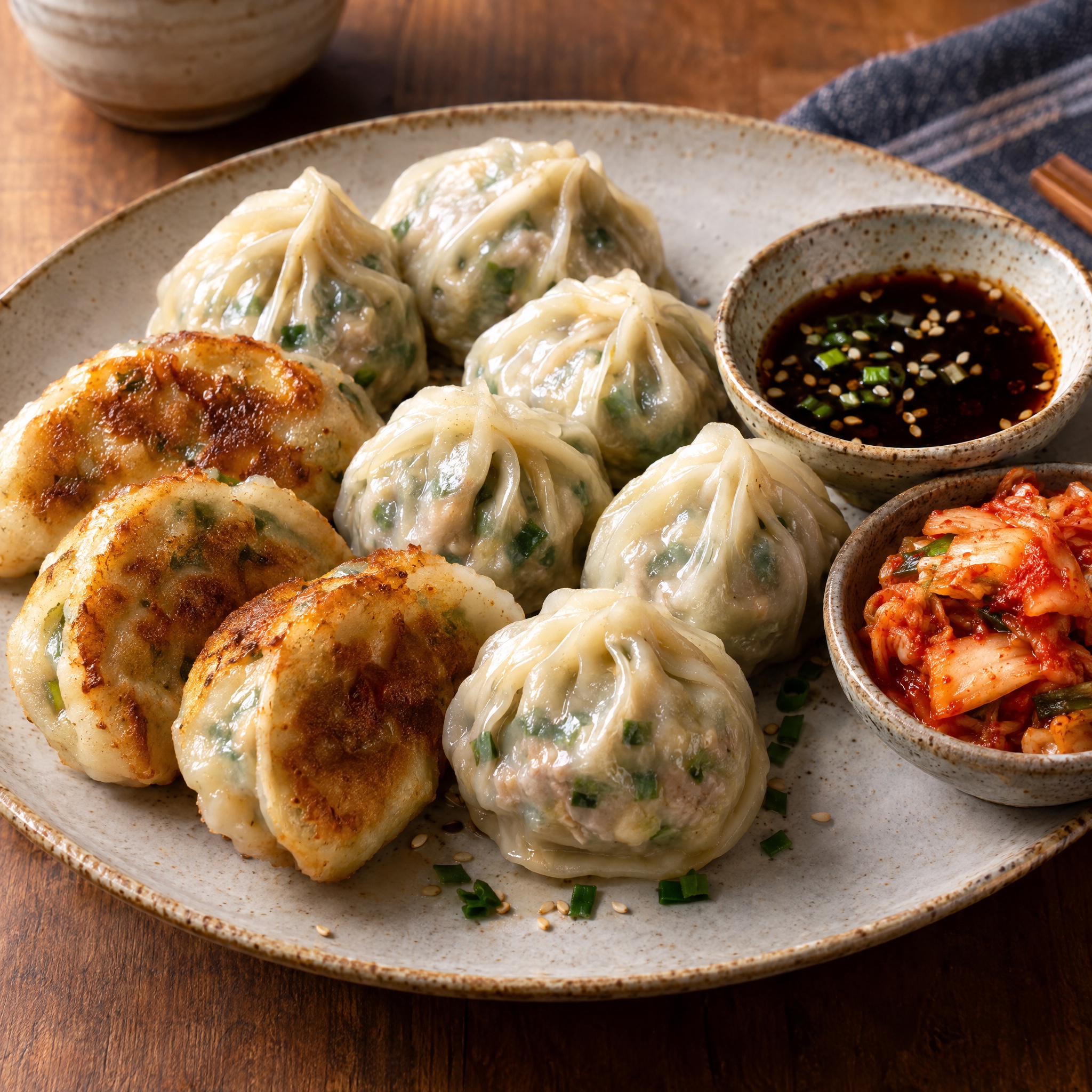
Korean dumplings — pork, tofu and chives in a thin wrapper, steamed, fried, or floated in soup.
Recipe by I Want Some Food · Reviewed by the editorial kitchen. Native name preserved: 만두.
0 people cooked this in the public kitchen yet. Kitchen-tested by I Want Some Food. Not a purchased rating.
- Prep
- 45 min
- Cook
- 15 min
- Rest
- None
- Total
- 1 hr
- Difficulty
- Medium
- Spice
- No chilli
- Cost
- Weeknight budget$8–16 USD · indicative, not a store price
About
Mandu are dumplings, not a single cooking method. The filling is usually pork, tofu, noodles or kimchi, and a lot of garlic. You can steam them, pan-fry them as gun-mandu, or drop them into tteokguk. This is a pork-and-tofu filling you can fold on a Sunday and freeze. The filling should be juicy when cooked, not wet in the bowl — squeeze tofu and salted cabbage or kimchi before mixing, and keep a little fat in the pork. Seal without trapped air or they burst, then freeze in a single layer before bagging. Done, steamed or fried, is a taut skin and no leaks. A dry filling means you overworked it or skipped the tofu moisture you were supposed to control, not celebrate.
Ingredients
- Wheat flour, or 40 round dumpling wrappers300 g
- Water, for dough, if not using wrappers150 ml
- Pork, mince300 g
- Tofu, firm, squeezed dry150 g
- Spring onion, minced4
- Garlic3 clove
- Ginger4.9 ml
- Soy sauce15 ml
- Toasted sesame oil15 ml
- Black pepper2½ ml
- Kimchi, squeezed and chopped (optional)80 g
- Neutral oil30 ml
Scaling multiplies the written quantities. Baking still prefers a scale.
Steps
Step 1
If making dough: mix flour and water, knead until smooth, rest 20 minutes, roll thin, cut rounds. Or open a packet of wrappers.
25 minStep 2
Mash tofu. Mix with pork, spring onion, garlic, ginger, soy, sesame oil, pepper and kimchi. It should hold a pinch.
5 minStep 3
Spoon filling onto wrappers, seal with water, pleat or press half-moons. Freeze on a tray if not cooking now.
20 minStep 4
Pan-fry in oil until the bottoms brown, add a splash of water, cover 4 minutes to steam, then uncover to recrisp. Or steam 8–10 minutes.
10 min
Adapt this recipe
The canonical recipe stays intact. Personal versions are labelled. Serving changes are maths, not AI.
Adaptations · 0 / 15 used. Resets 10 October.
Substitutions
Pork → Minced mushrooms and more tofu
Squeeze dry or the wrapper bursts.
Tips
- A soy-vinegar-chilli dip is mandatory.
- Kimchi mandu uses more kimchi and less pork. Same fold.
History & culture
New year tables, street stalls, and freezer drawers. North Korean styles and Seoul restaurant styles both exist. We are writing a home pork mandu. Lunar New Year labour still means a table of folders. Street steamers sell them as a snack; freezer drawers are how weekday pots happen. Northern styles and Seoul restaurant folds differ in wrapper thickness and dip. School canteens steam them; bars fry them; one filling does not settle the peninsula.
Dumplings travelled. The Korean filling and dipping sauce are local. We are not claiming a Yuan-dynasty origin story as the recipe. Dumplings travelled across North-East Asia; Korean fillings and dipping sauces localised them. Yuan-dynasty origin stories are too neat for a home pork-and-tofu fold. Industrial frozen mandu in the late twentieth century is what put them in every supermarket. We are writing a Sunday batch, not a dynastic claim.
Regional variation
Provenance: Editorial adaptation.
Questions about this recipe
Answers taken from this dish's times, amounts, swaps and tips — not a chatbot.
How long does Mandu take?
1 hr all in — 45 min prep, 15 min cook. Cook and rest follow the method. Leftover storage and optional extra waits are not included.
How many does it serve?
The recipe is written for 4 trays. Scale the ingredient list on the page if you are cooking for a different number.
How hard is it?
Medium.
How spicy is it?
No chilli.
What allergens should I watch?
This recipe is labelled for Wheat, Soy, Sesame. Labels are informational — check the packets in your kitchen. This is not medical advice.
Does it fit a diet?
The published recipe is labelled Dairy-free, Nut-free.
What does it cost to cook?
Weeknight budget — about $8–16 USD, as a grocery budget for this recipe, not a restaurant price.
What equipment do I need?
Mixing bowl, Frying pan.
How much salt do I put in?
This recipe does not list salt as its own ingredient. Saltiness comes from Soy sauce — 1 tbsp; Kimchi — 80 g (squeezed and chopped, optional). Taste at the end rather than adding a number we did not write.
How much soy sauce?
1 tbsp of Soy sauce.
How much toasted sesame oil?
1 tbsp of Toasted sesame oil.
How much kimchi?
80 g (squeezed and chopped, optional) of Kimchi.
What can I use instead?
Pork → Minced mushrooms and more tofu. Squeeze dry or the wrapper bursts.
Any tips from this recipe?
A soy-vinegar-chilli dip is mandatory. Kimchi mandu uses more kimchi and less pork. Same fold.
Can I use an air fryer?
This method is not written for an air fryer. The core technique on the page still applies.
Similar dishes
Checking your allergy settings…