


Tteokguk
떡국
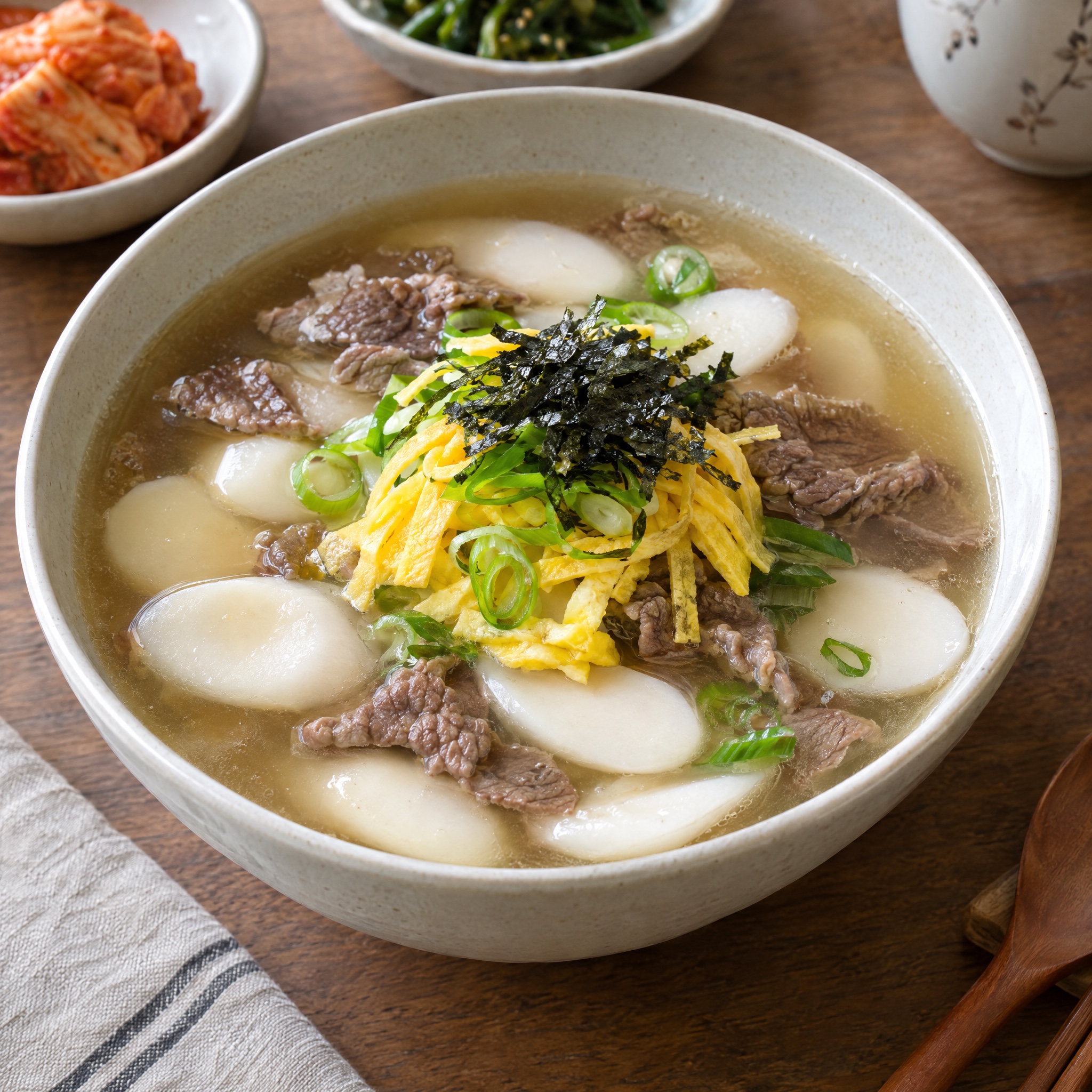
Sliced rice cakes in a clear beef broth — the New Year bowl that is said to make you a year older.
Recipe by I Want Some Food · Reviewed by the editorial kitchen. Native name preserved: 떡국.
0 people cooked this in the public kitchen yet. Kitchen-tested by I Want Some Food. Not a purchased rating.
- Prep
- 20 min
- Cook
- 1 hr
- Rest
- None
- Total
- 1 hr 20 min
- Difficulty
- Medium
- Spice
- No chilli
- Cost
- Weeknight budget$8–16 USD · indicative, not a store price
About
Tteokguk is oval slices of garaetteok in a clean beef (or anchovy) broth, with egg garnish and gim. You eat it on Seollal. The cakes should be soft but not dissolved. The broth should taste of meat and spring onion, not chilli. Slice frozen oval garaetteok and simmer them in a clear beef or anchovy broth until they float and turn tender but not dissolved. Egg jidan and roasted gim go on at the end. Done is a pale soup that tastes of meat and spring onion, cakes soft in the middle. If the broth goes cloudy-starchy, you boiled it too hard after the cakes went in; chilli stays off this pot.
Ingredients
- Garaetteok, sliced into coins, soaked400 g
- Beef, brisket300 g
- Garlic4 clove
- Soy sauce15 ml
- Egg, thin omelette strips or a swirl2 large
- Nori, julienned1 sheet
- Water1.8 l
- Salt4.9 ml
- Black pepper2½ ml
Scaling multiplies the written quantities. Baking still prefers a scale.
Steps
Step 1
Simmer beef in water with garlic 45–60 minutes. Lift out, shred, season with soy and pepper. Keep the clear broth.
55 minStep 2
Bring broth to a boil, add soaked rice-cake slices (and mandu if using). Cook until the cakes float and turn soft, 5–8 minutes.
8 minStep 3
Salt the broth. Ladle into bowls with shredded beef, egg, spring onion and gim.
Adapt this recipe
The canonical recipe stays intact. Personal versions are labelled. Serving changes are maths, not AI.
Adaptations · 0 / 15 used. Resets 10 October.
Substitutions
Beef broth → Anchovy-kelp stock
A lighter, common coastal pot.
Tips
- Do not boil the cakes until they vanish. Soft edges, intact ovals.
- The leftover broth is the next day's breakfast.
History & culture
Eating tteokguk on the lunar new year is the custom. People still eat it in July because they want soup. Seollal morning tables still serve it as the bowl that adds a year. Families joke about ageing and then reheat the pot on day two. Plenty of people also cook it in midsummer simply because they want a clean soup. Seoul home versions lean beef; some coastal houses stay with anchovy-kelp.
White rice-cake soup as a new-year wish is an old peninsula habit. The beef garnish is the common Seoul home version. Pale rice-cake soup as new-year food is an older peninsula habit. The beef-rich Seoul garnish is more twentieth-century prosperity than a fixed ancient formula. Year-round restaurant tteokguk is modern shop practice. We are writing the common home bowl, not a folk-myth origin for oval slices.
Traditional
Provenance: Editorial adaptation.
Questions about this recipe
Answers taken from this dish's times, amounts, swaps and tips — not a chatbot.
How long does Tteokguk take?
1 hr 20 min all in — 20 min prep, 1 hr cook. Cook and rest follow the method. Leftover storage and optional extra waits are not included.
How many does it serve?
The recipe is written for 4 bowls. Scale the ingredient list on the page if you are cooking for a different number.
How hard is it?
Medium.
How spicy is it?
No chilli.
What allergens should I watch?
This recipe is labelled for Eggs, Soy. Labels are informational — check the packets in your kitchen. This is not medical advice.
Does it fit a diet?
The published recipe is labelled Gluten-free, Dairy-free, Nut-free.
What does it cost to cook?
Weeknight budget — about $8–16 USD, as a grocery budget for this recipe, not a restaurant price.
What equipment do I need?
Stockpot.
How much salt do I put in?
The recipe lists Salt at 1 tsp.
How much soy sauce?
1 tbsp of Soy sauce.
What can I use instead?
Beef broth → Anchovy-kelp stock. A lighter, common coastal pot.
Any tips from this recipe?
Do not boil the cakes until they vanish. Soft edges, intact ovals. The leftover broth is the next day's breakfast.
Can I prepare this ahead?
The leftover broth is the next day's breakfast.
Can I use an air fryer?
This method is not written for an air fryer. The core technique on the page still applies.
Similar dishes
Checking your allergy settings…