


Miso soup
味噌汁
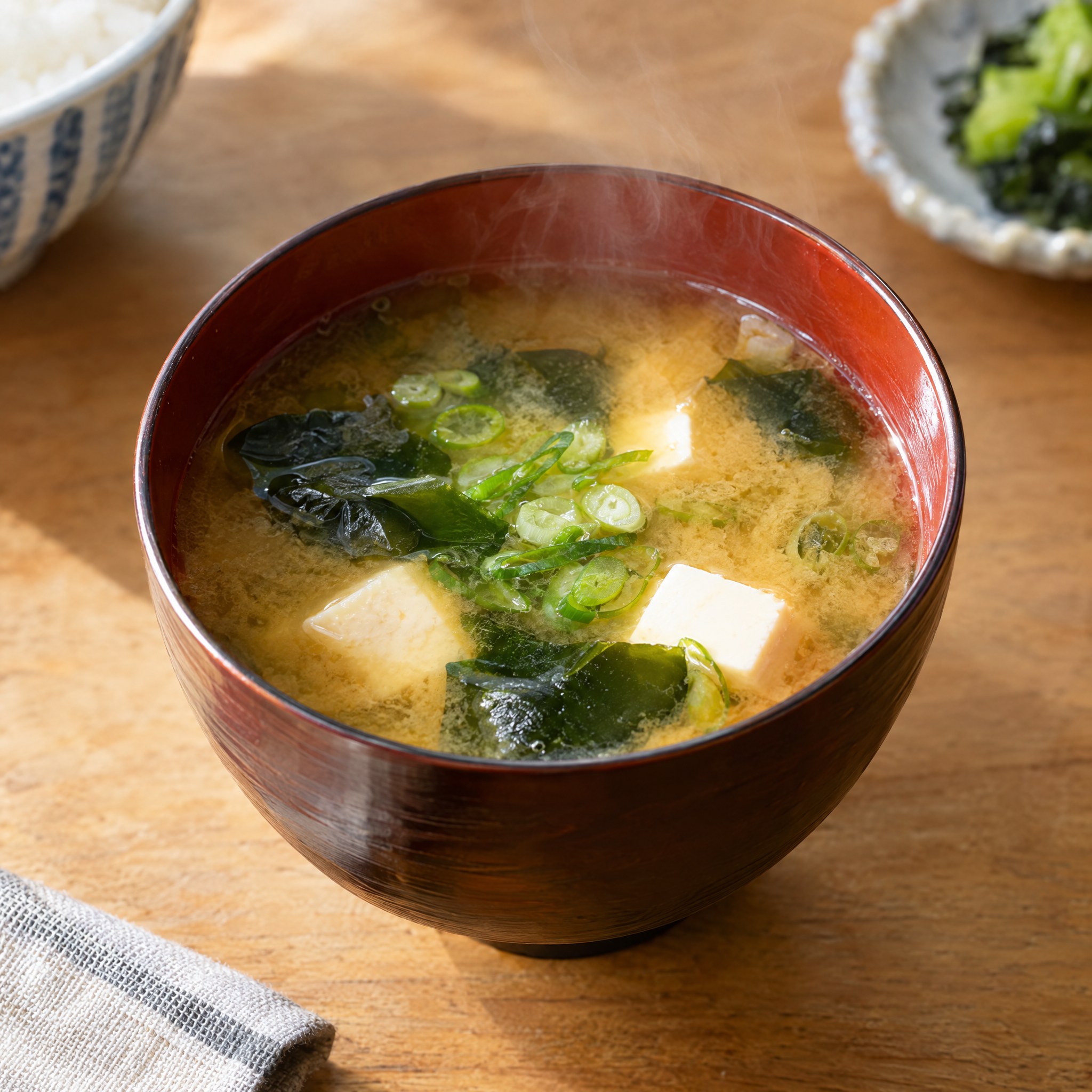
The everyday bowl: dashi, dissolved miso, tofu and spring onion — breakfast, not a starter you ignore.
Recipe by I Want Some Food · Reviewed by the editorial kitchen. Native name preserved: 味噌汁.
0 people cooked this in the public kitchen yet. Kitchen-tested by I Want Some Food. Not a purchased rating.
- Prep
- 5 min
- Cook
- 10 min
- Rest
- None
- Total
- 15 min
- Difficulty
- Very easy
- Spice
- No chilli
- Cost
- Cheap nightUnder $8 USD · indicative, not a store price
About
Miso soup is how a lot of Japanese tables start the day. You do not boil the miso. You make a light dashi, take it off the hard boil, and whisk the paste in so it stays alive. Tofu and wakame are usual; the bowl should taste of the sea and fermented soy, not salt water. The paste you buy is not interchangeable by colour alone. A dark hatcho brick and a pale supermarket tub labelled 'mild' behave differently in the same ladle of stock. Whisk a spoonful in a teacup first, then stir that slurry back — dumping a lump straight in leaves a salty clot on the bottom. If you add silken cubes too early they shatter; if wakame sits for twenty minutes it turns to slime. Taste before you reach for extra soy. Many pastes already carry enough salt for a small bowl.
Ingredients
- Dashi800 ml
- Miso44 ml
- Tofu, soft or medium, cubed200 g
- Spring onion, thinly sliced2
- Katsuobushi, if you are making dashi from scratch (optional)5 g
- Dashima, kombu, for homemade dashi (optional)5 g
Scaling multiplies the written quantities. Baking still prefers a scale.
Steps
Step 1
Heat dashi until steaming, not a rolling boil. If making it: soak kombu in the water, heat slowly, lift the kombu before it boils, then steep katsuobushi 30 seconds and strain.
8 minStep 2
Add tofu to warm through. Ladle a little broth into the miso and mash smooth, then stir that back into the pot off the heat.
2 minTip: Boiling miso flattens it. This is the one rule.
Step 3
Spring onion. Serve immediately. It does not improve sitting.
Adapt this recipe
The canonical recipe stays intact. Personal versions are labelled. Serving changes are maths, not AI.
Adaptations · 0 / 15 used. Resets 10 October.
Substitutions
Dashi → Water plus a pinch of kombu if you have it
Vegetarian bowls skip the flakes. Instant dashi is still dashi.
Tips
- A pinch of dried wakame, soaked, is the other usual addition.
- White miso is gentler at breakfast; red miso wants dinner.
History & culture
Home miso is regional — white and sweet in the west, redder and saltier in the east. One small bowl beside rice is a meal structure, not an appetiser. In a Japanese household the soup is part of ichiju-sansai thinking: one soup, rice, and a few sides, not a starter you finish before the 'real' food arrives. Office workers still drink it from a convenience-store lid. Travellers who treat it as consommé miss the point — you lift the bowl and drink, then chase the solids with chopsticks. Different miso makers are local pride, the way a bakery is.
Miso and dashi are older than restaurants. Instant dashi granules are how many apartments actually cook. We will not pretend otherwise. Temple kitchens and farmhouses were fermenting soy long before Tokyo restaurants printed miso on an English menu. What changed in the last century is packaging: tubs, freeze-dried cubes, and the idea that breakfast must include a steaming bowl even in a one-room flat. That convenience layer is modern. The habit of finishing a meal with something fermented and hot is not a branding exercise.
Traditional
Provenance: Editorial adaptation.
Questions about this recipe
Answers taken from this dish's times, amounts, swaps and tips — not a chatbot.
How long does Miso soup take?
15 min all in — 5 min prep, 10 min cook. Cook and rest follow the method. Leftover storage and optional extra waits are not included.
How many does it serve?
The recipe is written for 4 bowls. Scale the ingredient list on the page if you are cooking for a different number.
How hard is it?
Very easy.
How spicy is it?
No chilli.
What allergens should I watch?
This recipe is labelled for Soy, Fish. Labels are informational — check the packets in your kitchen. This is not medical advice.
Does it fit a diet?
The published recipe is labelled Vegetarian, Vegan, Gluten-free, Dairy-free, Nut-free.
What does it cost to cook?
Cheap night — about Under $8 USD, as a grocery budget for this recipe, not a restaurant price.
What equipment do I need?
Saucepan.
How much salt do I put in?
This recipe does not list salt as its own ingredient. Saltiness comes from Miso — 3 tbsp. Taste at the end rather than adding a number we did not write.
How much miso?
3 tbsp of Miso.
What can I use instead?
Dashi → Water plus a pinch of kombu if you have it. Vegetarian bowls skip the flakes. Instant dashi is still dashi.
Any tips from this recipe?
A pinch of dried wakame, soaked, is the other usual addition. White miso is gentler at breakfast; red miso wants dinner.
Can I use an air fryer?
This method is not written for an air fryer. The core technique on the page still applies.
Similar dishes
Checking your allergy settings…