


Doenjang jjigae
된장찌개
The everyday soybean-paste stew: zucchini, tofu, a little chilli, and a broth that tastes like someone's house.
Recipe by I Want Some Food · Reviewed by the editorial kitchen. Native name preserved: 된장찌개.
0 people cooked this in the public kitchen yet. Kitchen-tested by I Want Some Food. Not a purchased rating.
- Prep
- 10 min
- Cook
- 20 min
- Rest
- None
- Total
- 30 min
- Difficulty
- Easy
- Spice
- Mild
- Cost
- Cheap nightUnder $8 USD · indicative, not a store price
About
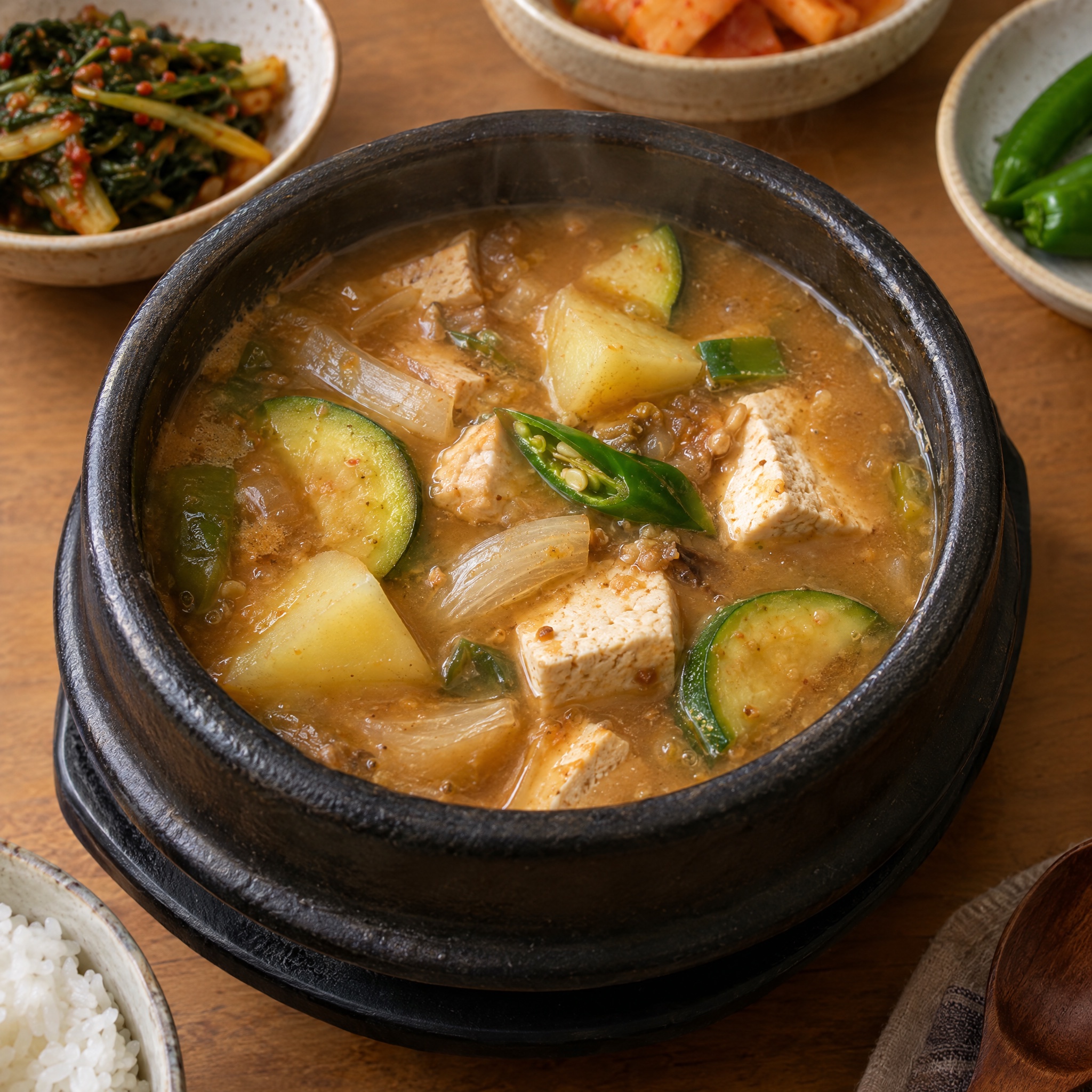
Doenjang jjigae is the stew that is on the table even when nothing else is planned. You dissolve fermented soybean paste into stock, add whatever vegetable is in the drawer, and finish with tofu. It should taste deep and a little rustic, not like miso soup with a Korean sticker. Dissolve the paste in a ladle of hot stock before it hits the pot so you do not chase raw lumps. Taste the doenjang first — tubs vary from mild to aggressively fermented — and hold the salt. Zucchini, onion, chilli and potato are the usual drawer list; tofu goes in late. Done is a rustic, deep broth and tofu hot through, tasting of aged soy rather than a swapped Japanese soup.
Ingredients
Scaling multiplies the written quantities. Baking still prefers a scale.
Steps
Step 1
If making stock: simmer dashima and dried anchovies in the water 15 minutes, then strain.
15 minStep 2
Dissolve doenjang into the stock. Add onion, zucchini, mushroom, garlic and chilli. Simmer 10 minutes.
10 minStep 3
Add tofu and gochugaru. Simmer 5 minutes more. Spring onion. Taste before salting — doenjang is already loud.
Adapt this recipe
The canonical recipe stays intact. Personal versions are labelled. Serving changes are maths, not AI.
Adaptations · 0 / 15 used. Resets 10 October.
Substitutions
Doenjang → Miso
Milder, sweeter. Add a pinch of extra salt and do not call it doenjang.
Tips
- Potato instead of zucchini is a winter pot.
- A small piece of pork or a handful of clams is a luxury version, not a requirement.
History & culture
This is home food more than restaurant food, though plenty of hansik places serve it. Every household's doenjang tastes different. Taste the pot before you add salt. This is the stew that appears when nobody planned a menu. Countryside households still make their own jang; city flats buy a branded tub and argue about which factory tastes 'like home'. Ssam dinners often leave enough leftover paste-smeared vegetables to start tomorrow's pot. Hansik restaurants serve it as a courtesy stew; the serious versions are still domestic.
Soybean-paste stews are older than chilli-red Korea. Gochugaru in the pot is optional and common. Soybean-paste stews sit in a jang culture older than Korea's chilli-red pantry. A pinch of gochugaru is a later, optional colour. Menu language calling this 'home-style' is twentieth-century restaurant talk for a pot that did not need a restaurant. We are not inventing a royal recipe number for fermented-soy Tuesday food.
Traditional
Provenance: Editorial adaptation.
Questions about this recipe
Answers taken from this dish's times, amounts, swaps and tips — not a chatbot.
How long does Doenjang jjigae take?
30 min all in — 10 min prep, 20 min cook. Cook and rest follow the method. Leftover storage and optional extra waits are not included.
How many does it serve?
The recipe is written for 3 bowls. Scale the ingredient list on the page if you are cooking for a different number.
How hard is it?
Easy.
How spicy is it?
Mild.
What allergens should I watch?
This recipe is labelled for Soy, Fish. Labels are informational — check the packets in your kitchen. This is not medical advice.
Does it fit a diet?
The published recipe is labelled Pescatarian, Gluten-free, Dairy-free, Nut-free.
What does it cost to cook?
Cheap night — about Under $8 USD, as a grocery budget for this recipe, not a restaurant price.
What equipment do I need?
Saucepan.
How much salt do I put in?
This recipe does not list salt as its own ingredient. Saltiness comes from Doenjang — 3 tbsp. Taste at the end rather than adding a number we did not write.
How much doenjang?
3 tbsp of Doenjang.
How much gochugaru?
1 tsp (optional) of Gochugaru.
What can I use instead?
Doenjang → Miso. Milder, sweeter. Add a pinch of extra salt and do not call it doenjang.
Any tips from this recipe?
Potato instead of zucchini is a winter pot. A small piece of pork or a handful of clams is a luxury version, not a requirement.
Can I use an air fryer?
This method is not written for an air fryer. The core technique on the page still applies.
Similar dishes
Checking your allergy settings…