


Onigiri
おにぎり
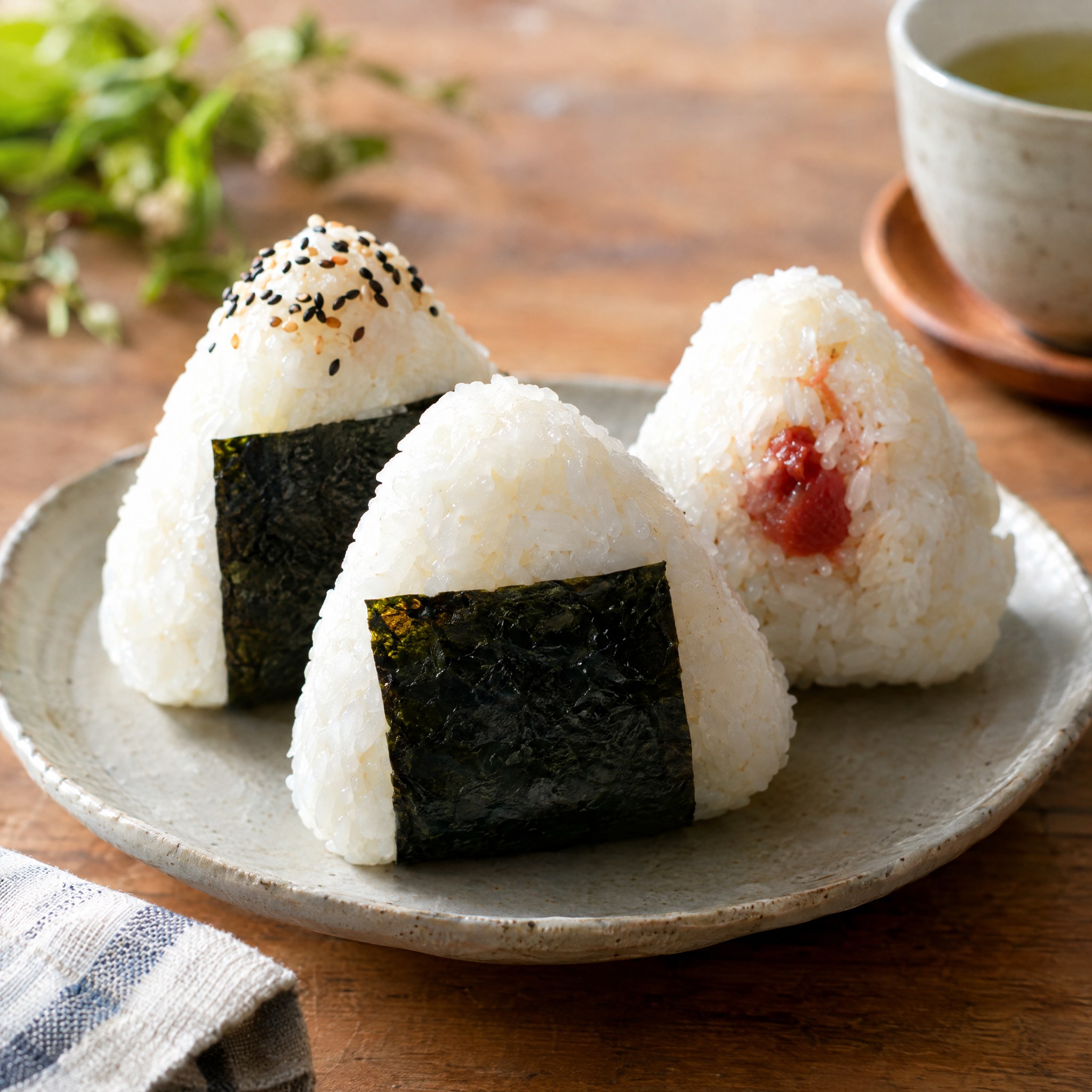
Salted rice you can hold — a filling in the middle, nori if you want it, and no, it is not a California roll.
Recipe by I Want Some Food · Reviewed by the editorial kitchen. Native name preserved: おにぎり.
0 people cooked this in the public kitchen yet. Kitchen-tested by I Want Some Food. Not a purchased rating.
- Prep
- 15 min
- Cook
- —
- Rest
- None
- Total
- 15 min
- Difficulty
- Easy
- Spice
- No chilli
- Cost
- Cheap nightUnder $8 USD · indicative, not a store price
About
Onigiri is leftover rice made portable. You salt your hands, pack warm short-grain rice around a sour or salty middle, and wrap a strip of nori so it stays crisp until you eat. Triangle is a shape, not a religion. If the rice is cold from the fridge it will not stick — warm it first. Warm short-grain rice is mandatory; fridge-cold rice will not stick unless you reheat it. Salt your hands, not the bowl, and keep the filling small and centred so it does not burst the side. Pack firmly enough to hold, not so hard you mash a paste. Nori last if the ball has to travel; done is a shape that survives a bag, rice that still tastes like rice, and a triangle only because it is convenient, not sacred.
Ingredients
- Rice, cooked short-grain, warm400 g
- Salt4.9 ml
- Nori, cut into strips2 sheet
- Soy sauce, for a tuna or leftover filling (optional)4.9 ml
- Sesame seed (optional)4.9 ml
- Firm white fish, salted salmon flake if you have it, or umeboshi (optional)80 g
Scaling multiplies the written quantities. Baking still prefers a scale.
Steps
Step 1
Wet your hands, then salt them. The film of salt seasons the rice and keeps it from welding to your palms.
Step 2
Take a handful of warm rice, press a hollow, add a teaspoon of filling, and pack into a triangle or a ball. Firm, not smashed.
10 minStep 3
Wrap nori just before eating if you can — it stays crisp. Sesame on the outside is optional.
Adapt this recipe
The canonical recipe stays intact. Personal versions are labelled. Serving changes are maths, not AI.
Adaptations · 0 / 15 used. Resets 10 October.
Substitutions
Umeboshi → Flaked salmon or a scrap of leftover pickles
The middle should be punchy. Plain rice is just a ball.
Tips
- Umeboshi in the middle is the sour classic. Tuna-mayo is the convenience-store classic. Both are allowed.
- A sheet of plastic wrap makes the packing cleaner if your hands run hot.
History & culture
Convenience stores sell millions a day. Home ones travel in a bento. This is not sushi: no vinegar in the rice, no raw fish required. Konbini fridges move these by the million; home ones go in a bento. Umeboshi, salmon flake and tuna-mayo are the ordinary middles; a raw-fish rice ball is a choice, not the default. Sports days and train platforms are native habitats. Leave the rice unsalted-sour; this is not a sushi roll, and Japanese home cooks are tired of the mix-up.
Rice balls are older than the convenience store. The plastic-wrapped triangle is a 20th-century design that taught the world the shape. Salted handfuls of leftover rice travelled long before plastic wrap. Nori as a standard jacket is later. The pull-tab triangle pack is late-twentieth-century industrial design that exported one silhouette worldwide. We are writing the home handful, not a seventh-century court picnic we cannot document on this page.
Traditional
Provenance: Editorial adaptation.
Questions about this recipe
Answers taken from this dish's times, amounts, swaps and tips — not a chatbot.
How long does Onigiri take?
15 min all in — 15 min prep. Cook and rest follow the method. Leftover storage and optional extra waits are not included.
How many does it serve?
The recipe is written for 4 rice balls. Scale the ingredient list on the page if you are cooking for a different number.
How hard is it?
Easy.
How spicy is it?
No chilli.
What allergens should I watch?
This recipe is labelled for Soy, Fish, Sesame. Labels are informational — check the packets in your kitchen. This is not medical advice.
Does it fit a diet?
The published recipe is labelled Pescatarian, Gluten-free, Dairy-free, Nut-free.
What does it cost to cook?
Cheap night — about Under $8 USD, as a grocery budget for this recipe, not a restaurant price.
What equipment do I need?
Mixing bowl.
How much salt do I put in?
The recipe lists Salt at 1 tsp.
How much soy sauce?
1 tsp (for a tuna or leftover filling, optional) of Soy sauce.
What can I use instead?
Umeboshi → Flaked salmon or a scrap of leftover pickles. The middle should be punchy. Plain rice is just a ball.
Any tips from this recipe?
Umeboshi in the middle is the sour classic. Tuna-mayo is the convenience-store classic. Both are allowed. A sheet of plastic wrap makes the packing cleaner if your hands run hot.
Can I use an air fryer?
This method is not written for an air fryer. The core technique on the page still applies.
Similar dishes
Checking your allergy settings…