

Pantry
Honey
Also called mulyeot stand-in, rice syrup stand-in
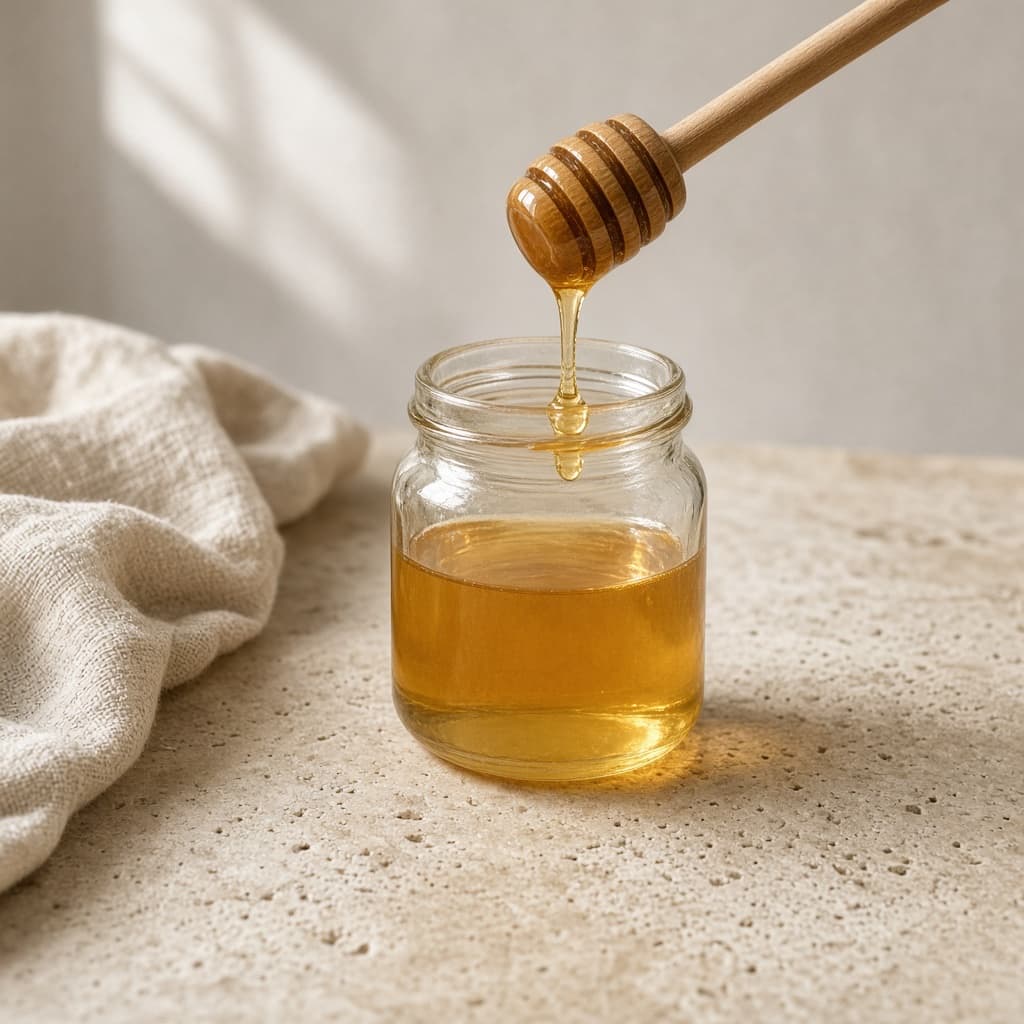
Floral nectar concentrated by bees into a dense sugar. In Korean cooking it often stands in for jocheong or mulyeot when you want shine; it is not chemically identical to those rice syrups.
Origin
Wherever bees forage. Flavour follows the flowers, so “honey” on a label is a category, not a single taste. Korean recipes treat it as a glaze more than a terroir lecture.
Flavour
Sweet, with floral or faintly bitter notes depending on the hive. Heated hard, it tastes more of caramel and less of flowers.
How it is made
Bees evaporate nectar in the comb; keepers extract and strain it. Raw honey may crystallise; supermarket squeezies are warmed and filtered so they stay liquid.
How to use it
Stir honey into glazes off a fierce heat so it does not scorch. For yangnyeom chicken or a bulgogi marinade it adds body and browning; rice syrup still gives a more authentic tteokbokki gloss if you have it. In baking, honey browns faster than caster sugar and adds water — reduce other liquids a little. Do not give honey to infants. Crystallised honey is not spoilt: stand the jar in warm water.
Storage
A pantry shelf, lid on. It does not need the fridge.
Recipes using it
Checking your allergy settings…