


Tteokbokki
떡볶이
Chewy rice cakes in a glossy gochujang sauce — the street stall that made K-food a late-night sport.
Recipe by I Want Some Food · Reviewed by the editorial kitchen. Native name preserved: 떡볶이.
0 people cooked this in the public kitchen yet. Kitchen-tested by I Want Some Food. Not a purchased rating.
- Prep
- 10 min
- Cook
- 20 min
- Rest
- None
- Total
- 30 min
- Difficulty
- Easy
- Spice
- Hot
- Cost
- Cheap nightUnder $8 USD · indicative, not a store price
About
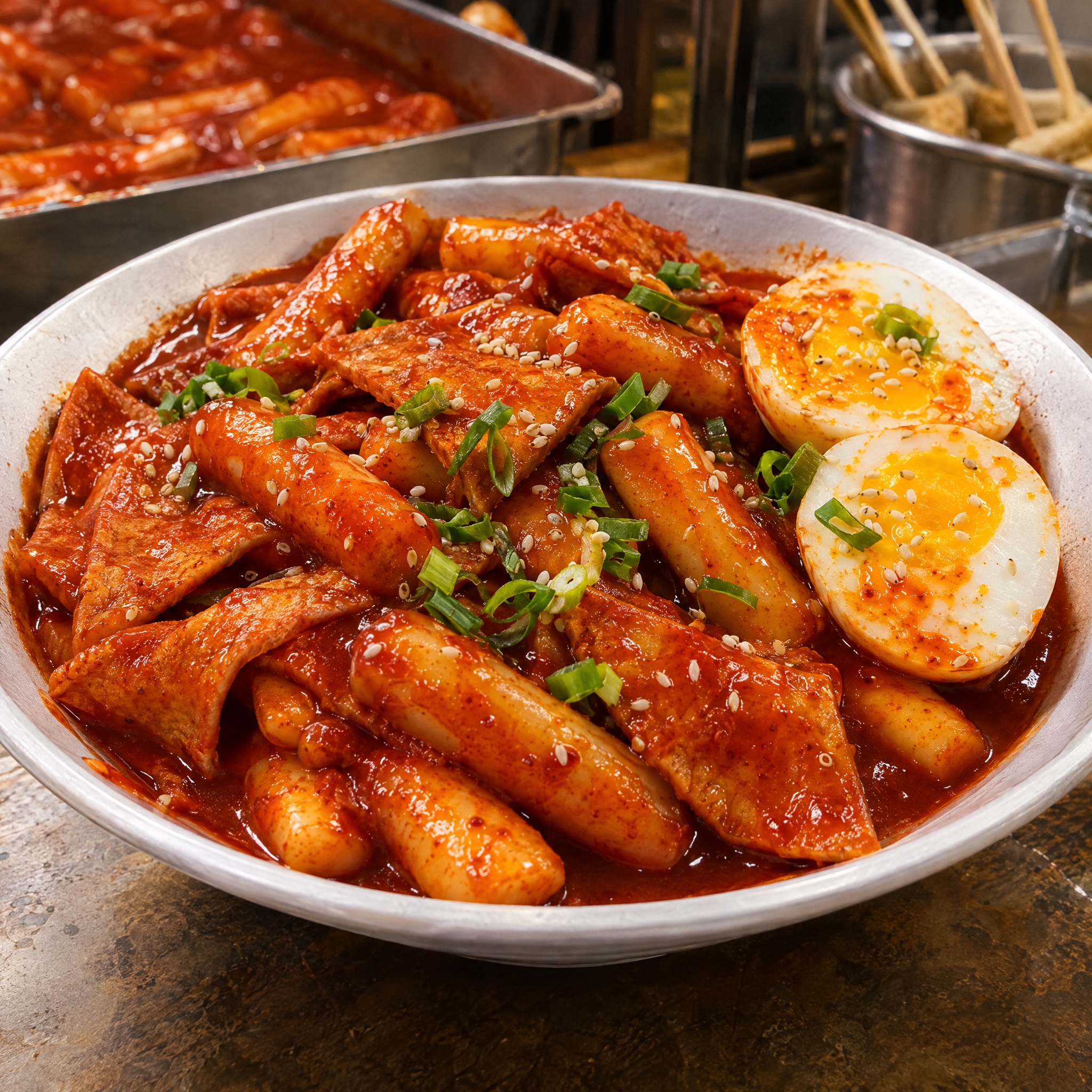
Tteokbokki is not a polite stew. It is rice cakes simmered until they drink a sweet-hot sauce and turn stretchy. The street version is usually just cakes, fish cake, spring onion and a red sauce. This is that bowl, cooked in a wide pan at home. If your cakes are fridge-hard, soak them first or you will be stirring rubber. Cylinder garaetteok are the cakes you want; sliced soup tteok dissolve into the sauce. If they still snap after soaking, they need more cold water, not a hotter boil. Bloom gochujang and gochugaru in a little oil, then add stock so the chilli tastes cooked. Done is a 90-degree bend without a break and a glaze that coats a spoon; fish cake is optional but it should be fried briefly first or it tastes boiled.
Ingredients
- Garaetteok, soaked until flexible400 g
- Gochujang30 ml
- Gochugaru15 ml
- Soy sauce15 ml
- Sugar15 ml
- Honey (optional) - Or rice syrup / jocheong15 ml
- Garlic, minced2 clove
- Water, or anchovy-kelp stock400 ml
- Spring onion, cut into lengths2
- Sesame seed (optional)4.9 ml
- Toasted sesame oil (optional)4.9 ml
Scaling multiplies the written quantities. Baking still prefers a scale.
Steps
Step 1
Soak refrigerated rice cakes in warm water 10–20 minutes until they bend without cracking. Drain.
15 minStep 2
In a wide pan, whisk gochujang, gochugaru, soy, sugar, honey and garlic into the water or stock. Bring to a simmer.
3 minStep 3
Add the rice cakes. Simmer, stirring often, 8–12 minutes until the sauce clings and the cakes are chewy, not hard in the centre.
12 minTip: If the sauce dries before the cakes soften, add a splash of water. If it stays thin, simmer uncovered.
Step 4
Add spring onion for the last minute. Finish with sesame oil and sesame seeds. Eat hot — it sets as it cools.
Adapt this recipe
The canonical recipe stays intact. Personal versions are labelled. Serving changes are maths, not AI.
Adaptations · 0 / 15 used. Resets 10 October.
Substitutions
Garaetteok → Sliced leftover steamed rice cakes or even gnocchi in an emergency
Texture will be wrong. Still edible. Not tteokbokki.
Anchovy stock → Water plus a pinch of dashima if you have it
Vegetarian bowls skip the fish cake too.
Tips
- A few sheets of eomuk (fish cake) simmered in the same sauce is the street-stall move.
- Leftovers reheat with a splash of water. The cakes keep drinking sauce.
History & culture
The red street tteokbokki most people mean is a late-20th-century snack, not a royal court dish. Older tteokbokki was soy-braised. Both exist. We are writing the gochujang one because that is the bowl that travelled. After-school snack shops still sell it in a paper cup with a wooden fork. Pojangmacha tables share a pan between soju glasses. Regional add-ins — cheese, boiled egg, ramyeon noodles — are later shop layers, not a different dish. It is not a family stew in most houses; it is a street and delivery bowl that migrated into home pans.
Sindang-dong stalls in Seoul helped fix the modern recipe: leftover rice cakes, chilli paste, a little sugar. It is now a global export and a 2 a.m. delivery order. We are not claiming one stall's secret. The red street bowl is late-twentieth-century stall food, fixed in neighbourhoods such as Sindang-dong when leftover rice cakes met cheap chilli paste. It is not Joseon court cookery, and older soy-braised rice cakes are a separate plate. Industrial cylinder tteok made the snack scalable; delivery apps then made it a national 2am order.
Regional variation — Fish cake is usual but not mandatory. Anchovy-kelp stock is better than plain water. Rice syrup gives a shinier sauce than sugar alone.
Provenance: Editorial adaptation.
Questions about this recipe
Answers taken from this dish's times, amounts, swaps and tips — not a chatbot.
How long does Tteokbokki take?
30 min all in — 10 min prep, 20 min cook. Cook and rest follow the method. Leftover storage and optional extra waits are not included.
How many does it serve?
The recipe is written for 2 plates. Scale the ingredient list on the page if you are cooking for a different number.
How hard is it?
Easy.
How spicy is it?
Hot.
What allergens should I watch?
This recipe is labelled for Soy, Wheat, Fish. Labels are informational — check the packets in your kitchen. This is not medical advice.
Does it fit a diet?
The published recipe is labelled Vegetarian, Vegan, Dairy-free, Nut-free.
What does it cost to cook?
Cheap night — about Under $8 USD, as a grocery budget for this recipe, not a restaurant price.
What equipment do I need?
Frying pan, Mixing bowl.
How much salt do I put in?
This recipe does not list salt as its own ingredient. Saltiness comes from Gochujang — 2 tbsp; Soy sauce — 1 tbsp. Taste at the end rather than adding a number we did not write.
How much gochujang?
2 tbsp of Gochujang.
How much gochugaru?
1 tbsp of Gochugaru.
How much soy sauce?
1 tbsp of Soy sauce.
How much sugar?
1 tbsp of Sugar.
How much honey?
1 tbsp (Or rice syrup / jocheong, optional) of Honey.
How much toasted sesame oil?
1 tsp (optional) of Toasted sesame oil.
What can I use instead?
Garaetteok → Sliced leftover steamed rice cakes or even gnocchi in an emergency. Texture will be wrong. Still edible. Not tteokbokki. Anchovy stock → Water plus a pinch of dashima if you have it. Vegetarian bowls skip the fish cake too.
Any tips from this recipe?
A few sheets of eomuk (fish cake) simmered in the same sauce is the street-stall move. Leftovers reheat with a splash of water. The cakes keep drinking sauce.
Can I prepare this ahead?
Leftovers reheat with a splash of water. The cakes keep drinking sauce.
Can I use an air fryer?
This method is not written for an air fryer. The core technique on the page still applies.
Similar dishes
Checking your allergy settings…