


Yangnyeom chicken
양념치킨
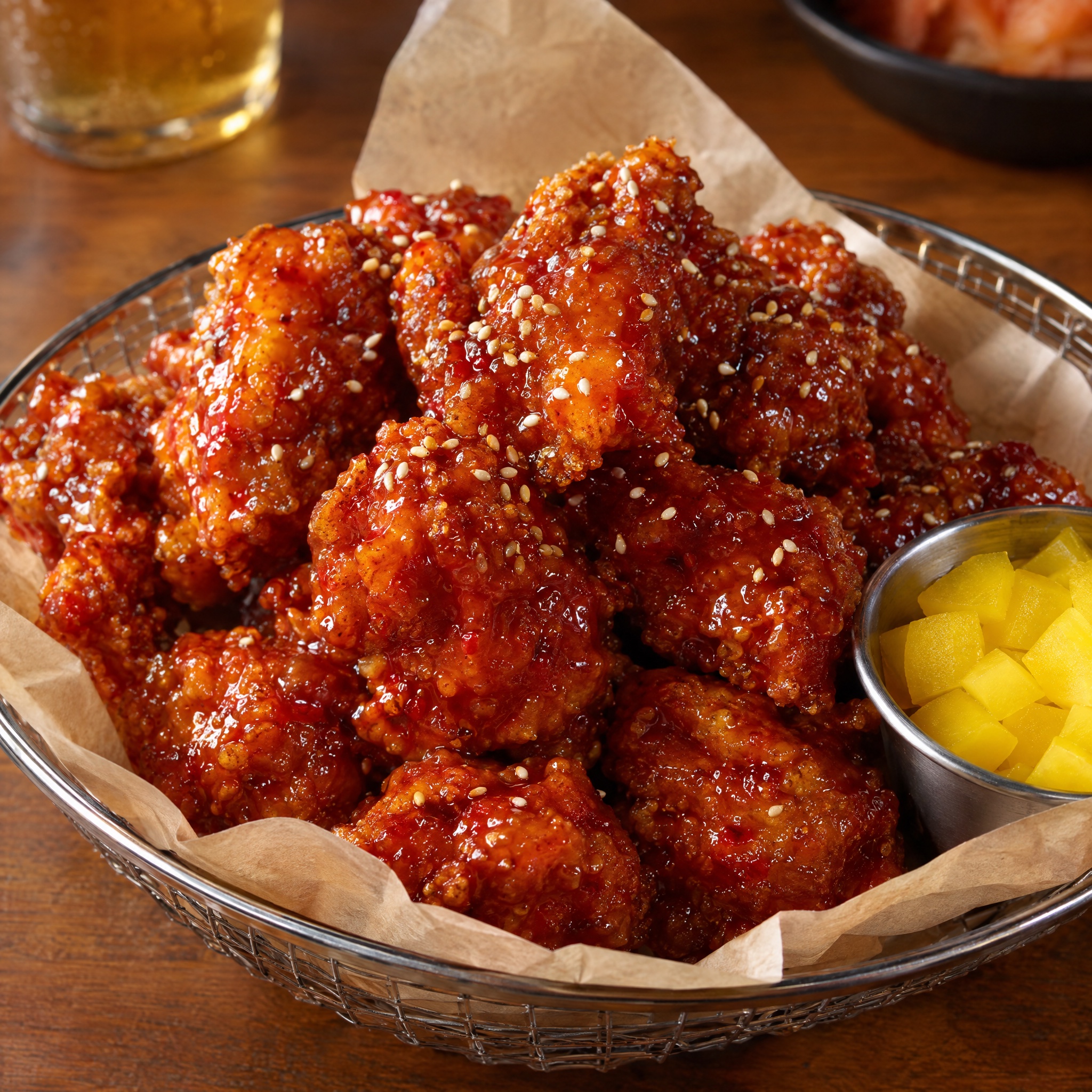
Twice-fried Korean chicken in a sticky sweet-chilli glaze — the reason 'chimaek' became a word.
Recipe by I Want Some Food · Reviewed by the editorial kitchen. Native name preserved: 양념치킨.
0 people cooked this in the public kitchen yet. Kitchen-tested by I Want Some Food. Not a purchased rating.
- Prep
- 25 min
- Cook
- 35 min
- Rest
- None
- Total
- 1 hr
- Difficulty
- Medium
- Spice
- Medium heat
- Cost
- Weeknight budget$8–16 USD · indicative, not a store price
About
Yangnyeom chicken is fried twice so the crust stays shatter-crisp under a glossy gochujang glaze. The meat should stay juicy. The sauce should be sticky, not soup. This is restaurant food you can do in a home pot if you respect oil temperature and you do not crowd the pan. Hold the oil around 170°C for the first fry, rest, then finish hotter so the crust sets before the glaze. Drain hard; wet chicken turns the sauce into soup. The glaze is gochujang, garlic, rice syrup or honey, and a splash of vinegar — sticky, not watery. Done is an audible crust under a thin coat, meat still juicy at the bone; crowding the pot drops the temperature and gives you greasy skin.
Ingredients
Ingredients
- Chicken, wings or small thigh pieces900 g
- Potato or corn starch, potato starch preferred120 g
- Salt4.9 ml
- Black pepper2½ ml
- Sesame seed4.9 ml
- Neutral oil, for frying1 l
Sauce
- Garlic, minced4 clove
- Ginger, grated4.9 ml
- Gochujang44 ml
- Gochugaru4.9 ml
- Soy sauce30 ml
- Honey30 ml
- Sugar15 ml
- Korean rice wine (optional)15 ml
- Toasted sesame oil4.9 ml
Scaling multiplies the written quantities. Baking still prefers a scale.
Steps
Step 1
Pat chicken very dry. Toss with salt, pepper and half the starch. Rest 10 minutes, then dust with the remaining starch so every piece is matte-white.
12 minStep 2
Heat oil to 160°C. Fry in batches 6–8 minutes until cooked through but still pale. Drain on a rack.
16 minWatch: Do not crowd. Wet steam is the enemy of crust.
Step 3
Raise oil to 180°C. Fry again 2–3 minutes until deep gold and loud-crisp. Drain.
8 minStep 4
In a small pan, warm garlic, ginger, gochujang, gochugaru, soy, honey, sugar and rice wine until bubbling and glossy, 2 minutes. Stir in sesame oil.
3 minStep 5
Toss chicken in the sauce just to coat — do not drown it. Sesame seeds. Eat immediately.
Adapt this recipe
The canonical recipe stays intact. Personal versions are labelled. Serving changes are maths, not AI.
Adaptations · 0 / 15 used. Resets 10 October.
Substitutions
Potato starch → Cornflour
Slightly less shatter, still crisp.
Honey → Rice syrup
Closer to many shop glazes.
Tips
- A wire rack beats paper towels. Paper steams the crust.
- If you only fry once, the glaze will soften the coating in minutes.
History & culture
Korean fried chicken is a post-war, post-American-flour story that became its own craft. Yangnyeom is the sauced half of the menu; hunyaseu (plain salted) is the other. Beer on the side is cultural, not mandatory in a recipe. Chimaek — chicken and beer — is the drinking-room pairing, not a legal requirement at home. Delivery bags of whole birds and wing sets run later than sit-down frying rooms. Hunyaeseu (plain salted) is the other half of the same menu; order both if you are feeding a table. Chains taught the world the style; independent shops still argue about crust thickness.
The double-fry and thin starch crust distinguish it from many American fried chickens. Chains exported the idea; home cooks can still make a tray that tastes like a place. Korean fried chicken shops are postwar food, built on cheaper flour, oil and American-style frying after the Korean War. The thin starch crust and double fry are local craft from the late twentieth century, not palace technique. Franchise export in the 1990s and 2000s froze the glossy yangnyeom image. Home pots can copy the method without copying a chain recipe.
Modern adaptation — Potato starch beats wheat flour for the brittle crust. Wings or chopped whole chicken both work.
Provenance: Editorial adaptation.
Questions about this recipe
Answers taken from this dish's times, amounts, swaps and tips — not a chatbot.
How long does Yangnyeom chicken take?
1 hr all in — 25 min prep, 35 min cook. Cook and rest follow the method. Leftover storage and optional extra waits are not included.
How many does it serve?
The recipe is written for 3 trays. Scale the ingredient list on the page if you are cooking for a different number.
How hard is it?
Medium.
How spicy is it?
Medium heat.
What allergens should I watch?
This recipe is labelled for Soy, Wheat, Sesame. Labels are informational — check the packets in your kitchen. This is not medical advice.
Does it fit a diet?
The published recipe is labelled Dairy-free, Nut-free.
What does it cost to cook?
Weeknight budget — about $8–16 USD, as a grocery budget for this recipe, not a restaurant price.
What equipment do I need?
Saucepan, Tongs, Mixing bowl.
How much salt do I put in?
The recipe lists Salt at 1 tsp.
How much gochujang?
3 tbsp of Gochujang.
How much gochugaru?
1 tsp of Gochugaru.
How much soy sauce?
2 tbsp of Soy sauce.
How much honey?
2 tbsp of Honey.
How much sugar?
1 tbsp of Sugar.
How much toasted sesame oil?
1 tsp of Toasted sesame oil.
What can I use instead?
Potato starch → Cornflour. Slightly less shatter, still crisp. Honey → Rice syrup. Closer to many shop glazes.
What should I watch for?
Do not crowd. Wet steam is the enemy of crust.
Any tips from this recipe?
A wire rack beats paper towels. Paper steams the crust. If you only fry once, the glaze will soften the coating in minutes.
Can I use an air fryer?
This method is not written for an air fryer. The core technique on the page still applies.
Similar dishes
Checking your allergy settings…