


Cao lầu
Hoi An's noodle dish: thick, chewy noodles under slices of five-spice braised pork, crisp fried squares, fresh greens and a few spoonfuls of dark, sweet-savoury pan juices.
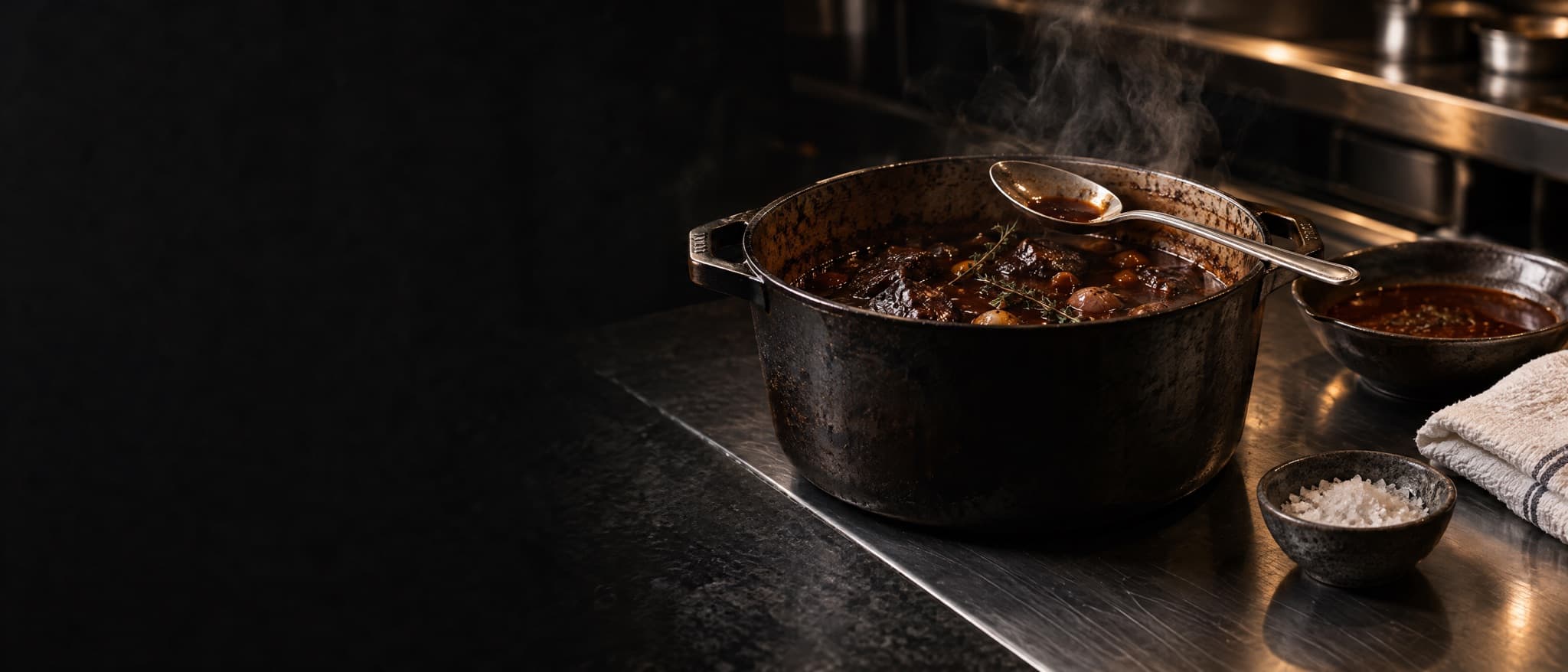
Recipe by I Want Some Food · Reviewed by the editorial kitchen.
- Prep
- 30 min
- Cook
- 1 hr 40 min
- Rest
- 1 hr
- Total
- 3 hr 10 min
- Difficulty
- Medium
- Spice
- Mild
- Cost
- A bit special$16–28 USD · indicative, not a store price
About
Cao lầu is closer to a warm salad than a soup. A handful of thick, chewy yellow noodles goes into a bowl over raw greens and herbs, then slices of pork braised with five-spice, soy and garlic, a few spoonfuls of the reduced braising juice, and crisp squares of fried noodle dough. You toss it at the table with chilli and lime. The true noodles cannot be made outside Hoi An: rice is soaked in lye made from wood ash and water from one old well, then steamed, cut and steamed again. Fresh thick udon is the workable home option, with fried wonton skins for the crunch.
What you'll need
21 ingredients. Tap each one once it's out on the bench.
- Pork
- Noodles
- To serve
Ingredients
Pork
- Pork, boneless shoulder or collar, in one or two pieces600 g
- Chinese five-spice4.9 ml
- Soy sauce44 ml
- Fish sauce15 ml
- Sugar15 ml
- Honey15 ml
- Garlic, crushed4 clove
- Shallot, minced2
- Neutral oil30 ml
- Water400 ml
Noodles
- Udon noodles, fresh thick udon, about three packs600 g
- Turmeric, in the noodle water, for colour (optional)1.2 ml
- Wonton skin, cut into 4 cm squares12 sheet
- Neutral oil, for frying the squares200 ml
To serve
- Lettuce, torn1
- Mint1 bunch
- Thai basil1 bunch
- Mixed herbs, Vietnamese coriander, perilla or a few mustard leaves1 bunch
- Bean sprouts, blanched for 10 seconds150 g
- Lime, in wedges2
Choose one
Chilli jam, Hoi An-style ớt rim, or sliced fresh chilli59 ml
Scaling multiplies the written quantities. Baking still prefers a scale.
Steps
Step 1
Mix the five-spice, soy, fish sauce, sugar, honey, garlic and shallot. Rub it all over the pork and marinate for at least an hour, or overnight in the fridge.
60 min
Step 2
Heat the oil in a heavy saucepan over medium-high heat. Lift the pork from the marinade and brown it on all sides for about 6 minutes, then add the marinade and the water. Cover and simmer gently for an hour, turning once, until tender.
70 min
Step 3
Uncover and simmer for 10 to 15 minutes more, turning the pork, until the liquid has reduced to about 150 ml of dark, glossy sauce. Lift out the pork, rest it for a few minutes and slice it thinly.
15 min
Tip: The sauce should be salty-sweet and thick enough to coat a spoon. Add a splash of water if it goes too far.
Step 4
Heat the frying oil in a wok to 175°C and fry the wonton squares a handful at a time for 30 to 60 seconds, until puffed and golden. Drain on paper.
10 min175°C
Step 5
Bring a pot of water to the boil with the turmeric, if using, and cook the udon for 1 to 2 minutes until hot and loosened. Drain well.
5 min
Step 6
Put lettuce, mint, Thai basil, the other herbs and bean sprouts in the bottom of each bowl. Add the noodles, then the sliced pork, 2 to 3 tbsp of the sauce and a handful of crisp squares. Serve with lime and chilli jam, and toss everything together before eating.
5 min
Nutrition
Per serving · estimate
- Calories
- 857 kcal
- Protein
- 53.8 g
- Carbs
- 60 g
- Fat
- 44.8 g
- Saturated fat
- 10.1 g
- Fibre
- 6.6 g
- Sugar
- 13.1 g
- Sodium
- 1425 mg
Calculated from canonical ingredient data (USDA FoodData Central averages and equivalent published tables). Estimates only.
Allergens
Informational only. Not a medical guarantee. Cross-contamination happens in real kitchens.
- Wheat
- Soy
- Fish
- Eggs
- Dairy-free
- Nut-free
Adapt this recipe
The original recipe stays as it is. Personal versions are labelled. Serving changes are simple maths.
Adaptations · 0 / 15 used. Resets 13 November.
Substitutions
Fresh udon → Dried udon or thick dried rice noodles
Dried udon is fine cooked just to tender. Thick rice noodles are softer and less chewy, which is further from the real thing.
Wonton skins → Rice crackers or prawn crackers
Lighter and less chewy, but they keep the crunch.
Tips
- The bowl should be almost dry, with just enough sauce to coat the noodles. Do not add broth.
- Hoi An cooks use Vietnamese mint, basil, coriander and a peppery mustard green from Trà Quế. Any mix of soft herbs and a few bitter leaves works.
- The braised pork keeps for three days in its sauce in the fridge. Slice it cold, then warm it in the sauce.
History & culture
Cao lầu is Hoi An's own dish, eaten at lunch in the old town and at market stalls, and rarely found anywhere else in Vietnam. Locals eat it with greens from Trà Quế, the herb-growing village just outside town, and a spoon of the town's chilli jam. Visitors are told it only tastes right in Hoi An, which is close to true.
Hoi An was a busy trading port in the 16th and 17th centuries, with Japanese and Chinese merchant quarters. The story goes that cao lầu descends from Japanese udon or Chinese noodles brought by those traders, though nobody can prove it. A few families still make the noodles, with ash from trees on the Cù Lao Chàm islands and water from the Bá Lễ well.
Modern adaptation — True cao lầu noodles are made only in Hoi An, from rice soaked in lye water leached from wood ash and mixed with Bá Lễ well water, then steamed twice; they are dense, chewy and faintly smoky. Nothing sold abroad matches them. Fresh thick udon gives the closest chew, a pinch of turmeric gives the colour, and fried wonton skins stand in for the fried noodle squares.
Provenance: Editorial adaptation.
Questions about this recipe
Answers taken from this dish's times, amounts, swaps and tips.
How long does Cao lầu take?
3 hr 10 min all in — 30 min prep, 1 hr 40 min cook, 1 hr rest. Cook and rest follow the method. Leftover storage and optional extra waits are not included.
How many does it serve?
The recipe is written for 4 bowls. Scale the ingredient list on the page if you are cooking for a different number.
How hard is it?
Medium.
How spicy is it?
Mild.
What allergens should I watch?
This recipe is labelled for Wheat, Soy, Fish, Eggs. Labels are informational — check the packets in your kitchen. This is not medical advice.
Does it fit a diet?
The published recipe is labelled Dairy-free, Nut-free.
11 more questionsFewer questions
What does it cost to cook?
A bit special — about $16–28 USD, as a grocery budget for this recipe, not a restaurant price.
What equipment do I need?
Saucepan, Wok, Spider or strainer, Mixing bowl, Chef's knife, Cutting board.
How much salt do I put in?
This recipe does not list salt as its own ingredient. Saltiness comes from Soy sauce — 3 tbsp; Fish sauce — 1 tbsp. Taste at the end rather than adding a number we did not write.
How much soy sauce?
3 tbsp of Soy sauce.
How much fish sauce?
1 tbsp of Fish sauce.
How much sugar?
1 tbsp of Sugar.
How much honey?
1 tbsp of Honey.
What can I use instead?
Fresh udon → Dried udon or thick dried rice noodles. Dried udon is fine cooked just to tender. Thick rice noodles are softer and less chewy, which is further from the real thing. Wonton skins → Rice crackers or prawn crackers. Lighter and less chewy, but they keep the crunch.
Any tips from this recipe?
The bowl should be almost dry, with just enough sauce to coat the noodles. Do not add broth. Hoi An cooks use Vietnamese mint, basil, coriander and a peppery mustard green from Trà Quế. Any mix of soft herbs and a few bitter leaves works. The braised pork keeps for three days in its sauce in the fridge. Slice it cold, then warm it in the sauce.
Can I prepare this ahead?
Mix the five-spice, soy, fish sauce, sugar, honey, garlic and shallot. Rub it all over the pork and marinate for at least an hour, or overnight in the fridge.
Can I use an air fryer?
This method is not written for an air fryer. The core technique on the page still applies.
Similar dishes
Mì Quảng
Quảng Nam's turmeric noodles: wide rice noodles with a small, intense pork and prawn broth, roasted peanuts, toasted sesame rice crackers and a heap of herbs.
Medium

Bún chả
Hanoi grilled pork, rice noodles, a sweet-sour dipping broth, and a pile of herbs.
Medium

Char siu
叉烧
Cantonese roast pork, red-edged, sticky — the barbecue that is not American barbecue.
Medium

Yaki Udon
Boil some water in a large saucepan. Add 250ml cold water and the udon noodles. (As they are so thick, adding cold water helps them to cook a little bit slower so the middle cooks through). If using frozen or fresh noodl
Medium