

Dakgangjeong
닭강정
Bite-size fried chicken in a sweet-soy-chilli glaze — snack-bar energy, not a whole bird.
Recipe by I Want Some Food · Reviewed by the editorial kitchen. Native name preserved: 닭강정.
0 people cooked this in the public kitchen yet. Kitchen-tested by I Want Some Food. Not a purchased rating.
- Prep
- 20 min
- Cook
- 25 min
- Rest
- None
- Total
- 45 min
- Difficulty
- Medium
- Spice
- Medium heat
- Cost
- Weeknight budget$8–16 USD · indicative, not a store price
About
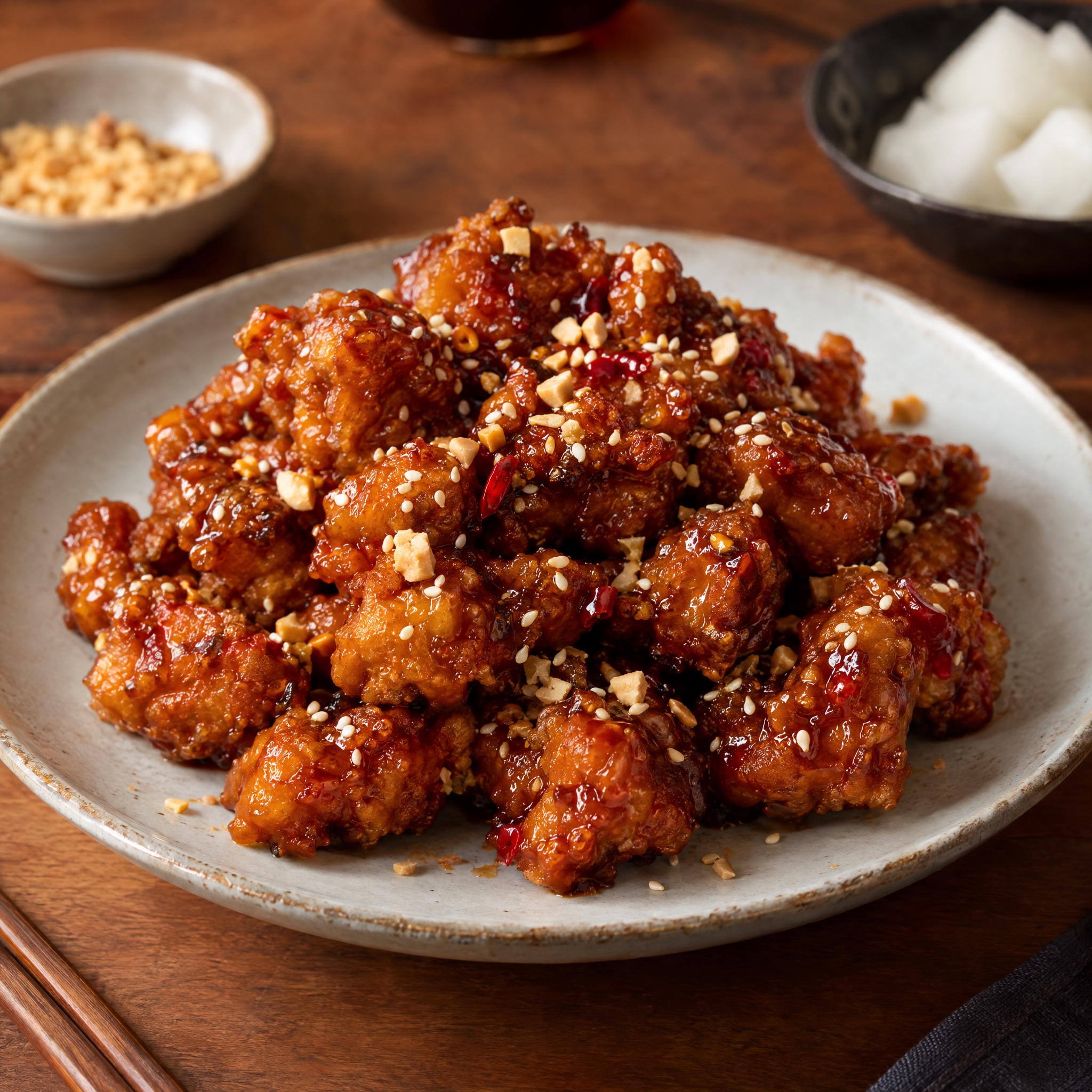
Dakgangjeong is smaller, stickier and often sweeter than yangnyeom chicken. Think crunchy morsels you eat with a toothpick or over rice. The glaze is soy, garlic, a little gochujang and enough sugar to shine. It is a market and lunchbox food as much as a drinking food. Cut the chicken small, dredge in starch, and fry until the pieces are truly dry before any glaze. Toss off the heat so the soy-garlic-sugar coat shines instead of burning. Done is separate, crunchy morsels you can pick up without a sauce trail on the plate. A steaming pile in a covered bowl will wilt the crust in minutes; rice syrup holds a glaze better than granulated sugar alone.
Ingredients
Ingredients
- Chicken, boneless thigh, bite-size700 g
- Salt2½ ml
- Toasted sesame oil4.9 ml
- Sesame seed4.9 ml
- Neutral oil, for frying800 ml
Scaling multiplies the written quantities. Baking still prefers a scale.
Steps
Step 1
Toss chicken with salt and starch. Fry at 170°C until cooked and crisp, in batches, 5–7 minutes. Drain.
15 minStep 2
Simmer soy, gochujang, garlic, honey, sugar and rice wine until syrupy, 2–3 minutes.
3 minStep 3
Toss chicken through the glaze off the heat. Sesame oil and seeds. Serve at once.
Adapt this recipe
The canonical recipe stays intact. Personal versions are labelled. Serving changes are maths, not AI.
Adaptations · 0 / 15 used. Resets 10 October.
Substitutions
Thigh → Wingettes
More bone, same glaze.
Tips
- Peanuts or crushed almonds on top are a common shop finish.
- A second brief fry before saucing keeps the crunch longer.
History & culture
You will find it in traditional markets, school-adjacent snack shops, and now in K-food pop-ups. It is related to fried chicken culture without being a whole-bird restaurant plate. Traditional markets still sell it in paper trays with a toothpick, next to other snack stalls rather than fried-chicken dining rooms. Lunchboxes pack it because it stays edible at room temperature longer than a wet stew. Kids treat it as a treat; drinkers treat it as anju. Pop-up K-food counters abroad often collapse it into 'Korean fried chicken' — it is smaller and sweeter than yangnyeom.
Gangjeong was originally a sweet rice puff. The chicken version borrowed the sticky-sweet idea. We are writing the common home glaze, not a particular market stall. Gangjeong named a sweet rice confection first; the chicken snack borrowed that sticky-sweet idea in the late twentieth century. It is market and school-adjacent food, not a documented court dish. This glaze is a home-kitchen average, not a stall formula we are claiming to steal. Treat it as modern snack craft that shares a frying oil with the later chicken chains.
Regional variation
Provenance: Editorial adaptation.
Questions about this recipe
Answers taken from this dish's times, amounts, swaps and tips — not a chatbot.
How long does Dakgangjeong take?
45 min all in — 20 min prep, 25 min cook. Cook and rest follow the method. Leftover storage and optional extra waits are not included.
How many does it serve?
The recipe is written for 3 plates. Scale the ingredient list on the page if you are cooking for a different number.
How hard is it?
Medium.
How spicy is it?
Medium heat.
What allergens should I watch?
This recipe is labelled for Soy, Wheat, Sesame. Labels are informational — check the packets in your kitchen. This is not medical advice.
Does it fit a diet?
The published recipe is labelled Dairy-free, Nut-free.
What does it cost to cook?
Weeknight budget — about $8–16 USD, as a grocery budget for this recipe, not a restaurant price.
What equipment do I need?
Saucepan, Mixing bowl.
How much salt do I put in?
The recipe lists Salt at ½ tsp.
How much soy sauce?
3 tbsp of Soy sauce.
How much gochujang?
1 tbsp of Gochujang.
How much honey?
2 tbsp of Honey.
How much sugar?
1 tbsp of Sugar.
How much toasted sesame oil?
1 tsp of Toasted sesame oil.
What can I use instead?
Thigh → Wingettes. More bone, same glaze.
Any tips from this recipe?
Peanuts or crushed almonds on top are a common shop finish. A second brief fry before saucing keeps the crunch longer.
Can I use an air fryer?
This method is not written for an air fryer. The core technique on the page still applies.
Similar dishes
Checking your allergy settings…