

Dakbokkeumtang
닭볶음탕
Chicken and potato braised in a gochujang pot until the sauce clings — also called dakdori-tang, still a weeknight hero.
Recipe by I Want Some Food · Reviewed by the editorial kitchen. Native name preserved: 닭볶음탕.
0 people cooked this in the public kitchen yet. Kitchen-tested by I Want Some Food. Not a purchased rating.
- Prep
- 20 min
- Cook
- 40 min
- Rest
- None
- Total
- 1 hr
- Difficulty
- Easy
- Spice
- Hot
- Cost
- Weeknight budget$8–16 USD · indicative, not a store price
About
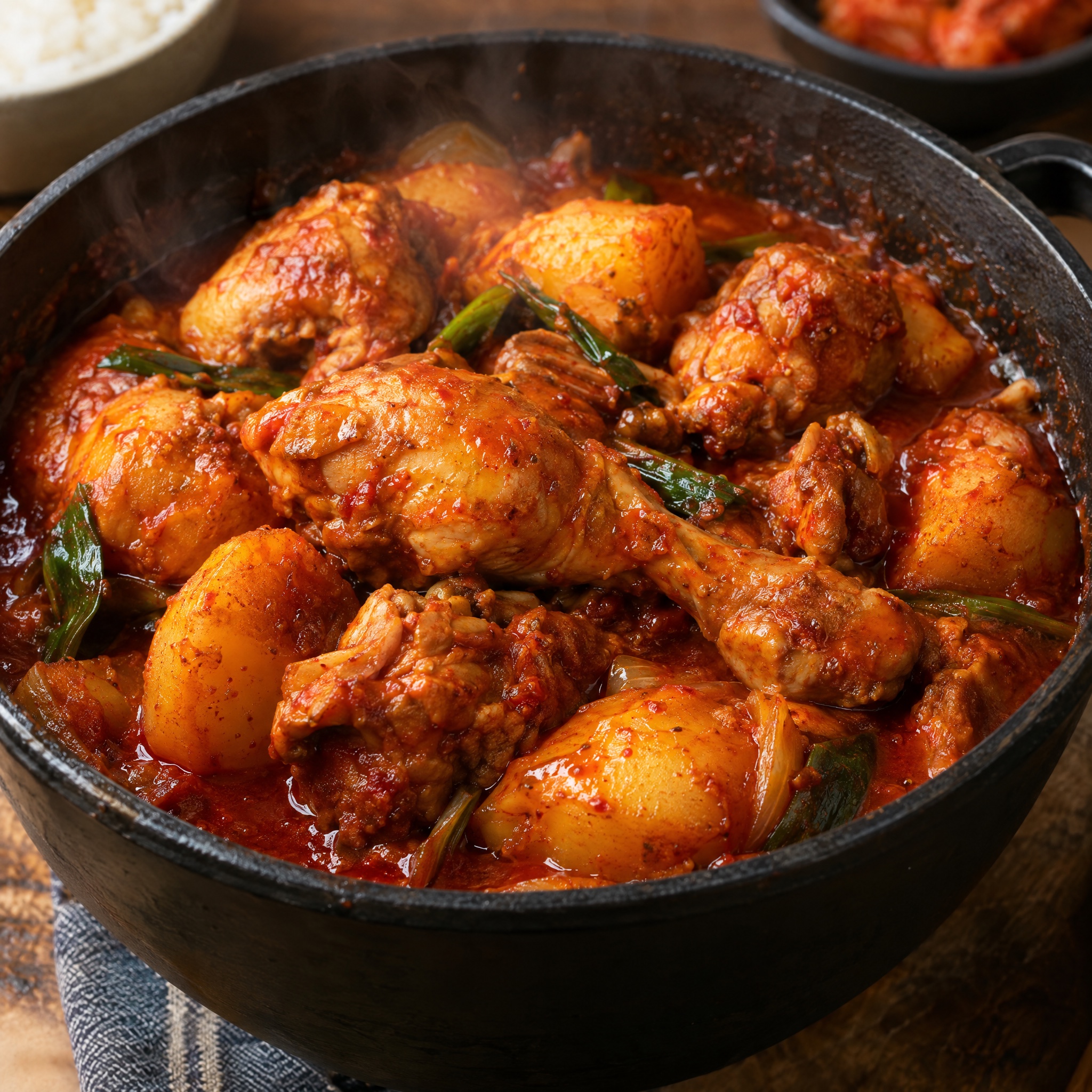
Dakbokkeumtang is chicken pieces, potato and carrot simmered in a red sauce until the meat is tender and the potatoes have a chilli crust. It is home food. The two names (dakbokkeumtang / dakdoritang) are a history argument; the pot is the same. Brown skin-on chicken pieces, then simmer with potato and carrot in a gochujang-gochugaru sauce, uncovered at the end so it reduces. The potatoes should pick up a chilli crust. Done is tender meat and a jammy sauce that clings to the veg, not a thin red broth. If the chicken shreds before the potatoes cook, your pieces were too small or the heat was too wild; salt late; the paste is already salty.
Ingredients
Scaling multiplies the written quantities. Baking still prefers a scale.
Steps
Step 1
Mix gochujang, gochugaru, soy, sugar, garlic, ginger and water. Optionally blanch the chicken 2 minutes and drain if you want a cleaner pot.
5 minStep 2
Put chicken, potato, carrot and onion in a wide pot. Pour the sauce over. Simmer covered 25 minutes, then uncovered until the sauce is thick and the potatoes are tender, 10–15 minutes more.
40 minStep 3
Sesame oil and spring onion. Rice. The leftover sauce is why you cooked extra rice.
Adapt this recipe
The canonical recipe stays intact. Personal versions are labelled. Serving changes are maths, not AI.
Adaptations · 0 / 15 used. Resets 10 October.
Substitutions
Bone-in chicken → Thigh fillets
Shorten the simmer so they do not dry.
Tips
- A handful of tteok in the last 8 minutes is a modern pot.
- Bone-in chicken tastes better. Boneless is faster.
History & culture
A family pot with rice. Not fried chicken, not samgyetang. This is the spicy braise in the middle. Sunday family pots and next-day lunchboxes claim it more than dining rooms. It sits between fried chicken and samgyetang and is neither. Households argue about potato-to-chicken ratio and then ignore the result because the rice is waiting. Spice level follows the youngest adult, not the recipe card.
The older name dakdoritang mixed Korean and Japanese words; dakbokkeumtang is the later Korean-only name. We use the current common name and mention both. An older name, dakdoritang, mixed a Japanese word for bird into a Korean pot; the later Korean-only label is the current standard. That rename is modern linguistic housekeeping, not a new stew. The home braise itself is late-twentieth-century everyday food. We use the current name and mention both so the argument has somewhere to sit.
Traditional
Provenance: Editorial adaptation.
Questions about this recipe
Answers taken from this dish's times, amounts, swaps and tips — not a chatbot.
How long does Dakbokkeumtang take?
1 hr all in — 20 min prep, 40 min cook. Cook and rest follow the method. Leftover storage and optional extra waits are not included.
How many does it serve?
The recipe is written for 4 pots. Scale the ingredient list on the page if you are cooking for a different number.
How hard is it?
Easy.
How spicy is it?
Hot.
What allergens should I watch?
This recipe is labelled for Soy, Sesame. Labels are informational — check the packets in your kitchen. This is not medical advice.
Does it fit a diet?
The published recipe is labelled Gluten-free, Dairy-free, Nut-free.
What does it cost to cook?
Weeknight budget — about $8–16 USD, as a grocery budget for this recipe, not a restaurant price.
What equipment do I need?
Dutch oven.
How much salt do I put in?
This recipe does not list salt as its own ingredient. Saltiness comes from Gochujang — 3 tbsp; Soy sauce — 3 tbsp. Taste at the end rather than adding a number we did not write.
How much gochujang?
3 tbsp of Gochujang.
How much gochugaru?
2 tbsp of Gochugaru.
How much soy sauce?
3 tbsp of Soy sauce.
How much sugar?
1 tbsp of Sugar.
How much toasted sesame oil?
1 tbsp of Toasted sesame oil.
What can I use instead?
Bone-in chicken → Thigh fillets. Shorten the simmer so they do not dry.
Any tips from this recipe?
A handful of tteok in the last 8 minutes is a modern pot. Bone-in chicken tastes better. Boneless is faster.
Can I prepare this ahead?
Sesame oil and spring onion. Rice. The leftover sauce is why you cooked extra rice.
Can I use an air fryer?
This method is not written for an air fryer. The core technique on the page still applies.
Similar dishes
Checking your allergy settings…