


Kalguksu
칼국수
Knife-cut wheat noodles in a mild anchovy-kelp or chicken broth — the bowl you want when the air is cold.
Recipe by I Want Some Food · Reviewed by the editorial kitchen. Native name preserved: 칼국수.
0 people cooked this in the public kitchen yet. Kitchen-tested by I Want Some Food. Not a purchased rating.
- Prep
- 25 min
- Cook
- 30 min
- Rest
- None
- Total
- 55 min
- Difficulty
- Medium
- Spice
- No chilli
- Cost
- Weeknight budget$8–16 USD · indicative, not a store price
About
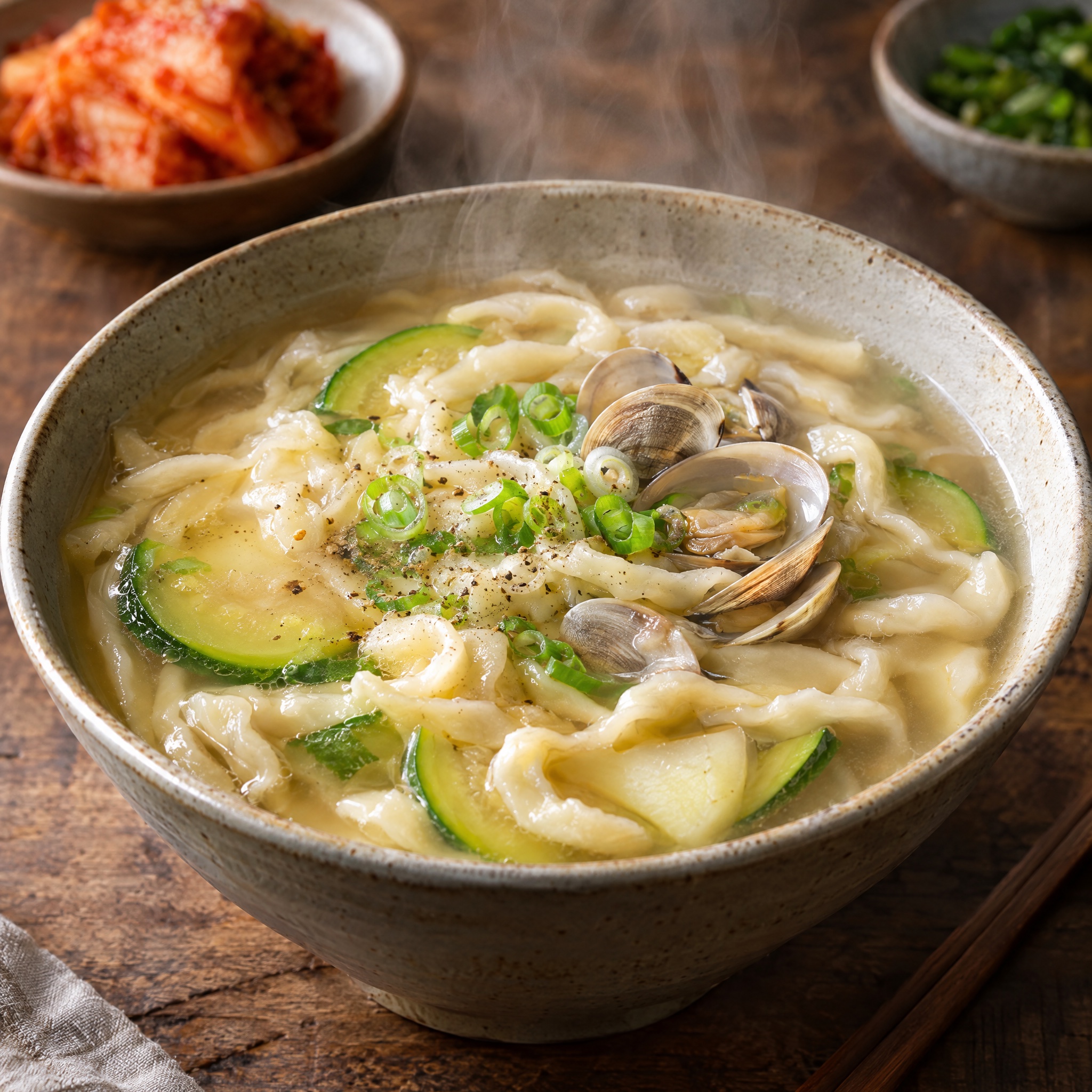
Kalguksu means knife noodles. The broth is usually clean: anchovy-kelp or chicken, sometimes clams. The noodles are thick and handmade if you have 20 minutes, dried if you do not. A little zucchini and potato in the pot is home style. Chilli is on the side, not in the soup. Rest the wheat dough so it rolls without springing back, and cut the noodles thick. Boil them in the broth only until they are soft-chewy; a long boil turns the soup to wallpaper paste. Anchovy-kelp, chicken or clams should already taste seasoned before the noodles go in. Zucchini and potato are home-style additions; done is a clean soup with noodles that still have a bite, and chilli stays on the side.
Ingredients
- Wheat noodles350 g
- Water, anchovy-kelp or light chicken stock1.4 l
- Dashima (optional)8 g
- Dried anchovy (optional)15 g
- Zucchini1 small
- Potato1 small
- Garlic3 clove
- Soy sauce15 ml
- Salt4.9 ml
Scaling multiplies the written quantities. Baking still prefers a scale.
Steps
Step 1
Simmer dashima and anchovies in the water 15 minutes, then strain. Or use light chicken stock.
15 minStep 2
Add potato, zucchini and garlic. Simmer 8 minutes. Season with soy and salt — the broth should be quiet, not salty soup.
8 minStep 3
Boil noodles separately until just tender. Divide into bowls, ladle broth and vegetables, finish with spring onion. Gochugaru on the side.
Adapt this recipe
The canonical recipe stays intact. Personal versions are labelled. Serving changes are maths, not AI.
Adaptations · 0 / 15 used. Resets 10 October.
Substitutions
Anchovy stock → Chicken stock
A common home pot, especially for kids.
Tips
- Handmade dough is just flour, water and salt, rolled and cut. Dried kalguksu noodles are honest.
- Clams in the last 3 minutes make haemul-kalguksu.
History & culture
A rainy-day and winter restaurant staple. Some regions do a richer sesame or perilla broth. This is the clear pot. Rainy-day restaurants still sell it as the default wheat bowl. Summer coastal rooms do clam kalguksu; winter houses go chicken. A few districts finish with crushed sesame or perilla for a heavier broth — that is a variant, not this clear pot. Grandmothers roll it for lunch; flats buy dried knife-cut noodles and do not apologise.
Wheat noodles as everyday food expanded in the 20th century. The handmade cut is the name. Wheat as everyday noodle food expanded with twentieth-century imports and aid, not because the peninsula was always a wheat culture. Handmade knife-cut noodles became a restaurant selling point. We are not claiming an ancient national wheat staple. The name is the method: noodles cut with a knife, in soup.
Traditional
Provenance: Editorial adaptation.
Questions about this recipe
Answers taken from this dish's times, amounts, swaps and tips — not a chatbot.
How long does Kalguksu take?
55 min all in — 25 min prep, 30 min cook. Cook and rest follow the method. Leftover storage and optional extra waits are not included.
How many does it serve?
The recipe is written for 3 bowls. Scale the ingredient list on the page if you are cooking for a different number.
How hard is it?
Medium.
How spicy is it?
No chilli.
What allergens should I watch?
This recipe is labelled for Wheat, Fish. Labels are informational — check the packets in your kitchen. This is not medical advice.
Does it fit a diet?
The published recipe is labelled Pescatarian, Dairy-free, Nut-free.
What does it cost to cook?
Weeknight budget — about $8–16 USD, as a grocery budget for this recipe, not a restaurant price.
What equipment do I need?
Saucepan, Stockpot.
How much salt do I put in?
The recipe lists Salt at 1 tsp.
How much soy sauce?
1 tbsp of Soy sauce.
What can I use instead?
Anchovy stock → Chicken stock. A common home pot, especially for kids.
Any tips from this recipe?
Handmade dough is just flour, water and salt, rolled and cut. Dried kalguksu noodles are honest. Clams in the last 3 minutes make haemul-kalguksu.
Can I use an air fryer?
This method is not written for an air fryer. The core technique on the page still applies.
Similar dishes
Checking your allergy settings…