


Nikujaga
肉じゃが
Meat and potatoes simmered in soy and dashi until the house smells like someone is home.
Recipe by I Want Some Food · Reviewed by the editorial kitchen. Native name preserved: 肉じゃが.
0 people cooked this in the public kitchen yet. Kitchen-tested by I Want Some Food. Not a purchased rating.
- Prep
- 15 min
- Cook
- 30 min
- Rest
- None
- Total
- 45 min
- Difficulty
- Easy
- Spice
- No chilli
- Cost
- Weeknight budget$8–16 USD · indicative, not a store price
About
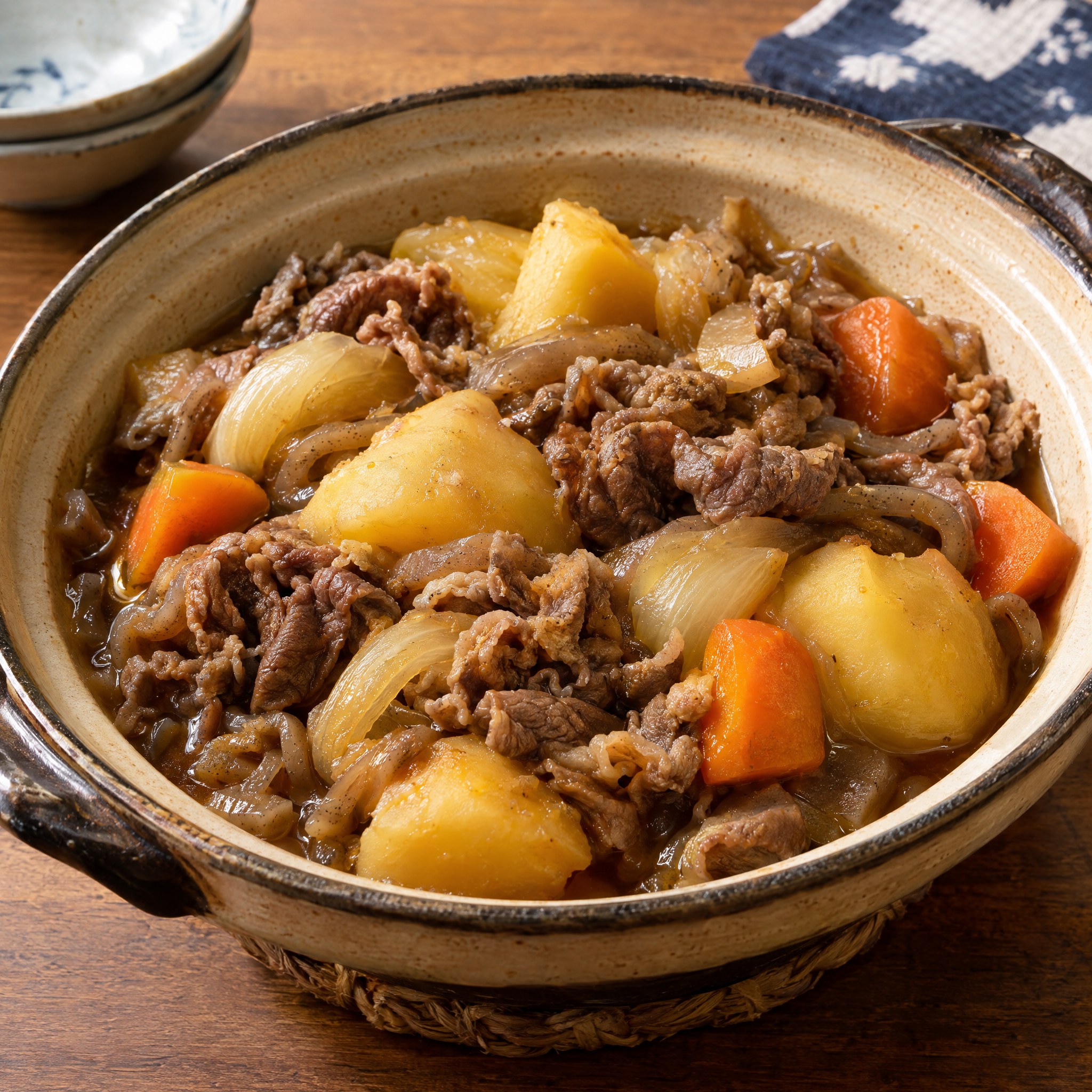
Nikujaga is beef (or pork), potato, onion and carrot in a sweet-savoury broth. It should be glossy, not swimming. The potatoes drink the soy. It is the Japanese pot roast that is not a roast — a simmer you eat with rice. Waxy potatoes hold their shape; floury ones collapse into the liquor and you get gravy with lumps. Brown the meat quickly, then simmer gently or the slices curl into leather. Do not drown the pot — the liquid should come most of the way up, not over the rim. A drop of oil on the surface at the end is gloss, not a fry-up. If it tastes thin, you under-reduced or under-salted, not because you skipped wine. Rest ten minutes so the potatoes finish drinking.
Ingredients
Scaling multiplies the written quantities. Baking still prefers a scale.
Steps
Step 1
In a pot, combine dashi, soy, rice wine and sugar. Add onion, potato and carrot. Simmer 15 minutes.
15 minStep 2
Add beef. Simmer until the potatoes are tender and the liquid has reduced to a glaze, 10–12 minutes. Do not stir into mash.
12 minStep 3
Rest 10 minutes if you can — it tastes more like itself. Rice.
Adapt this recipe
The canonical recipe stays intact. Personal versions are labelled. Serving changes are maths, not AI.
Adaptations · 0 / 15 used. Resets 10 October.
Substitutions
Beef → Pork
Still nikujaga.
Tips
- Shirataki noodles are a common addition. They take on the broth.
- Pork belly instead of beef is a western-Japan pot.
History & culture
Home cooking more than restaurants. The dish people say tastes like their mother's, which is a lot of pressure for potatoes. This is the smell of a weeknight kitchen more than a dining-out dish. People compare pots the way they compare miso: too sweet, too dark, not enough onion. It sits in the fridge and becomes better lunch than dinner. Serving it without rice confuses the plate. A handful of green beans at the end is a household flourish, not a rule from a ministry.
Often traced to a Meiji-era attempt to make a British stew with soy instead of gravy. The result is thoroughly Japanese now. Naval and household cooks who met European stews had soy, sugar, and a different idea of a 'sauce'. The pot that survived is a simmer with Japanese pantry logic, not a facsimile of Sunday gravy. Meat was the expensive part for a long time, which is why the vegetables carry the volume. Later supermarket beef made it ordinary. Ordinary is the point of its history.
Traditional
Provenance: Editorial adaptation.
Questions about this recipe
Answers taken from this dish's times, amounts, swaps and tips — not a chatbot.
How long does Nikujaga take?
45 min all in — 15 min prep, 30 min cook. Cook and rest follow the method. Leftover storage and optional extra waits are not included.
How many does it serve?
The recipe is written for 4 pots. Scale the ingredient list on the page if you are cooking for a different number.
How hard is it?
Easy.
How spicy is it?
No chilli.
What allergens should I watch?
This recipe is labelled for Soy. Labels are informational — check the packets in your kitchen. This is not medical advice.
Does it fit a diet?
The published recipe is labelled Gluten-free, Dairy-free, Nut-free.
What does it cost to cook?
Weeknight budget — about $8–16 USD, as a grocery budget for this recipe, not a restaurant price.
What equipment do I need?
Saucepan.
How much salt do I put in?
This recipe does not list salt as its own ingredient. Saltiness comes from Soy sauce — 4 tbsp. Taste at the end rather than adding a number we did not write.
How much soy sauce?
4 tbsp of Soy sauce.
How much sugar?
1½ tbsp of Sugar.
What can I use instead?
Beef → Pork. Still nikujaga.
Any tips from this recipe?
Shirataki noodles are a common addition. They take on the broth. Pork belly instead of beef is a western-Japan pot.
Can I use an air fryer?
This method is not written for an air fryer. The core technique on the page still applies.
Similar dishes
Checking your allergy settings…