


Japanese curry rice
カレーライス
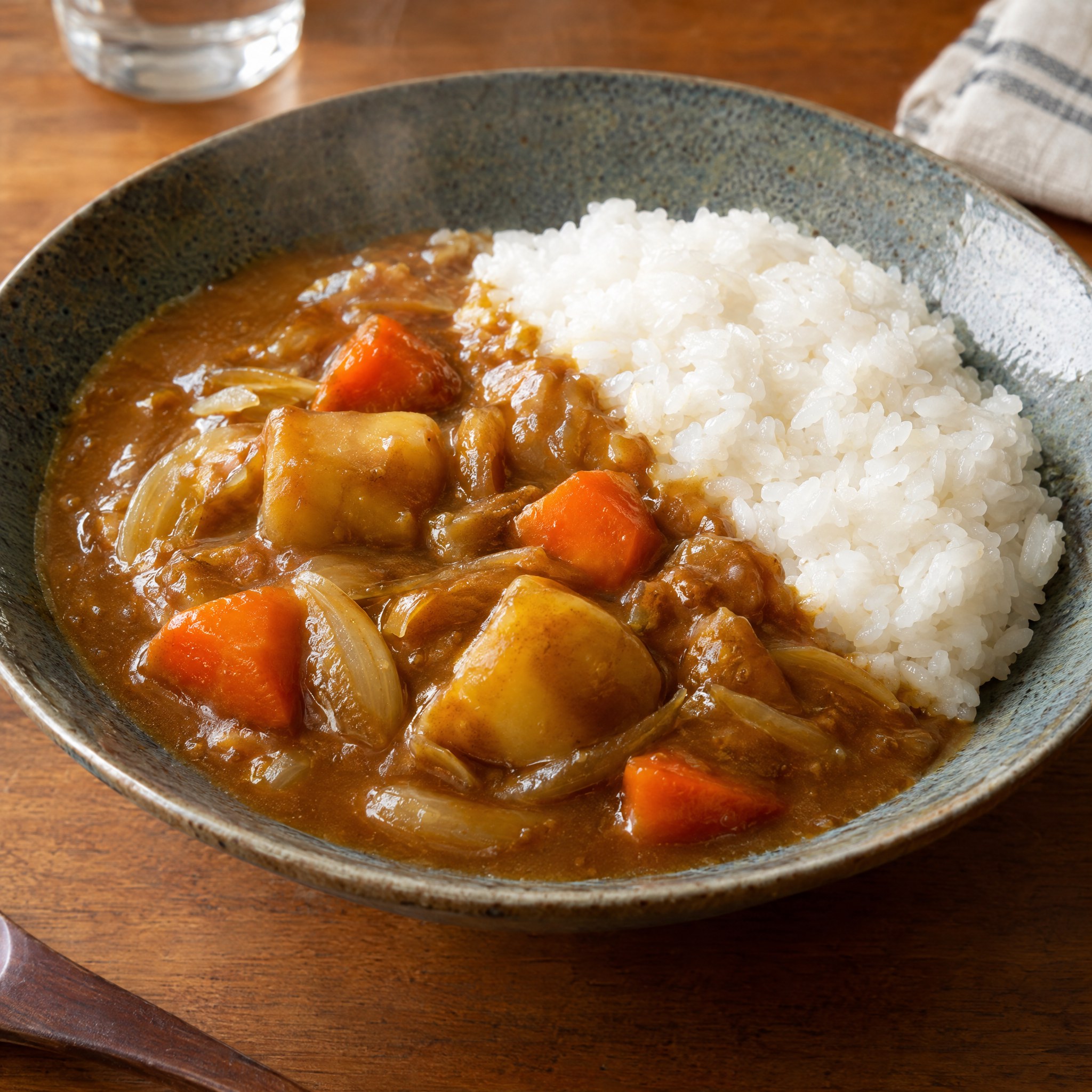
The everyday Japanese curry — mild, a little sweet, thick enough to catch on rice, no cutlet required.
Recipe by I Want Some Food · Reviewed by the editorial kitchen. Native name preserved: カレーライス.
0 people cooked this in the public kitchen yet. Kitchen-tested by I Want Some Food. Not a purchased rating.
- Prep
- 15 min
- Cook
- 40 min
- Rest
- None
- Total
- 55 min
- Difficulty
- Easy
- Spice
- Mild
- Cost
- Weeknight budget$8–16 USD · indicative, not a store price
About
Kare raisu is the national comfort stew: onion cooked until sweet, carrot, potato, and a roux that is closer to gravy than to Indian masala. Most homes use a boxed roux. This recipe lets you use the box or a butter-flour-spice stand-in. It should be mild enough for children and still savoury. Onions want time more than spice does. If they are still sharp, the pot will taste of raw allium no matter how much roux you melt. Add the block off the boil or it catches and tastes of flour paste. Potato pieces should be even or some dissolve while others stay hard. A teaspoon of soy or Worcestershire at the end is a house adjustment, not a scandal. Cool leftovers promptly; this stew thickens in the fridge and wants a splash of water when you reheat, stirred gently so the potatoes survive.
Ingredients
- Onion, sliced3
- Potato3 medium
- Chicken, bite-size, or skip for vegetable curry400 g
- Butter30 ml
- Wheat flour, skip if using a roux block30 ml
- Garam masala15 ml
- Turmeric4.9 ml
- Soy sauce15 ml
- Apple or Korean pear, grated (optional)½
- Water800 ml
- Rice, uncooked, to serve400 g
Scaling multiplies the written quantities. Baking still prefers a scale.
Steps
Step 1
Brown chicken if using; lift out. Cook onions in butter until they slump and go gold, 15 minutes. This is the flavour.
18 minStep 2
Add carrot, potato, spices and flour. Stir. Add water, soy and apple. Return chicken. Simmer until the vegetables are tender and the sauce coats a spoon, 20 minutes. A roux block goes in at the end instead of flour and spice.
20 minStep 3
Rice, a lake of curry, pickle if you have it.
Adapt this recipe
The canonical recipe stays intact. Personal versions are labelled. Serving changes are maths, not AI.
Adaptations · 0 / 15 used. Resets 10 October.
Substitutions
Chicken → Beef cubes, simmered longer
The other weekday protein.
Tips
- A square of chocolate or a spoon of honey is a home secret. A little is enough.
- It is better the next day.
History & culture
School lunches, home Fridays, and the dish more Japanese people eat weekly than sushi. A fukujinzuke pickle on the side is usual. Friday curry is a scheduling joke that is also true. Families keep a favourite brand the way they keep a tea. School trays taught a generation the colour and the mild heat. Raisins, cheese, or a fried egg on top are household politics. Eating it with a spoon is normal. Insisting on chopsticks is performance. Fukujinzuke between spoonfuls is there to reset your mouth between bites of brown.
British naval curry entered in the Meiji era. Japan thickened it, sweetened it, and put it on short-grain rice. A naval stew with British spice logic was rebuilt around short-grain rice, a sweet onion base, and later a chocolate-dark roux industry. That industry is the modern history: blocks, spice levels printed as numbers, and a national taste for mild heat. Home from-scratch versions exist and are fine. They are not more 'real' than the box that actually feeds people on a wet night. Reality is the box, the rice cooker, and the leftover lunch.
Modern adaptation
Provenance: Editorial adaptation.
Questions about this recipe
Answers taken from this dish's times, amounts, swaps and tips — not a chatbot.
How long does Japanese curry rice take?
55 min all in — 15 min prep, 40 min cook. Cook and rest follow the method. Leftover storage and optional extra waits are not included.
How many does it serve?
The recipe is written for 4 plates. Scale the ingredient list on the page if you are cooking for a different number.
How hard is it?
Easy.
How spicy is it?
Mild.
What allergens should I watch?
This recipe is labelled for Wheat, Soy. Labels are informational — check the packets in your kitchen. This is not medical advice.
Does it fit a diet?
The published recipe is labelled Dairy-free, Nut-free.
What does it cost to cook?
Weeknight budget — about $8–16 USD, as a grocery budget for this recipe, not a restaurant price.
What equipment do I need?
Dutch oven.
How much salt do I put in?
This recipe does not list salt as its own ingredient. Saltiness comes from Soy sauce — 1 tbsp. Taste at the end rather than adding a number we did not write.
How much soy sauce?
1 tbsp of Soy sauce.
What can I use instead?
Chicken → Beef cubes, simmered longer. The other weekday protein.
Any tips from this recipe?
A square of chocolate or a spoon of honey is a home secret. A little is enough. It is better the next day.
Can I prepare this ahead?
It is better the next day.
Can I use an air fryer?
This method is not written for an air fryer. The core technique on the page still applies.
Similar dishes
Checking your allergy settings…