


Tomato egg stir-fry
番茄炒蛋
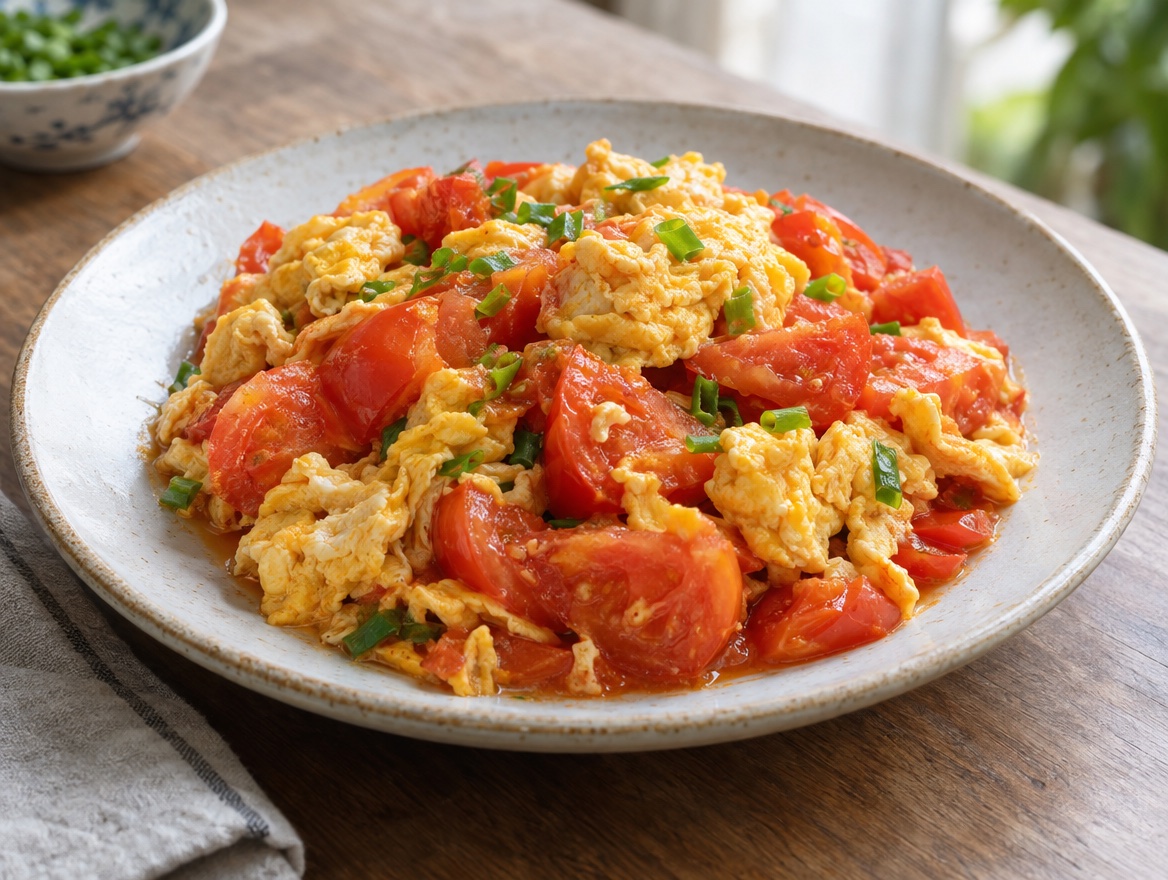
The Chinese home stir-fry of scrambled egg and jammy tomato — weeknight rice, not a brunch flex.
Recipe by I Want Some Food · Reviewed by the editorial kitchen. Native name preserved: 番茄炒蛋.
0 people cooked this in the public kitchen yet. Kitchen-tested by I Want Some Food. Not a purchased rating.
- Prep
- 10 min
- Cook
- 10 min
- Rest
- None
- Total
- 20 min
- Difficulty
- Easy
- Spice
- No chilli
- Cost
- Cheap nightUnder $8 USD · indicative, not a store price
About
Tomato and egg is the dish people cook when they get home late in China: eggs scrambled softly, tomatoes cooked until they slump into a sweet-sour sauce, then folded together. Sugar is not a scandal; it balances pale winter tomatoes. Rice is mandatory. Ketchup is a diaspora shortcut some families own and others deny. Scramble the eggs softly in a little oil until they are just set, then take them out so they do not toughen while the tomatoes cook. Use ripe fruit if you can; pale winter tomatoes need a pinch of sugar and a longer slump to make a sauce. Some cooks add a splash of water or stock so there is enough liquor for rice. White pepper, a dash of Shaoxing wine, and spring onion at the end are household knobs. Fold the eggs back through so they stay in large curds, not scrambled dust. The pan should be hot enough to sizzle, not so hot that the tomatoes scorch into jam. Serve immediately over rice. Leftovers reheat, but the eggs go firmer.
Ingredients
Scaling multiplies the written quantities. Baking still prefers a scale.
Steps
Step 1
Beat eggs with a pinch of salt. Scramble in a hot oiled wok until just set and still glossy. Remove.
3 minStep 2
More oil, tomato, optional garlic. Cook until the pieces slump and the juices thicken, 4–5 minutes. Add sugar and salt.
5 minStep 3
Return eggs, fold once or twice. Spring onion. Serve immediately on rice.
2 min
Adapt this recipe
The canonical recipe stays intact. Personal versions are labelled. Serving changes are maths, not AI.
Adaptations · 0 / 15 used. Resets 10 October.
Substitutions
Fresh tomato → Tinned chopped plus a pinch more sugar
Winter version. Still home food.
Tips
- A splash of water helps pale tomatoes become a sauce.
- Some cooks add a little ketchup. Name it if you do.
History & culture
Dorm food, first-apartment food, the thing parents ask if you can cook. Every household has a texture preference — wetter or drier, more sugar or more salt. This is the dish Chinese students cook in a first kitchen because the ingredients are everywhere and the method is short. Parents use it as a competency test: can you feed yourself without ordering in. Wetness is a family setting — some want a spoonable sauce, others a drier scramble. Ketchup appears in diaspora kitchens when tomatoes are expensive or tasteless, and that shortcut is both loved and denied at the same table. It is not banquet food and not a restaurant signature; it is weeknight protein. Eat it with plain rice, maybe a cucumber salad. Nobody needs a wok to make it well, only a frying pan that gets hot. In student halls the dish is a peace offering and a brag: if you can get the sauce glossy, you are considered able to live. Order it in a home-style restaurant and you will see how wet the cook's family likes it, which is information, not a verdict.
Tomatoes are New World; the pairing with eggs is 20th-century Chinese home cooking that became national comfort. Tomatoes reached China as a New World crop and were slow to become everyday food; the pairing with eggs is widely dated to twentieth-century home cooking, spreading with urban kitchens, bottled sauces, and cheaper eggs. It became a national comfort not because an emperor named it, but because it is fast, cheap, and tastes of sweet-sour tomato against soft egg. Republican-era and later cookbooks start to treat it as ordinary. Diaspora versions followed migrants into student houses worldwide. Sugar in the pan tracks pale tomatoes more than a fixed tradition. There is no classical Jiangnan canon that this dish must obey. It is modern Chinese domestic food that happens to be beloved. Urban markets, bottled ketchup, and cheaper protein after mid-century all helped a simple stir-fry become the thing people cook without a recipe. That recency is not a flaw. Plenty of beloved Chinese home food is twentieth-century and still counts.
Traditional
Provenance: Editorial adaptation.
Questions about this recipe
Answers taken from this dish's times, amounts, swaps and tips — not a chatbot.
How long does Tomato egg stir-fry take?
20 min all in — 10 min prep, 10 min cook. Cook and rest follow the method. Leftover storage and optional extra waits are not included.
How many does it serve?
The recipe is written for 2 people. Scale the ingredient list on the page if you are cooking for a different number.
How hard is it?
Easy.
How spicy is it?
No chilli.
What allergens should I watch?
This recipe is labelled for Eggs. Labels are informational — check the packets in your kitchen. This is not medical advice.
Does it fit a diet?
The published recipe is labelled Vegetarian, Dairy-free, Gluten-free.
What does it cost to cook?
Cheap night — about Under $8 USD, as a grocery budget for this recipe, not a restaurant price.
What equipment do I need?
Wok, Frying pan.
How much salt do I put in?
The recipe lists Salt at ½ tsp.
How much sugar?
1 tsp of Sugar.
What can I use instead?
Fresh tomato → Tinned chopped plus a pinch more sugar. Winter version. Still home food.
Any tips from this recipe?
A splash of water helps pale tomatoes become a sauce. Some cooks add a little ketchup. Name it if you do.
Can I use an air fryer?
This method is not written for an air fryer. The core technique on the page still applies.
Similar dishes
Checking your allergy settings…