


Colcannon
Cál ceannann
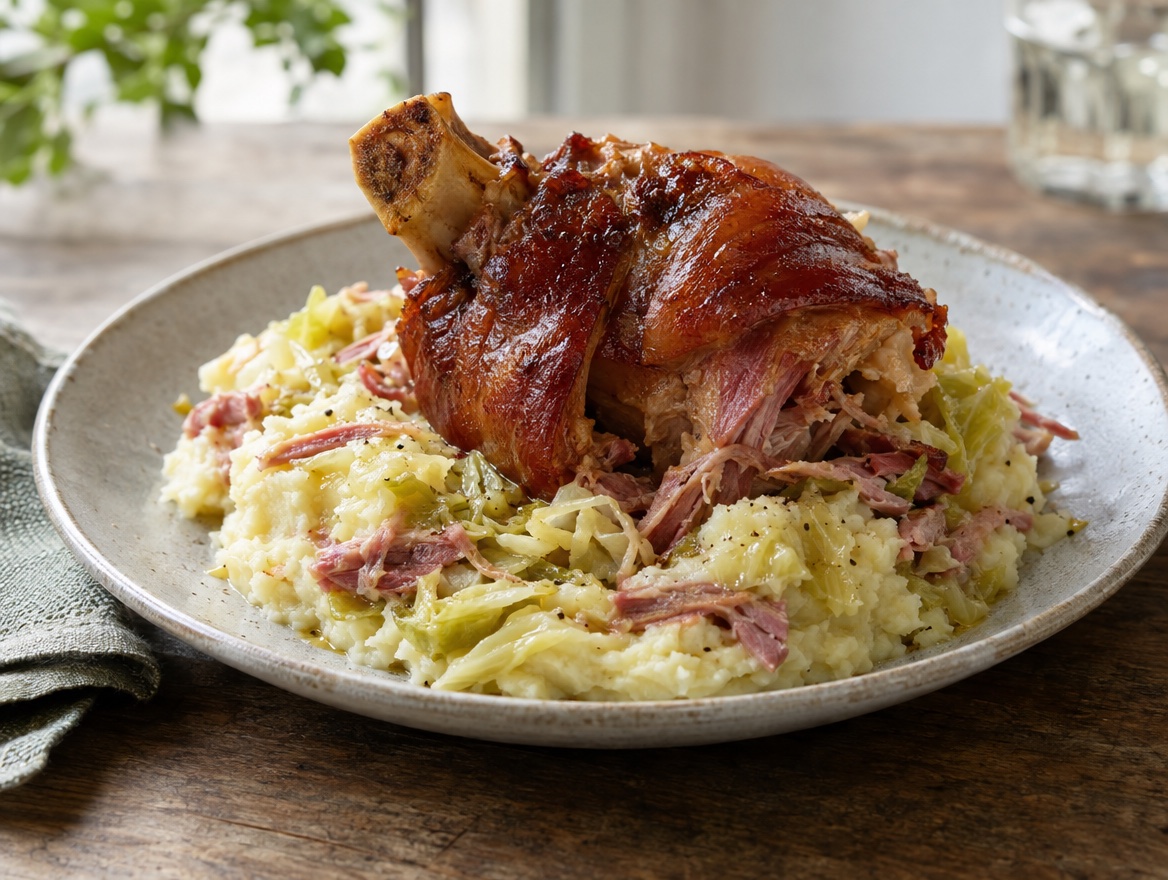
Mash with cabbage or kale, butter, and optional ham hock — Halloween potatoes that became a weeknight pot.
Recipe by I Want Some Food · Reviewed by the editorial kitchen. Native name preserved: Cál ceannann.
0 people cooked this in the public kitchen yet. Kitchen-tested by I Want Some Food. Not a purchased rating.
- Prep
- 15 min
- Cook
- 1 hr 30 min
- Rest
- None
- Total
- 1 hr 45 min
- Difficulty
- Easy
- Spice
- No chilli
- Cost
- Weeknight budget$8–16 USD · indicative, not a store price
About
Colcannon is mashed potato folded with cooked cabbage or kale and a reckless amount of butter. A ham hock simmered until it shreds is the meaty version this site already pointed at. Without the ham it is still colcannon. With it, it is dinner. Make a butter well. That is not garnish; that is the method. Simmer a ham hock until the meat shreds, then lift it, strain the liquor, and cook floury potatoes in some of that liquid so they taste of pork. Mash with butter and hot milk. Fold through cooked cabbage or kale that still has a little bite, then the shredded ham. Taste for salt; the hock may have done that job already. Make a butter well. The greens should be silky, not khaki mush. Serve in bowls. Leftovers fry. If you only have bacon, you can render it and fold it through, which is a different, thinner pork note and still a legitimate weeknight. Do not skip the butter. The dish is not trying to be light. Taste before you salt; the hock may have finished that job. A butter well is method. Bacon rendered and folded through is a thinner weeknight cousin. Do not blend it. Leftovers fry into cakes.
Ingredients
Scaling multiplies the written quantities. Baking still prefers a scale.
Steps
Step 1
If using a hock, simmer 75 minutes until the meat shreds. Keep a little liquor. Strip the meat.
75 minStep 2
Boil potatoes. Wilt cabbage in a knob of butter or a splash of hock liquor 5 minutes.
20 minStep 3
Mash potatoes with milk and most of the butter. Fold in cabbage, spring onion and ham. Well of butter.
8 min
Adapt this recipe
The canonical recipe stays intact. Personal versions are labelled. Serving changes are maths, not AI.
Adaptations · 0 / 15 used. Resets 10 October.
Substitutions
Ham hock → Leftover ham or nothing
The mash is the dish.
Tips
- Kale colcannon is as correct as cabbage.
- Skip the hock and you still made colcannon.
History & culture
Halloween charms used to be hidden in the mash. Now it is a side that can carry the plate. Irish-American corned beef dinners sometimes steal it. Irish-American boiled dinners sometimes steal it to sit beside corned beef, which is a diaspora plate with its own history. In Ireland it is still a home mash, not a tourist performance, though tourist menus have noticed it. Kale versus cabbage is seasonal more than ideological. The ham-hock version on this site is a meaty supper, not a claim that every colcannon must include pork. Eat it with a spoon. Pickles or brown sauce on the side are household manners. It is comfort food in the literal sense: hot, fatty, green, and filling after weather. Charms in the mash belong to older Halloweens; most tables now just want a hot green potato supper. Kale or cabbage follows the garden. A deep bowl and a spoon are the correct tools; this is not mash you quenelle for a photograph.
Cabbage-and-potato mash is a post-potato Irish staple. The name is older than the tourist menu. Pork in the pot is farm thrift: a hock flavours potatoes and greens because that is what a small piece of meat is for. Diaspora corned-beef-and-cabbage dinners in North America are a related, not identical, story shaped by what butchers sold to immigrants. Do not flatten all of that into a single 'traditional Irish feast'. Famine memory belongs in serious history, not in a cute blurb. What you are cooking is a mash that survived because it is cheap and good. The ham hock is a flavour engine. The butter well is a serving habit that still makes sense. Supermarket hocks are salty and small, which is still enough to perfume a family pot. Keep the liquor; it is the stock you already paid for. That thrift is the least romantic and most accurate inheritance.
Regional variation
Provenance: Editorial adaptation.
Questions about this recipe
Answers taken from this dish's times, amounts, swaps and tips — not a chatbot.
How long does Colcannon take?
1 hr 45 min all in — 15 min prep, 1 hr 30 min cook. Cook and rest follow the method. Leftover storage and optional extra waits are not included.
How many does it serve?
The recipe is written for 4 people. Scale the ingredient list on the page if you are cooking for a different number.
How hard is it?
Easy.
How spicy is it?
No chilli.
What allergens should I watch?
This recipe is labelled for Milk. Labels are informational — check the packets in your kitchen. This is not medical advice.
Does it fit a diet?
The published recipe is labelled Gluten-free.
What does it cost to cook?
Weeknight budget — about $8–16 USD, as a grocery budget for this recipe, not a restaurant price.
What equipment do I need?
Dutch oven, Saucepan.
How much salt do I put in?
The recipe lists Salt at 1 tsp.
What can I use instead?
Ham hock → Leftover ham or nothing. The mash is the dish.
Any tips from this recipe?
Kale colcannon is as correct as cabbage. Skip the hock and you still made colcannon.
Can I use an air fryer?
This method is not written for an air fryer. The core technique on the page still applies.
Similar dishes
Checking your allergy settings…