


Jeyuk bokkeum
제육볶음
Spicy stir-fried pork with gochujang and gochugaru — weeknight heat with rice that you will need.
Recipe by I Want Some Food · Reviewed by the editorial kitchen. Native name preserved: 제육볶음.
0 people cooked this in the public kitchen yet. Kitchen-tested by I Want Some Food. Not a purchased rating.
- Prep
- 15 min
- Cook
- 12 min
- Rest
- 20 min
- Total
- 47 min
- Difficulty
- Easy
- Spice
- Hot
- Cost
- Weeknight budget$8–16 USD · indicative, not a store price
About
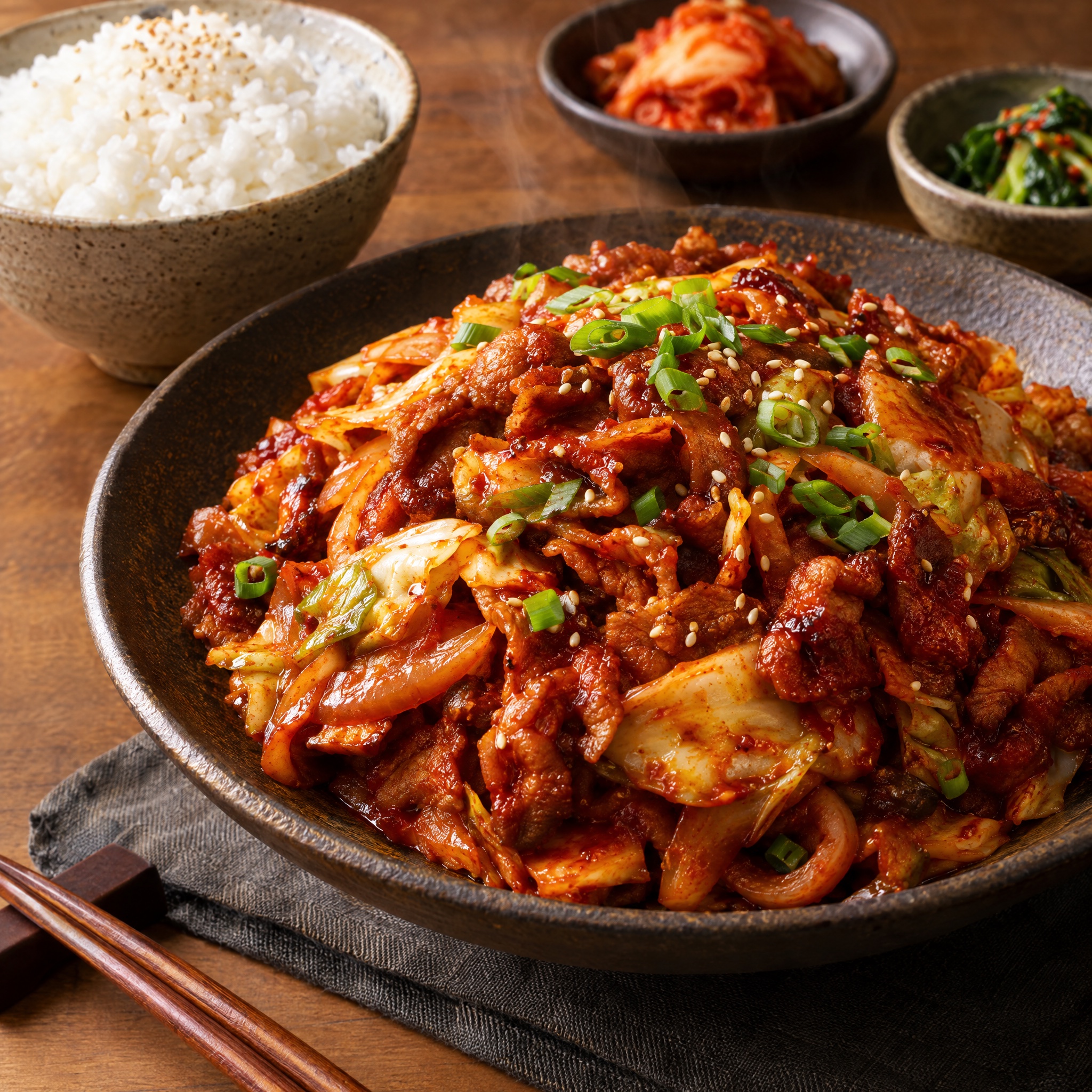
Jeyuk bokkeum is the spicy pork that shows up in lunchboxes and pojangmacha. Thin pork, a red marinade, onions, and a hot pan. It should be saucy enough to stain rice, not watery. Shoulder or belly both work. If you use mince, you have made a different (still fine) dinner. Slice shoulder or belly thin and give the gochujang-gochugaru marinade twenty minutes, not overnight in a wet heap. Onion should fill the pan; it becomes the sauce. High heat, short time. Done is pork just cooked, edges a little dark, sauce reduced enough to stain rice without pooling; overcooked strips dry out in minutes; mince is a different, valid stir-fry — keep it off this name if you can slice.
Ingredients
Scaling multiplies the written quantities. Baking still prefers a scale.
Steps
Step 1
Mix gochujang, gochugaru, soy, sugar, sesame oil, garlic, ginger and rice wine. Toss with pork. Rest 20 minutes.
20 minStep 2
Heat a wide pan until hot. Add pork and onion. Stir-fry until the pork is cooked and the sauce reduces to a glaze, 7–10 minutes.
10 minStep 3
Add spring onion at the end. Serve with rice and lettuce if you want wraps.
Adapt this recipe
The canonical recipe stays intact. Personal versions are labelled. Serving changes are maths, not AI.
Adaptations · 0 / 15 used. Resets 10 October.
Substitutions
Pork → Chicken thigh
Closer to dakgalbi. Still good.
Tips
- A handful of cabbage or onion in the pan stretches the meat and tastes correct.
- Day-old rice is mandatory on the side, not in the pan — that would be a different dish.
History & culture
This is banchan-as-main-course: one meat plate, many spoons of rice, maybe lettuce wraps. It is also a common anju — food that sits next to a drink. Kimbap shops sell it as the meat banchan next to a set lunch. Pojangmacha treat it as anju. Gyeongsang pots often run hotter; Seoul lunch trays can be sweeter. Lettuce wraps are optional at home and common when the plate is the only meat on the table.
Chilli-forward pork stir-fries are everyday modern Korean cooking. We are writing a home marinade, not a restaurant secret. Hot pork in a gochujang wok is weekday modern cooking, not court food. Using chilli paste on cheap sliced pork is twentieth-century home and lunch-room practice. This is a house marinade, not a restaurant secret. Packed-lunch culture is what carried it as far as the snack shops.
Traditional
Provenance: Editorial adaptation.
Questions about this recipe
Answers taken from this dish's times, amounts, swaps and tips — not a chatbot.
How long does Jeyuk bokkeum take?
47 min all in — 15 min prep, 12 min cook, 20 min rest. Cook and rest follow the method. Leftover storage and optional extra waits are not included.
How many does it serve?
The recipe is written for 3 plates. Scale the ingredient list on the page if you are cooking for a different number.
How hard is it?
Easy.
How spicy is it?
Hot.
What allergens should I watch?
This recipe is labelled for Soy, Wheat, Sesame. Labels are informational — check the packets in your kitchen. This is not medical advice.
Does it fit a diet?
The published recipe is labelled Dairy-free, Nut-free.
What does it cost to cook?
Weeknight budget — about $8–16 USD, as a grocery budget for this recipe, not a restaurant price.
What equipment do I need?
Wok, Frying pan.
How much salt do I put in?
This recipe does not list salt as its own ingredient. Saltiness comes from Gochujang — 2 tbsp; Soy sauce — 1 tbsp. Taste at the end rather than adding a number we did not write.
How much gochujang?
2 tbsp of Gochujang.
How much gochugaru?
1 tbsp of Gochugaru.
How much soy sauce?
1 tbsp of Soy sauce.
How much sugar?
1 tbsp of Sugar.
How much toasted sesame oil?
1 tbsp of Toasted sesame oil.
What can I use instead?
Pork → Chicken thigh. Closer to dakgalbi. Still good.
Any tips from this recipe?
A handful of cabbage or onion in the pan stretches the meat and tastes correct. Day-old rice is mandatory on the side, not in the pan — that would be a different dish.
Can I use an air fryer?
This method is not written for an air fryer. The core technique on the page still applies.
Similar dishes
Checking your allergy settings…