

 Taste Thailand
ประเทศไทย
Hot, sour, salty and sweet are not a branding slogan; they are how a Thai cook finishes a bowl. If one taste shouts, the dish is unfinished.
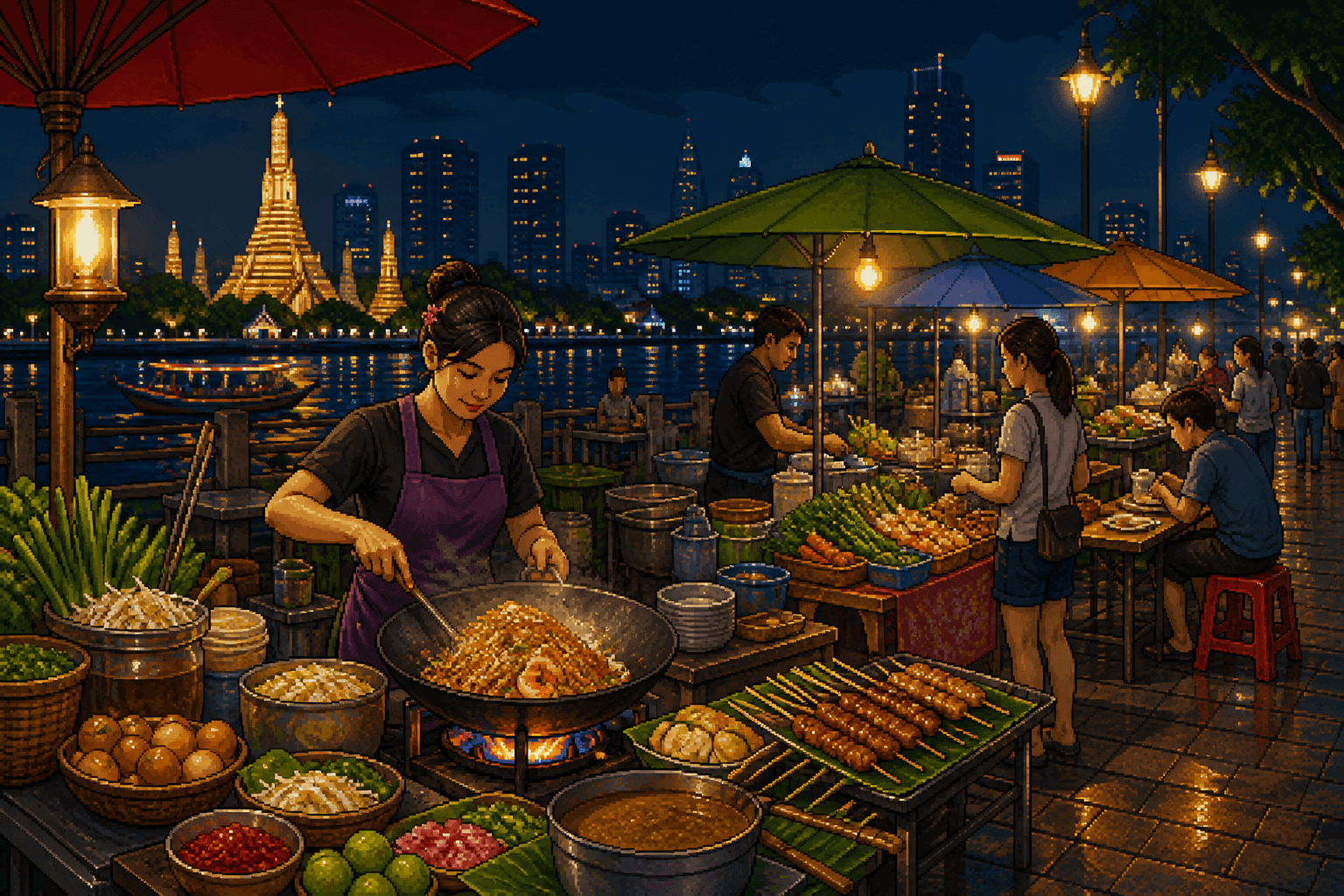
Central cooking loves coconut and fish sauce; the north prefers pork, herbs and a milder chilli; Isaan is loud with lime, dried chilli and fermented fish; the south goes hard on turmeric and seafood. Street stalls are one of the country's great public kitchens, not a sideshow. Pad thai is a wok craft of noodles, tamarind and a squeezed lime, not a generic sweet stir-fry. Som tam is pounded green papaya with a mortar that should sound busy. Pad krapow wants holy basil, a hot wok and a fried egg. Khao soi is Chiang Mai's coconut-curry noodle with pickled mustard greens. Larb is minced meat dressed, not stewed; tom yum goong is a sour-hot broth that should stay clear enough to taste the prawn.
32 recipes · 2 cuisines
Essential dishes
Checking your allergy settings…
More dishes
Further Thailand listings, including shorter editorial recipes and imported methods.
Checking your allergy settings…
Regional cuisines
Think you know Thailand food?
32 quiz dishes. Optional — Passport stamps still come from cooking.
Take the Thailand food quizFood history
Ayutthaya's court absorbed Chinese, Persian and Portuguese ideas without flattening regional cooking. Chilli, now essential, is an American crop that Thailand made its own. Chinese immigration shaped noodles and stir-fries, including pad thai — a twentieth-century national dish with Chinese technique and Thai seasoning. Home cooks still pound curry paste when they have time, and buy it when they do not. The balance of naam — the seasoning liquid — matters more than any single 'secret spice'.
Common ingredients
Techniques
- pounding in a mortar
- wok tossing
- balancing naam
- grilling satay
- coconut simmering