

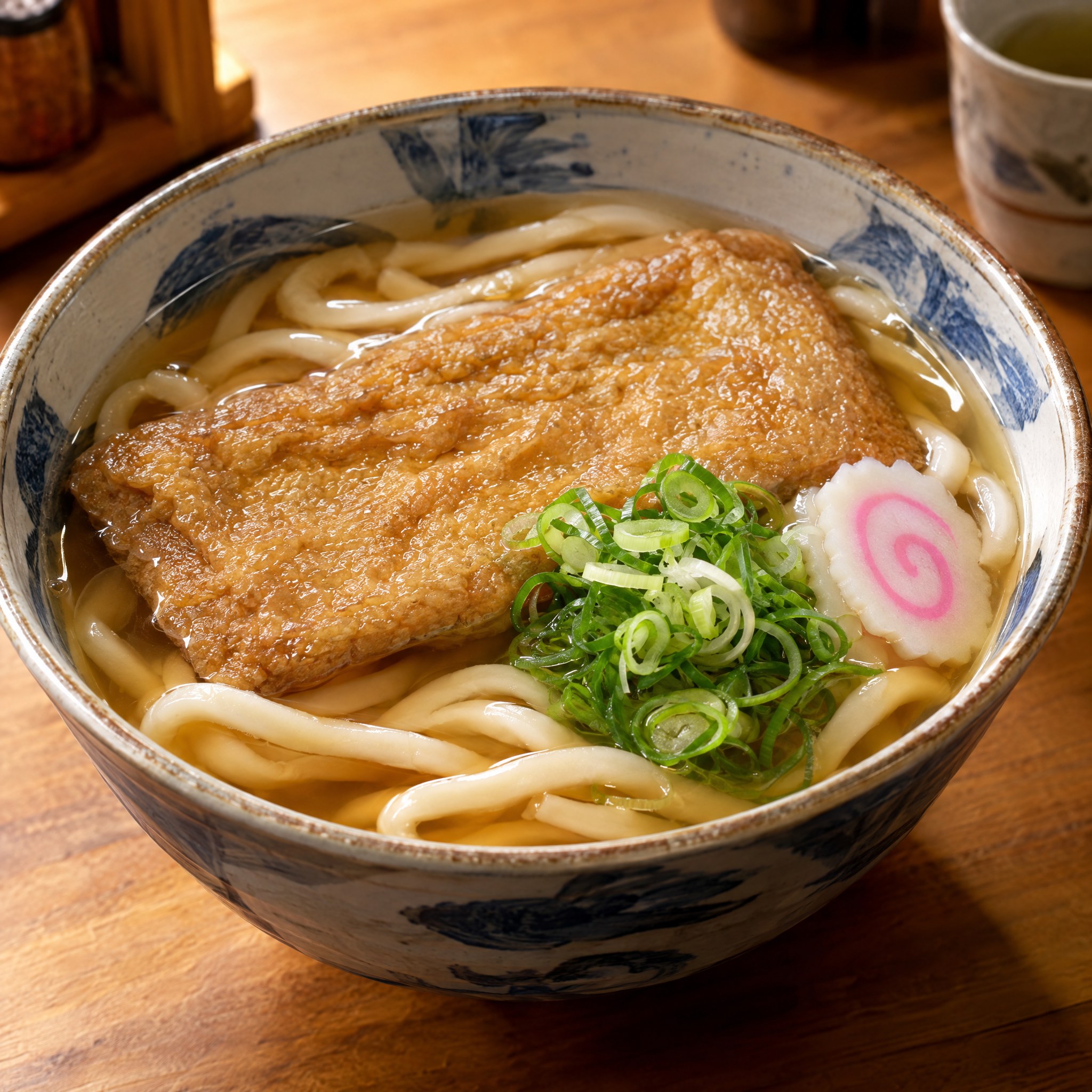
Kitsune udon
きつねうどん
Fat wheat noodles in a hot dashi broth with a sweet fried-tofu pillow — the fox's favourite bowl.
Recipe by I Want Some Food · Reviewed by the editorial kitchen. Native name preserved: きつねうどん.
0 people cooked this in the public kitchen yet. Kitchen-tested by I Want Some Food. Not a purchased rating.
- Prep
- 10 min
- Cook
- 15 min
- Rest
- None
- Total
- 25 min
- Difficulty
- Easy
- Spice
- No chilli
- Cost
- Cheap nightUnder $8 USD · indicative, not a store price
About
Kitsune udon is hot udon, a light soy-dashi, and aburaage (fried tofu) simmered so it turns sweet and floppy. The fox (kitsune) is said to love fried tofu. The bowl should be simple. If you load it like ramen, you have made another soup. Store-udon often carries a dusting of starch; rinse or it clouds the soup into glue. The broth should taste clean before the tofu goes in — if you season only after, the pockets dump sugar and the balance tilts. Simmer the aburaage until it slumps, not until it shreds. A rolling boil wrecks the noodles and makes the bowl look agitated. If you use a dashi packet, taste for salt before adding extra soy. Spring onion at the end, not cooked to khaki.
Ingredients
- Wheat noodles, udon, fresh or dried300 g
- Tofu, aburaage fried tofu pockets, or thin fried tofu2 sheet
- Dashi800 ml
- Soy sauce44 ml
- Korean rice wine30 ml
- Sugar15 ml
Scaling multiplies the written quantities. Baking still prefers a scale.
Steps
Step 1
Simmer the fried tofu in a little dashi, soy, rice wine and sugar 8 minutes until it tastes sweet-savoury and floppy.
8 minStep 2
Heat the remaining dashi with soy and a pinch of sugar. Boil udon until just tender. Drain.
8 minStep 3
Noodles, hot broth, tofu on top, spring onion. Keep it simple.
Adapt this recipe
The canonical recipe stays intact. Personal versions are labelled. Serving changes are maths, not AI.
Adaptations · 0 / 15 used. Resets 10 October.
Substitutions
Aburaage → Thick fried tofu squares
Same idea. Simmer them sweet.
Tips
- Inari-age from a packet is already seasoned. Taste before you add more sugar.
- A slice of kamaboko is the shop garnish if you have it.
History & culture
Osaka claims it. Udon shops everywhere serve it. Home versions use dried udon and a packet of seasoned tofu pockets. Osaka still claims the bowl as local character: sweet tofu, pale broth, no need to shout. Elsewhere it is simply the mild udon you order when you do not want a chilli headache. Convenience packets of seasoned pockets made it a student dinner. There is affection in that. A fox shrine story is a nice table remark. The actual culture is a hot bowl you can finish without taking notes.
Inari (the fox kami) and fried tofu are an old pairing. Putting that pocket on udon is Kansai comfort. Fried tofu as an offering food and wheat noodles as a cheap staple were going to meet. Kansai sweetness in the broth is a regional habit that shops turned into a named product. Dried noodles and factory aburaage did more to spread kitsune udon than any single chef. When a dish is this simple, its history is distribution: who sold the pockets, who boiled the wheat, who decided the fox on the menu card was good marketing.
Regional variation
Provenance: Editorial adaptation.
Questions about this recipe
Answers taken from this dish's times, amounts, swaps and tips — not a chatbot.
How long does Kitsune udon take?
25 min all in — 10 min prep, 15 min cook. Cook and rest follow the method. Leftover storage and optional extra waits are not included.
How many does it serve?
The recipe is written for 2 bowls. Scale the ingredient list on the page if you are cooking for a different number.
How hard is it?
Easy.
How spicy is it?
No chilli.
What allergens should I watch?
This recipe is labelled for Wheat, Soy, Fish. Labels are informational — check the packets in your kitchen. This is not medical advice.
Does it fit a diet?
The published recipe is labelled Vegetarian, Vegan, Dairy-free, Nut-free.
What does it cost to cook?
Cheap night — about Under $8 USD, as a grocery budget for this recipe, not a restaurant price.
What equipment do I need?
Saucepan, Stockpot.
How much salt do I put in?
This recipe does not list salt as its own ingredient. Saltiness comes from Soy sauce — 3 tbsp. Taste at the end rather than adding a number we did not write.
How much soy sauce?
3 tbsp of Soy sauce.
How much sugar?
1 tbsp of Sugar.
What can I use instead?
Aburaage → Thick fried tofu squares. Same idea. Simmer them sweet.
Any tips from this recipe?
Inari-age from a packet is already seasoned. Taste before you add more sugar. A slice of kamaboko is the shop garnish if you have it.
Can I use an air fryer?
This method is not written for an air fryer. The core technique on the page still applies.
Similar dishes
Checking your allergy settings…