Grain
Wheat noodles
Also called kalguksu noodles, jajangmyeon noodles, udon-style thick wheat noodles
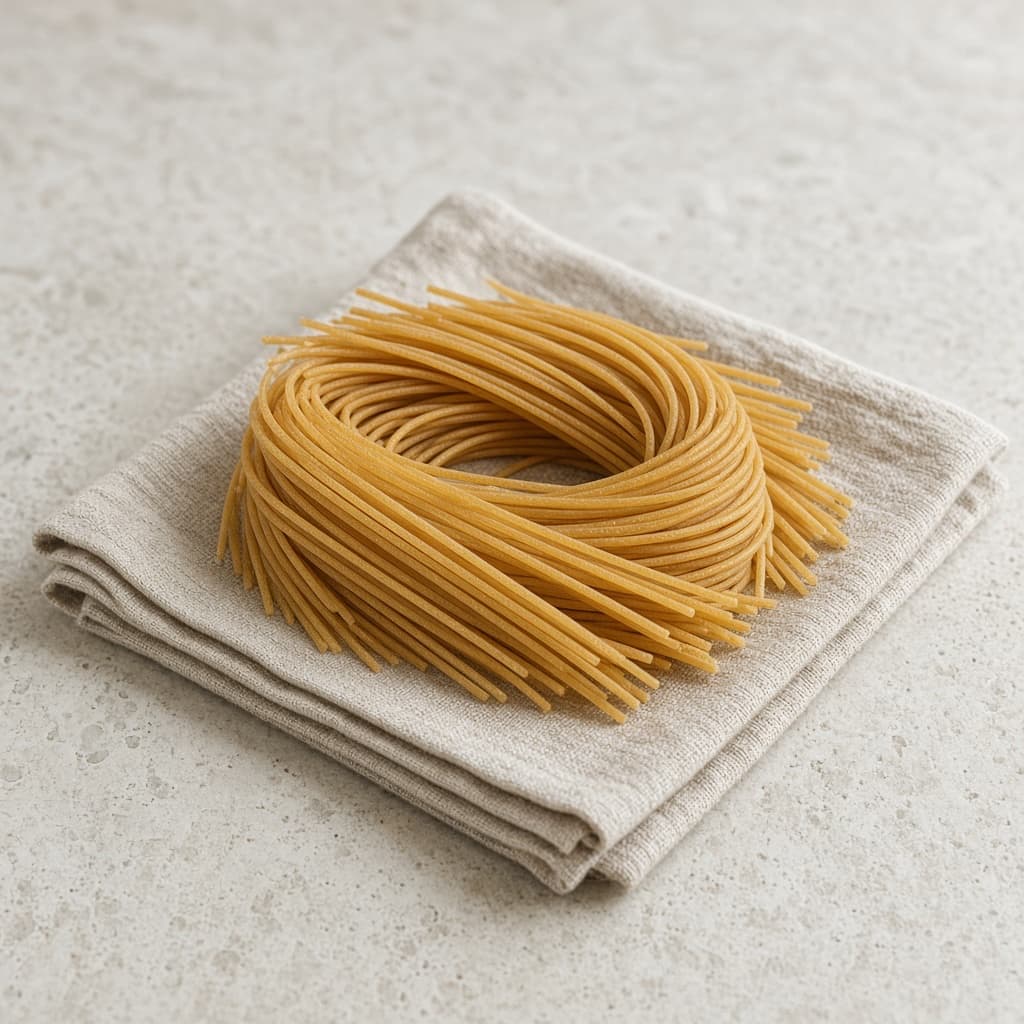
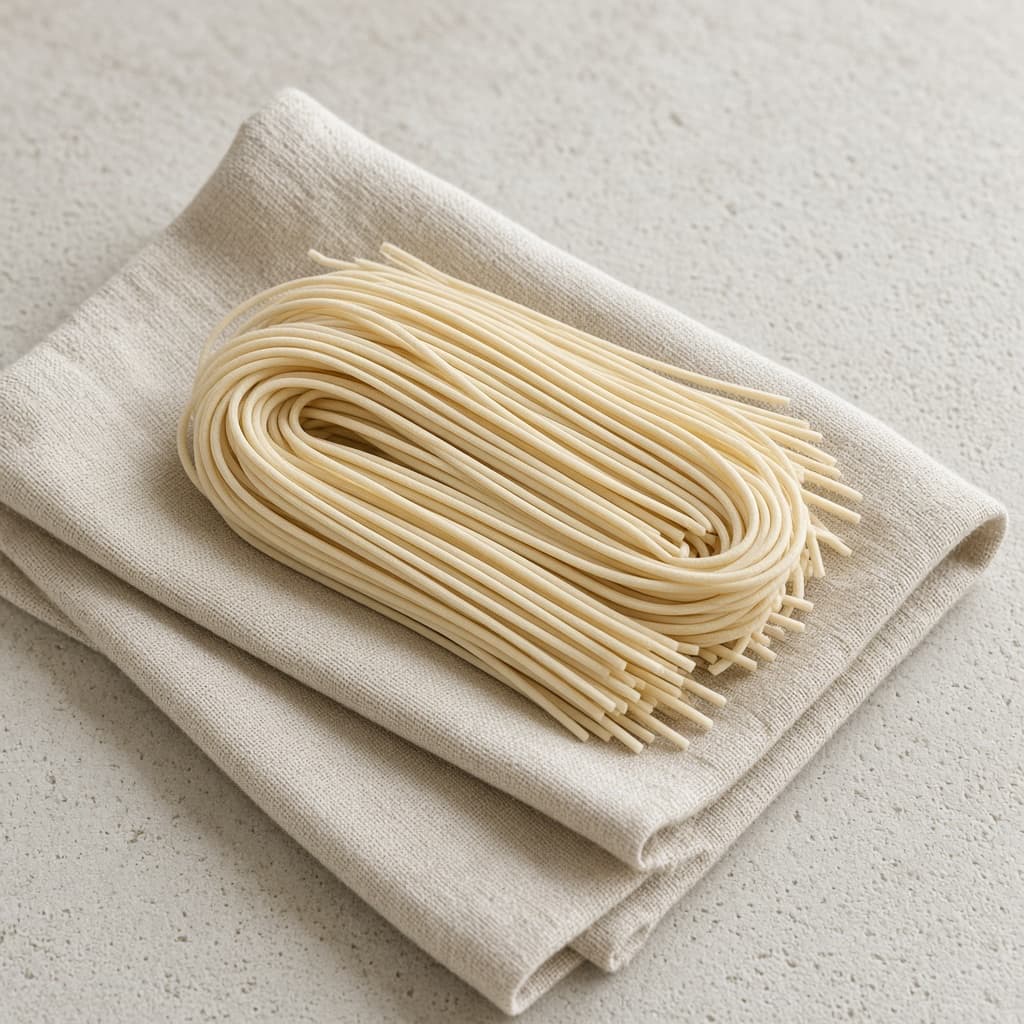
Thick wheat strands for jajangmyeon, kalguksu, jjamppong and similar Korean bowls. Fresh knife-cut dough is softer; dried and frozen supermarket noodles are the weeknight reality. They are closer to udon than to ramen hair.
Origin
Wheat-noodle shops spread through northern China and then Korea. Jajangmyeon noodles are a Korean-Chinese thick cut; kalguksu is knife-cut soup noodle at home.
Flavour
Mild wheat, slightly sweet when fresh. The sauce or broth does the talking. Old dried noodles taste of the cardboard box.
How it is made
Wheat flour and water, sometimes salt or alkali, are kneaded, rested, and cut or extruded. Fresh noodles are dusted so they do not weld. Dried ones are dehydrated for the pantry.
How to use it
Boil in abundant water until the core just loses its chalk, then drain. For jajangmyeon, rinse briefly if the packet says so, then sauce immediately so they do not set into a brick. For kalguksu, cook them in the soup or separately — separately is cleaner if the dough is very starchy. They need a few minutes, not angel-hair timing. Reheat leftovers in sauce or broth, not a dry microwave.
Storage
Fridge if fresh, pantry if dried, freezer if sold frozen. Fresh noodles want to be cooked within a few days.
Recipes using it
Checking your allergy settings…