


Zaru soba
ざるそば
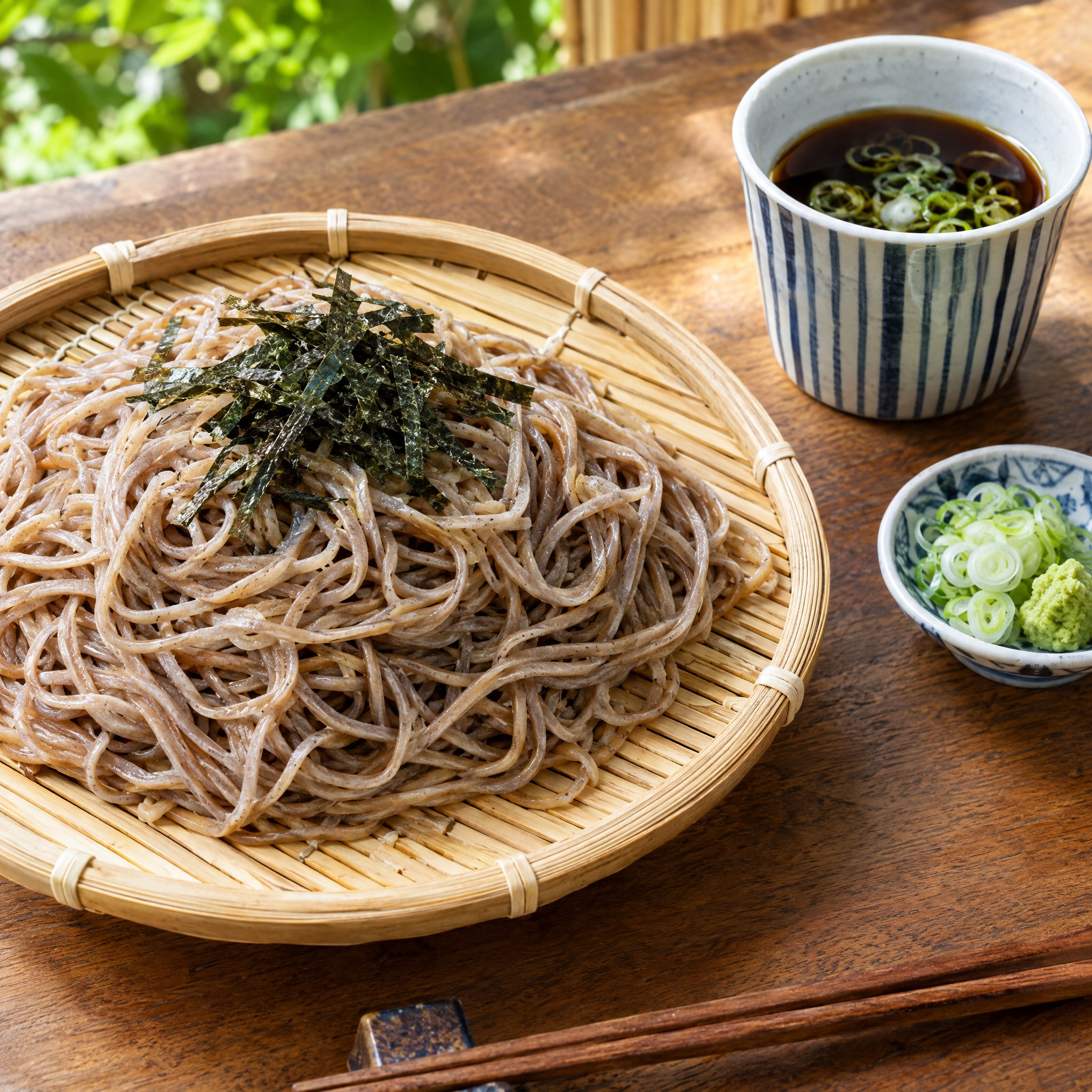
Cold buckwheat noodles on a bamboo tray, dipped in a smoky-soy tsuyu — summer lunch that should taste of the grain.
Recipe by I Want Some Food · Reviewed by the editorial kitchen. Native name preserved: ざるそば.
0 people cooked this in the public kitchen yet. Kitchen-tested by I Want Some Food. Not a purchased rating.
- Prep
- 10 min
- Cook
- 8 min
- Rest
- None
- Total
- 18 min
- Difficulty
- Easy
- Spice
- No chilli
- Cost
- Cheap nightUnder $8 USD · indicative, not a store price
About
Zaru soba is boiled soba, rinsed until it squeaks, and eaten cold with a dipping broth of dashi, soy and mirin. Wasabi and spring onion go in the dip. If your noodles taste only of refrigerator, the rinse was lazy or the pack was all wheat. Salt the boiling water well. Under-salted soba tastes of paste even after a good rinse. Ice water is not a garnish — it stops the cooking and washes surface starch so the strands separate. Shake the colander hard. A clinging wet clump will dilute the tsuyu into grey soup. Warm the dipping broth slightly if your kitchen is cold; icy dip and icy noodles together go mute. Fresh wasabi fades in minutes once grated, so do it last. Dried soba varies wildly; taste a strand before you commit the whole bundle.
Ingredients
- Soba noodles200 g
- Dashi150 ml
- Soy sauce44 ml
- Korean rice wine30 ml
- Nori, shredded (optional)½ sheet
- Ginger, or wasabi if you have it (optional)4.9 ml
Scaling multiplies the written quantities. Baking still prefers a scale.
Steps
Step 1
Stir dashi, soy and rice wine. Chill. This is tsuyu.
2 minStep 2
Boil soba according to the pack, usually 4–6 minutes. Rinse in cold water, rubbing the starch off, until the water runs clear and the noodles feel cool and firm.
8 minStep 3
Mound on a plate or tray. Nori. Dip each bite in tsuyu with spring onion and wasabi. Do not pour the sauce over unless you are making kake soba.
Adapt this recipe
The canonical recipe stays intact. Personal versions are labelled. Serving changes are maths, not AI.
Adaptations · 0 / 15 used. Resets 10 October.
Substitutions
Soba → Somen, served the same way
A different noodle. Still a cold summer plate.
Tips
- The leftover boiling water (soba-yu) is sometimes mixed into leftover tsuyu as a drink. Optional, traditional.
- 100% buckwheat soba breaks more. Handle it like it is expensive, because it is.
History & culture
Summer, New Year's Eve toshikoshi soba, and the lunch you want when the air is heavy. A bamboo draining tray is traditional; a plate is fine. Eating cold noodles in a heatwave is a seasonal skill, like knowing when the first good tomatoes arrive. People still slurp, even from a tray, because air is part of the flavour. New Year bowls and summer trays share a noodle and almost nothing else in mood. A bamboo mat is charming. A plain plate with a decent dip is the adult version when you live in a small flat.
Buckwheat noodles are Edo-period city food. Serving them cold on a zaru is the summer form. Buckwheat as a crop liked poor soil and short seasons; the noodle followed the grain into cities that needed fast lunches. Cold service is a practical answer to humidity, not an aesthetic invented for photographs. Factory dried noodles made the dish a weeknight option far from the mill. Purists can chase a local miller. Most bowls in real life are a packet, a rinse, and a dip you can mix in five minutes.
Traditional
Provenance: Editorial adaptation.
Questions about this recipe
Answers taken from this dish's times, amounts, swaps and tips — not a chatbot.
How long does Zaru soba take?
18 min all in — 10 min prep, 8 min cook. Cook and rest follow the method. Leftover storage and optional extra waits are not included.
How many does it serve?
The recipe is written for 2 plates. Scale the ingredient list on the page if you are cooking for a different number.
How hard is it?
Easy.
How spicy is it?
No chilli.
What allergens should I watch?
This recipe is labelled for Wheat, Soy, Fish. Labels are informational — check the packets in your kitchen. This is not medical advice.
Does it fit a diet?
The published recipe is labelled Vegetarian, Vegan, Dairy-free, Nut-free.
What does it cost to cook?
Cheap night — about Under $8 USD, as a grocery budget for this recipe, not a restaurant price.
What equipment do I need?
Saucepan, Mixing bowl.
How much salt do I put in?
This recipe does not list salt as its own ingredient. Saltiness comes from Soy sauce — 3 tbsp. Taste at the end rather than adding a number we did not write.
How much soy sauce?
3 tbsp of Soy sauce.
What can I use instead?
Soba → Somen, served the same way. A different noodle. Still a cold summer plate.
Any tips from this recipe?
The leftover boiling water (soba-yu) is sometimes mixed into leftover tsuyu as a drink. Optional, traditional. 100% buckwheat soba breaks more. Handle it like it is expensive, because it is.
Can I prepare this ahead?
The leftover boiling water (soba-yu) is sometimes mixed into leftover tsuyu as a drink. Optional, traditional.
Can I use an air fryer?
This method is not written for an air fryer. The core technique on the page still applies.
Similar dishes
Checking your allergy settings…