


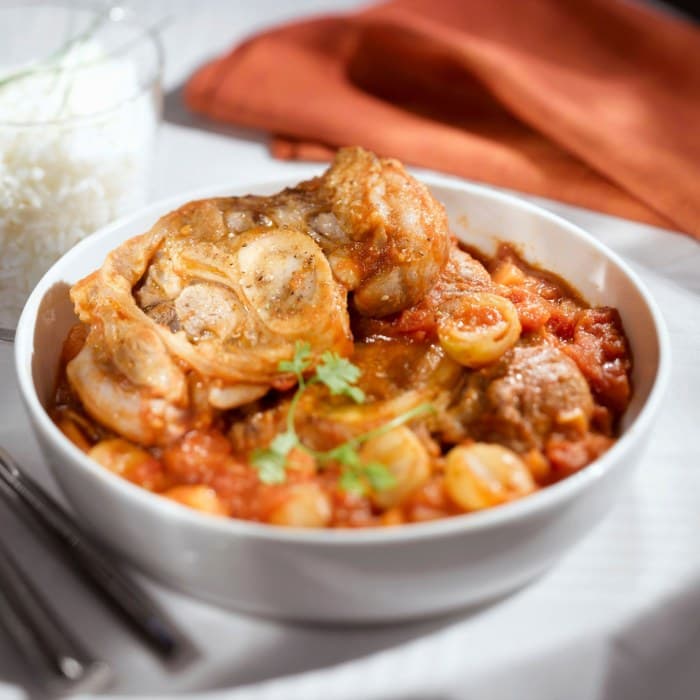
Osso Buco alla Milanese
Osso Buco alla Milanese from Italy. Times were inferred from the source steps.
Imported from TheMealDB. Times and card copy were filled in for this listing, not kitchen-tested.
0 people cooked this in the public kitchen yet. Kitchen-tested by I Want Some Food. Not a purchased rating.
- Prep
- 45 min
- Cook
- 3 hr 46 min
- Total
- 4 hr 31 min
- Difficulty
- A bit of work
- Spice
- No chilli
- Cost
- Weeknight budget$8–16 USD · indicative, not a store price
About
Osso Buco alla Milanese is listed as miscellaneous from Italy. The steps below are the imported TheMealDB method, not an editorial rewrite. Times shown were read from those steps.
Ingredients
Scaling multiplies the written quantities. Baking still prefers a scale.
Steps
Step 1
Heat the oven to 300 degrees. Dredging the shanks: pour the flour into a shallow dish (a pie plate works nicely).
Step 2
Season the veal shanks on all sides with salt and pepper. One at a time, roll the shanks around in the flour coat, and shake and pat the shank to remove any excuses flour.
Step 3
Discard the remaining flour. Browning the shanks: put the oil and 1 tablespoon of the butter in a wide Dutch oven or heavy braising pot (6 to 7 quart) and heat over medium-high heat.
Step 4
When the butter has melted and the oil is shimmering, lower the shanks into the pot, flat side down; if the shanks won’t fit without touching one another, do this in batches. Brown the shanks, turning once with tongs, until both flat sides are well caramelized, about 5 minutes per side.
5 minStep 5
If the butter-oil mixture starts to burn, lower the heat just a bit. Transfer the shanks to a large platter or tray and set aside.
Step 6
The aromatics: pour off and discard the fat from the pot. Wipe out any burnt bits with a damp paper towel, being careful not to remove any delicious little caramelized bits.
Step 7
Ad the remaining 2 tablespoons butter to the pot and melt it over medium heat. When the butter has stopped foaming, add the onion, carrot, celery, and fennel.
Step 8
Season with salt and pepper, stir, and cook the vegetables until they begin to soften but do not brown, about 6 minutes. Stir in the garlic, orange zest, marjoram, and bay leaf, and stew for another minute or two.
6 minStep 9
The braising liquid: add the wine, increase the heat to high, and bring to a boil. Boil, stirring occasionally, to reduce the wine by about half, 5 minutes.
5 minStep 10
Add the stock and tomatoes, with their juice, and boil again to reduce the liquid to about 1 cup total, about 10 minutes. The braise: Place the shanks in the pot so that they are sitting with the exposed bone facing up, and pour over any juices that accumulated as they sat.
10 minStep 11
Cover with parchment paper, pressing down so the parchment nearly touches the veal and the edges hang over the sides of the pot by about an inch. Cover tightly with the lid, and slide into the lower part of the oven to braise at a gentle simmer.
Step 12
Check the pot after the first 15 minutes, and if the liquid is simmering too aggressively, lower the oven heat by 10 or 15 degrees. Continue braising, turning the shanks and spooning some pan juices over the top after the first 40 minutes, until the meat is completely tender and pulling away from the bone, about 2 hours.
175 minStep 13
The gremolata: While the shanks are braising, stir together the garlic, parsley, and lemon zest in a small bowl. Cover with plastic wrap and set aside in a cool place (or the refrigerator, if your kitchen is very warm.) The finish: When the veal is fork-tender and falling away from the bone, remove the lid and sprinkle over half of the gremolata.
Step 14
Return the veal to the oven, uncovered, for another 15 minutes to caramelize it some. Using a slotted spatula or spoon, carefully lift the shanks from the braising liquid, doing your best to keep them intact.
15 minStep 15
The shanks will be very tender and threatening to fall into pieces, and the marrow will be wobbly inside the bones, so this can be a bit tricky. But if they do break apart, don’t worry, the flavor won’t suffer at all.
Step 16
Arrange the shanks on a serving platter or other large plate, without stacking, and cover with foil to keep warm. Finishing the sauce: Set the braising pot on top of the stove and evaluate the sauce: if there is a visible layer of fat floating on the surface, use a large spoon to skim it off and discard it.
Step 17
Taste the sauce for concentration of flavor. If it tastes a bit weak or flat, bring it to a boil over high heat, and boil to reduce the volume and intensify the flavor for 5 to 10 minutes.
10 minStep 18
Taste again for salt and pepper. If the sauce wants more zip, stir in a teaspoon or two of the remaining gremolata.
Step 19
Portioning the veal shanks: if the shanks are reasonably sized, serve one per person. If the shanks are gargantuan or you’re dealing with modest appetites, pull apart the larger shanks, separating them at their natural seams, and serve smaller amounts.
Step 20
Be sure to give the marrow bones to whomever prizes them most. Serving: Arrange the veal shanks on warm dinner plates accompanied by the risotto, if serving.
Step 21
Just before carrying the plates to the table, sprinkle on the remaining gremolata and then spoon over a generous amount of sauce – the contact with the hot liquid will aromatize the gremolata and perk up everyone’s appetite with the whiff of garlic and lemon.
Adapt this recipe
The canonical recipe stays intact. Personal versions are labelled. Serving changes are maths, not AI.
Adaptations · 0 / 15 used. Resets 24 August.
Substitutions
flour (a gluten-free blend (not plain rice flour alone for bread)) → a gluten-free blend (not plain rice flour alone for bread)
Coatings and roux can swap. Yeast breads need a blend designed for gluten-free baking.
butter → olive-oil
Use a little less oil than butter. Pastry and laminated doughs are a different problem.
onion → shallot
Shallots are sweeter. Use the same volume, or a little extra onion if that is what you have.
garlic (garlic powder or a pinch of onion) → garlic powder or a pinch of onion
1 clove ≈ ¼ tsp garlic powder. The fresh bite will be missing.
chicken → tofu
Press firm tofu, marinate as you would the chicken, and cook until browned. This is an adaptation, not the original dish.
tomato (passata or canned chopped tomatoes) → passata or canned chopped tomatoes
Canned tomatoes are often better than pale fresh ones out of season.
Tips
- Times on this listing were inferred from the imported method, not kitchen-tested.
History & culture
Editorial cultural notes have not been written for this imported dish.
Editorial history has not been written for this imported dish.
Inspired by
Provenance: Imported. Initial recipe data sourced from TheMealDB and adapted/reviewed by I Want Some Food. Times on this listing were inferred from the imported method, not kitchen-tested.
Questions about this recipe
Answers taken from this dish's times, amounts, swaps and tips — not a chatbot.
How long does Osso Buco alla Milanese take?
4 hr 31 min all in — 45 min prep, 3 hr 46 min cook. That is the time on this recipe, not a guess.
How many does it serve?
The recipe is written for 4 servings. Scale the ingredient list on the page if you are cooking for a different number.
How hard is it?
A bit of work.
How spicy is it?
No chilli.
What allergens should I watch?
This recipe is labelled for Wheat, Milk. Labels are informational — check the packets in your kitchen. This is not medical advice.
Does it fit a diet?
The published recipe is labelled Nut-free.
What does it cost to cook?
Weeknight budget — about $8–16 USD, as a grocery budget for this recipe, not a restaurant price.
What equipment do I need?
Oven, Saucepan, Dutch oven, Mixing bowl.
How much salt do I put in?
This recipe does not list a salt amount. We will not invent one.
What can I use instead?
flour (a gluten-free blend (not plain rice flour alone for bread)) → a gluten-free blend (not plain rice flour alone for bread). Coatings and roux can swap. Yeast breads need a blend designed for gluten-free baking. butter → olive-oil. Use a little less oil than butter. Pastry and laminated doughs are a different problem. onion → shallot. Shallots are sweeter. Use the same volume, or a little extra onion if that is what you have. garlic (garlic powder or a pinch of onion) → garlic powder or a pinch of onion. 1 clove ≈ ¼ tsp garlic powder. The fresh bite will be missing. chicken → tofu. Press firm tofu, marinate as you would the chicken, and cook until browned. This is an adaptation, not the original dish. tomato (passata or canned chopped tomatoes) → passata or canned chopped tomatoes. Canned tomatoes are often better than pale fresh ones out of season.
Any tips from this recipe?
Times on this listing were inferred from the imported method, not kitchen-tested.
Can I use an air fryer?
This method is not written for an air fryer. The core technique on the page still applies.