


Pad kee mao
ผัดขี้เมา
Drunken noodles — wide rice noodles, holy basil, chilli, a splash of sauce. Hotter and louder than pad thai.
Recipe by I Want Some Food · Reviewed by the editorial kitchen. Native name preserved: ผัดขี้เมา.
0 people cooked this in the public kitchen yet. Kitchen-tested by I Want Some Food. Not a purchased rating.
- Prep
- 15 min
- Cook
- 10 min
- Rest
- None
- Total
- 25 min
- Difficulty
- Medium
- Spice
- Hot
- Cost
- Weeknight budget$8–16 USD · indicative, not a store price
About
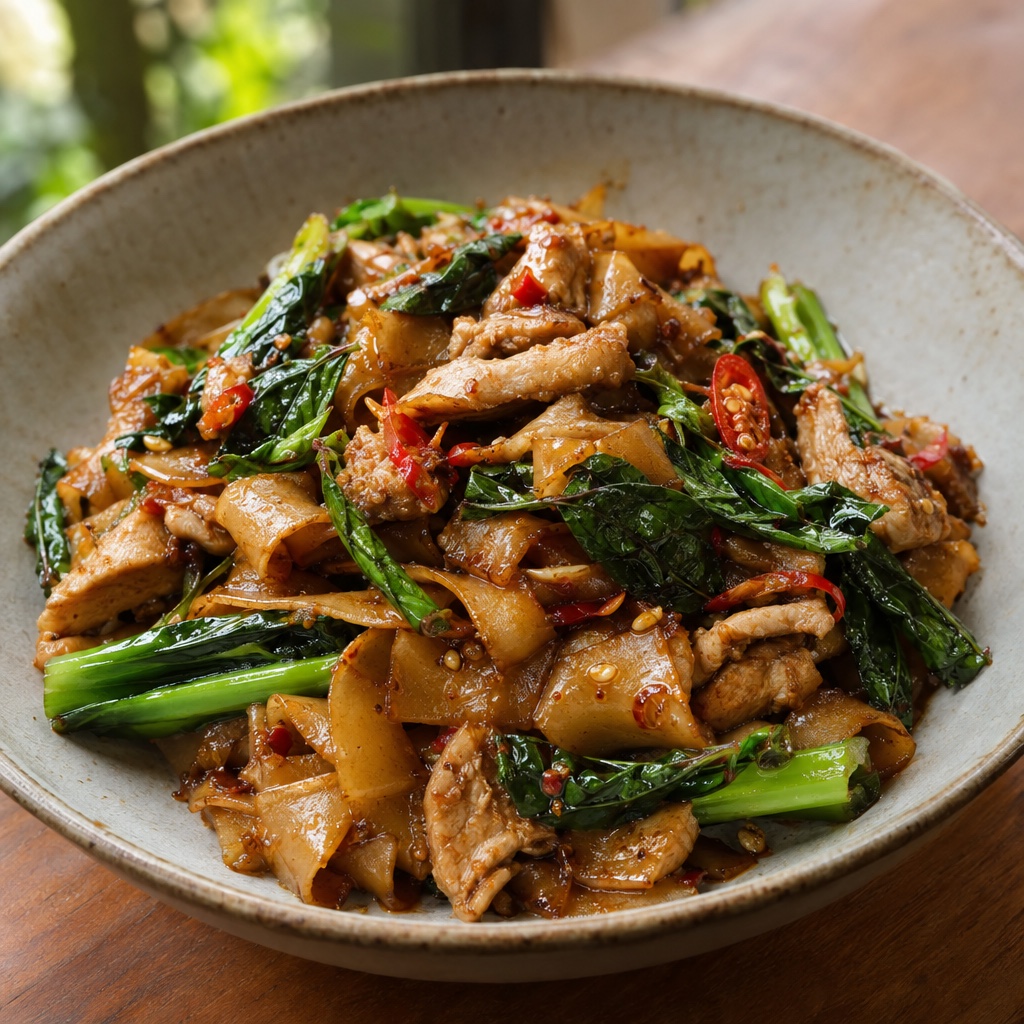
Pad kee mao is a late-night wok of wide fresh rice noodles, lots of chilli and holy basil, garlic, and usually pork or seafood. The name means drunkard's stir-fry — seasoning that slaps you awake. It is not pad thai. Fish sauce, soy, a little sugar, Chinese broccoli if you have it. Hot pan, small batch. Wide fresh rice noodles (sen yai) need a ripping-hot wok and a small batch so they char instead of steam. Holy basil (krapow) is the perfume; Thai sweet basil is a weaker cousin and Italian basil is a last resort. Season with fish sauce, soy and a pinch of sugar, then a lot of bird's-eye chilli and garlic. Chinese broccoli or yard-long beans give crunch. Pork, chicken or prawns are all normal. It should taste hot and herbal, not like pad thai with extra chilli.
Ingredients
- Rice noodles, fresh wide sen yai, or soaked dried300 g
- Pork, sliced150 g
- Holy basil1 handful
- Fresh chilli5 small
- Garlic4 clove
- Fish sauce22 ml
- Soy sauce15 ml
- Sugar4.9 ml
- Egg (optional)1 large
Scaling multiplies the written quantities. Baking still prefers a scale.
Steps
Step 1
Pound garlic and chilli. Mix fish sauce, soy and sugar.
5 minStep 2
Screaming wok, oil, pork, then garlic-chilli. Egg if using. Noodles and sauce. Toss hard 2 minutes.
5 minWatch: Wet noodles steam. Drain them well.
Step 3
Holy basil off the heat. It should smell like a dare. Serve immediately.
1 min
Adapt this recipe
The canonical recipe stays intact. Personal versions are labelled. Serving changes are maths, not AI.
Adaptations · 0 / 15 used. Resets 10 October.
Substitutions
Holy basil → Thai basil plus extra chilli
The anise note changes.
Tips
- Chinese broccoli stems add crunch.
- If it is not spicy, it is a different noodle.
History & culture
Thai street and pub food. Holy basil is the perfume; Italian basil is a weaker cousin. Heat is the point. This is late-night Thai wok food, sold next to rice whisky and beer. The heat is the point, not a garnish. Street cooks work in seconds; home cooks should still refuse to crowd the pan. Isaan and central versions argue about how much chilli and whether to add green peppercorns. Call it drunken noodles if you must; cook it as a basil-chilli stir-fry.
A relatively modern named stir-fry in the Chinese-Thai wok family. The drunkard story is marketing and also a mood. The Chinese-Thai wok family is older than this particular menu name. Pad kee mao as a labelled plate is relatively modern street and pub language. The drunkard story is a mood, not a documented origin myth you need to honour. What is old is the wide noodle, the fish-sauce-soy balance, and holy basil thrown in at the end.
Regional variation
Provenance: Editorial adaptation.
Questions about this recipe
Answers taken from this dish's times, amounts, swaps and tips — not a chatbot.
How long does Pad kee mao take?
25 min all in — 15 min prep, 10 min cook. Cook and rest follow the method. Leftover storage and optional extra waits are not included.
How many does it serve?
The recipe is written for 2 plates. Scale the ingredient list on the page if you are cooking for a different number.
How hard is it?
Medium.
How spicy is it?
Hot.
What allergens should I watch?
This recipe is labelled for Fish, Soy, Wheat. Labels are informational — check the packets in your kitchen. This is not medical advice.
Does it fit a diet?
The published recipe is labelled Dairy-free.
What does it cost to cook?
Weeknight budget — about $8–16 USD, as a grocery budget for this recipe, not a restaurant price.
What equipment do I need?
Wok.
How much salt do I put in?
This recipe does not list salt as its own ingredient. Saltiness comes from Fish sauce — 1½ tbsp; Soy sauce — 1 tbsp. Taste at the end rather than adding a number we did not write.
How much fish sauce?
1½ tbsp of Fish sauce.
How much soy sauce?
1 tbsp of Soy sauce.
How much sugar?
1 tsp of Sugar.
What can I use instead?
Holy basil → Thai basil plus extra chilli. The anise note changes.
What should I watch for?
Wet noodles steam. Drain them well.
Any tips from this recipe?
Chinese broccoli stems add crunch. If it is not spicy, it is a different noodle.
Can I use an air fryer?
This method is not written for an air fryer. The core technique on the page still applies.
Similar dishes
Checking your allergy settings…