

Wok
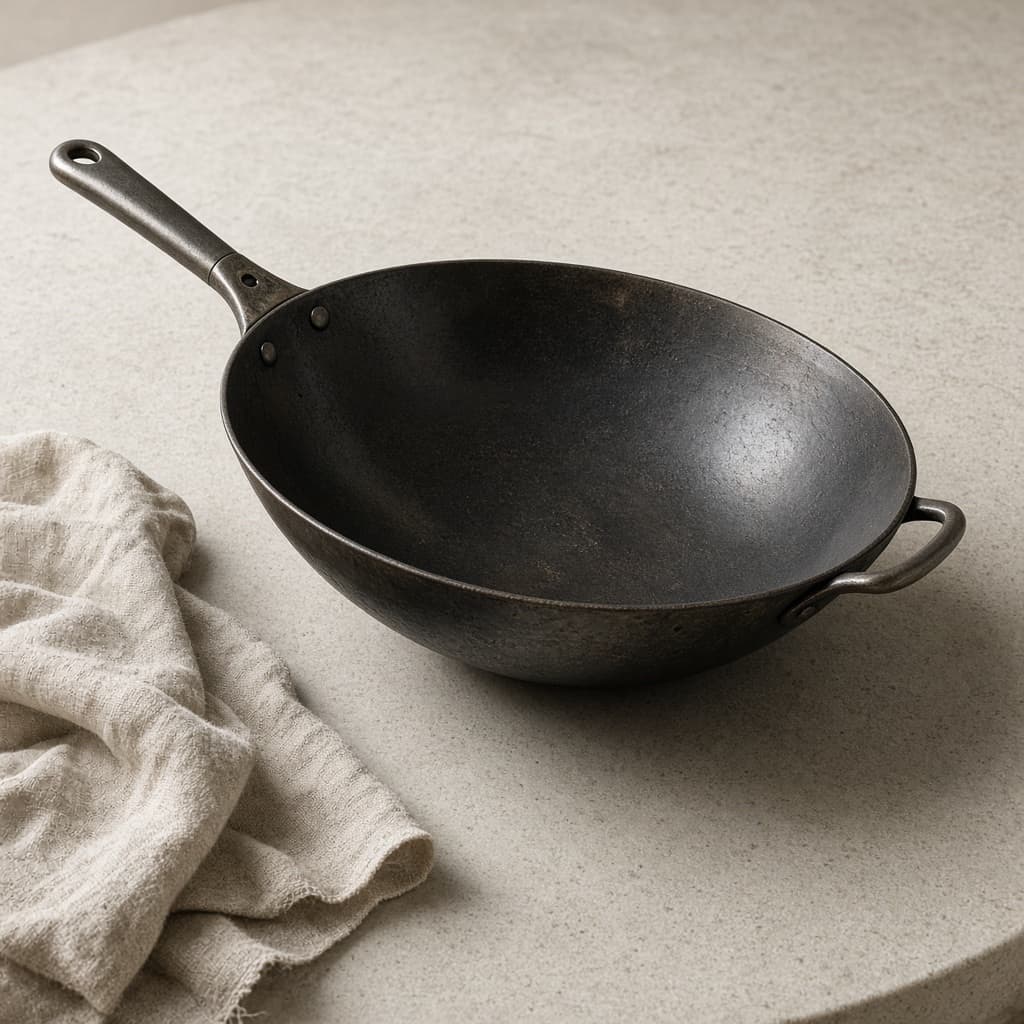
A bowl-shaped pan that takes fierce heat and tosses food up the sides. Carbon steel is the usual home choice: it seasons, it scorches, and it will not pamper you. A wok is a heat tool, not a nationality badge. Pad thai and a mapo tofu night both survive in a wide skillet if that is what you own.
When you need it
Stir-fries, searing noodles, and anything that wants a hot spot in the centre and a cooler slope for food that is already done. You do not need one to cook Chinese or Korean food at home. You need one if you cook those dinners often enough that a skillet's flat base starts to steam instead of sear. For one person, a 30–32 cm wok is plenty.
What to look for
Carbon steel, a base that matches your hob — flat for induction and electric, round only if you have a ring and a gas flame that can climb the sides — and a lid if you steam. A wooden handle stays cooler. Non-stick woks are a different tool: useful for eggs, useless for wok hei, and they hate the heat the shape was invented for.
Alternatives
A wide stainless or carbon-steel skillet. You lose some toss and smoke-point theatre, and you may need to cook in batches. That is still dinner. A deep sauté pan is better than a tiny non-stick.
Care
Season carbon steel. Heat, oil, wipe, repeat. Do not soak it like a casserole or run it through a dishwasher. Dry it on the hob so rust never gets a vote. Mild soap is fine once it is seasoned; you are not preserving a museum piece.
Recommended products
I Want Some Food may earn a commission from qualifying purchases. Commission never decides whether a technique or ingredient is recommended.
Recipes using this
Checking your allergy settings…