Condiment
Hae ko
Also called black prawn paste, petis udang, heiko, hei ko, rojak paste, prawn paste
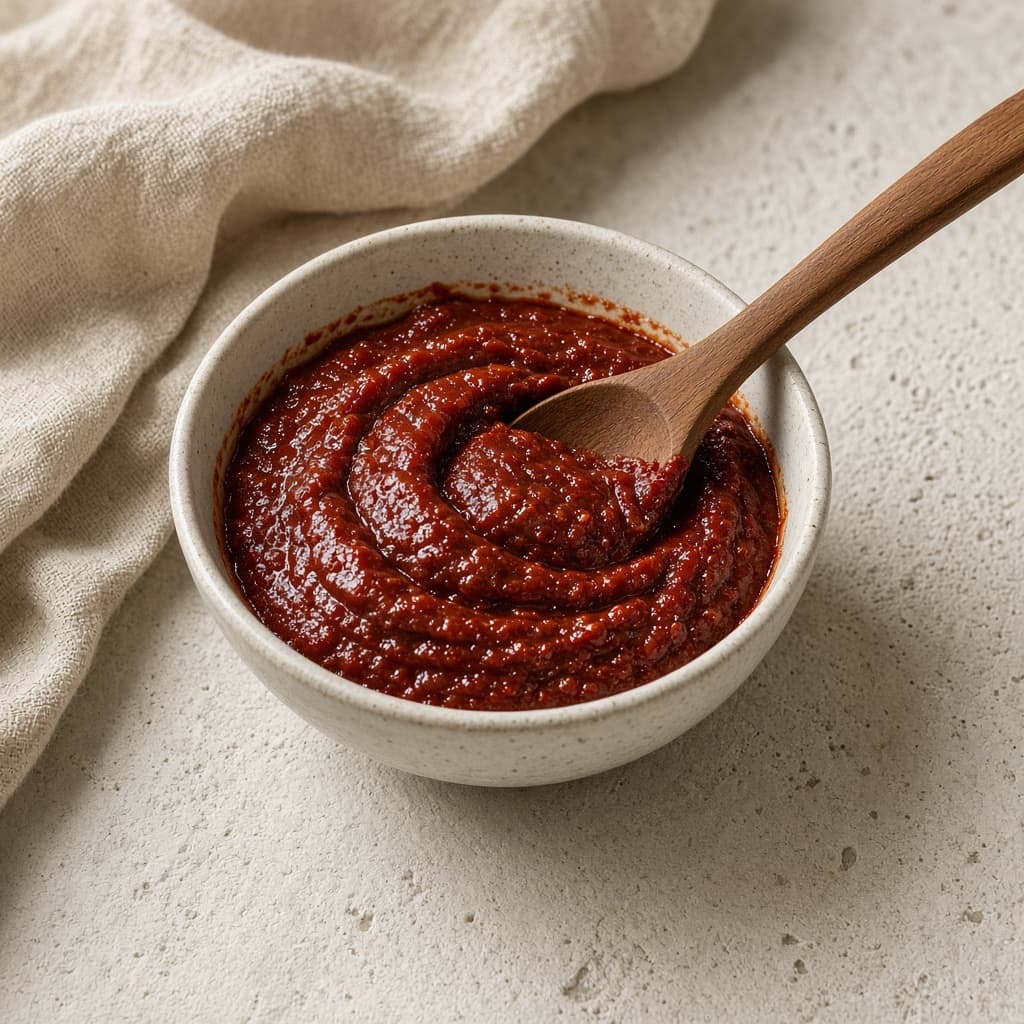
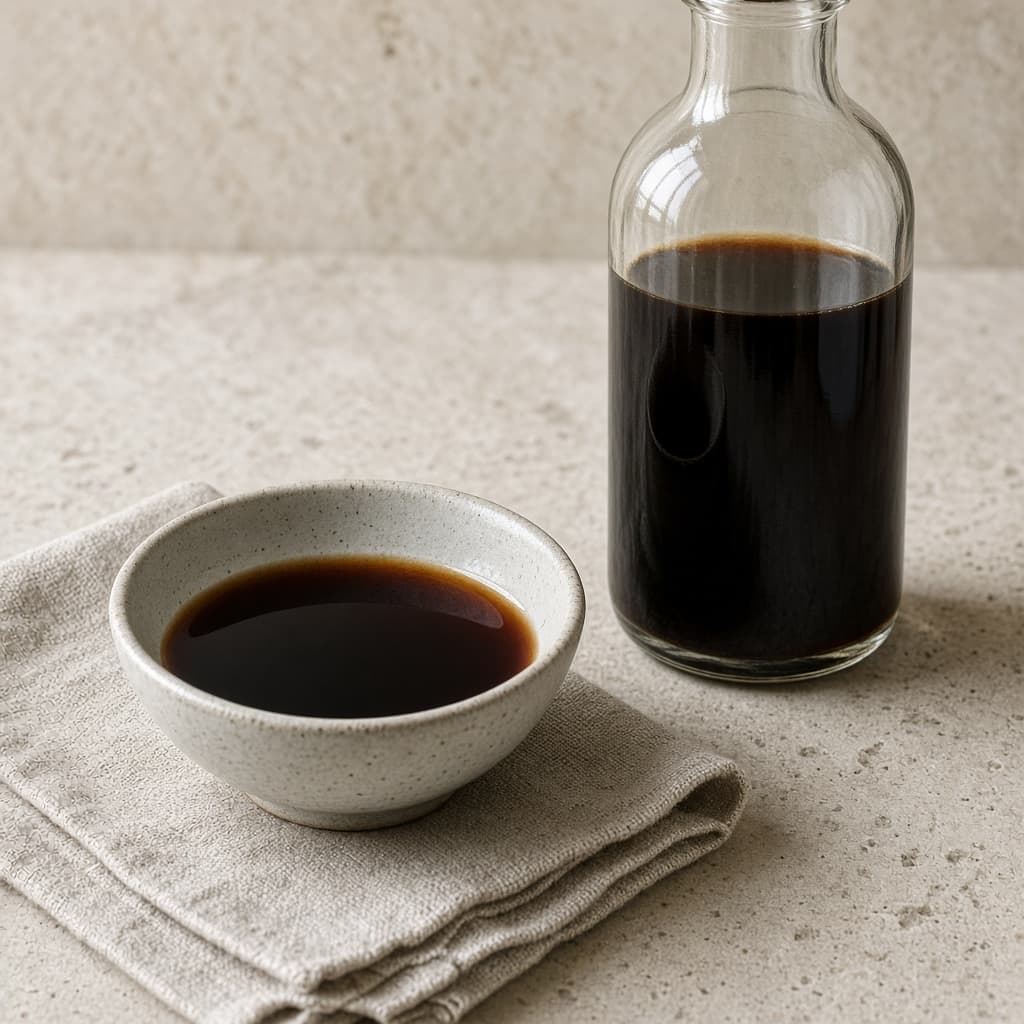
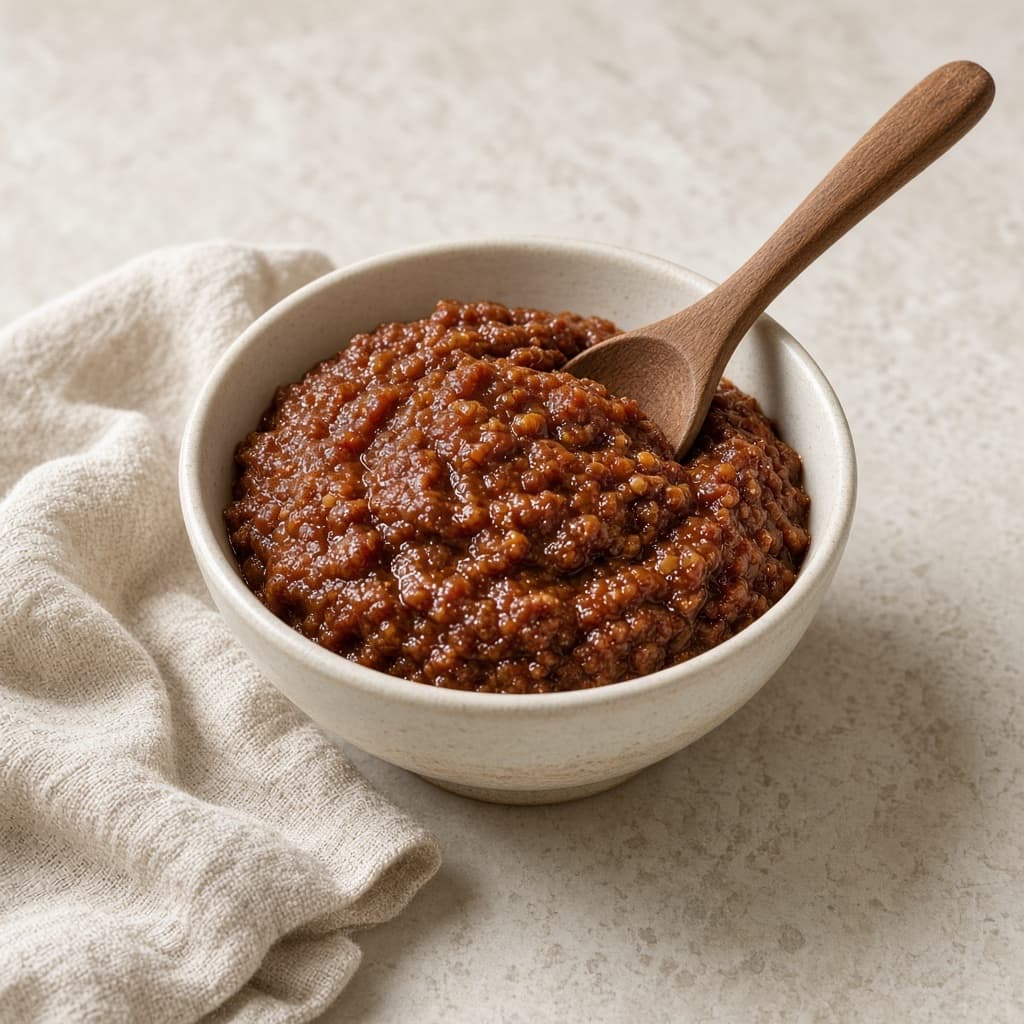
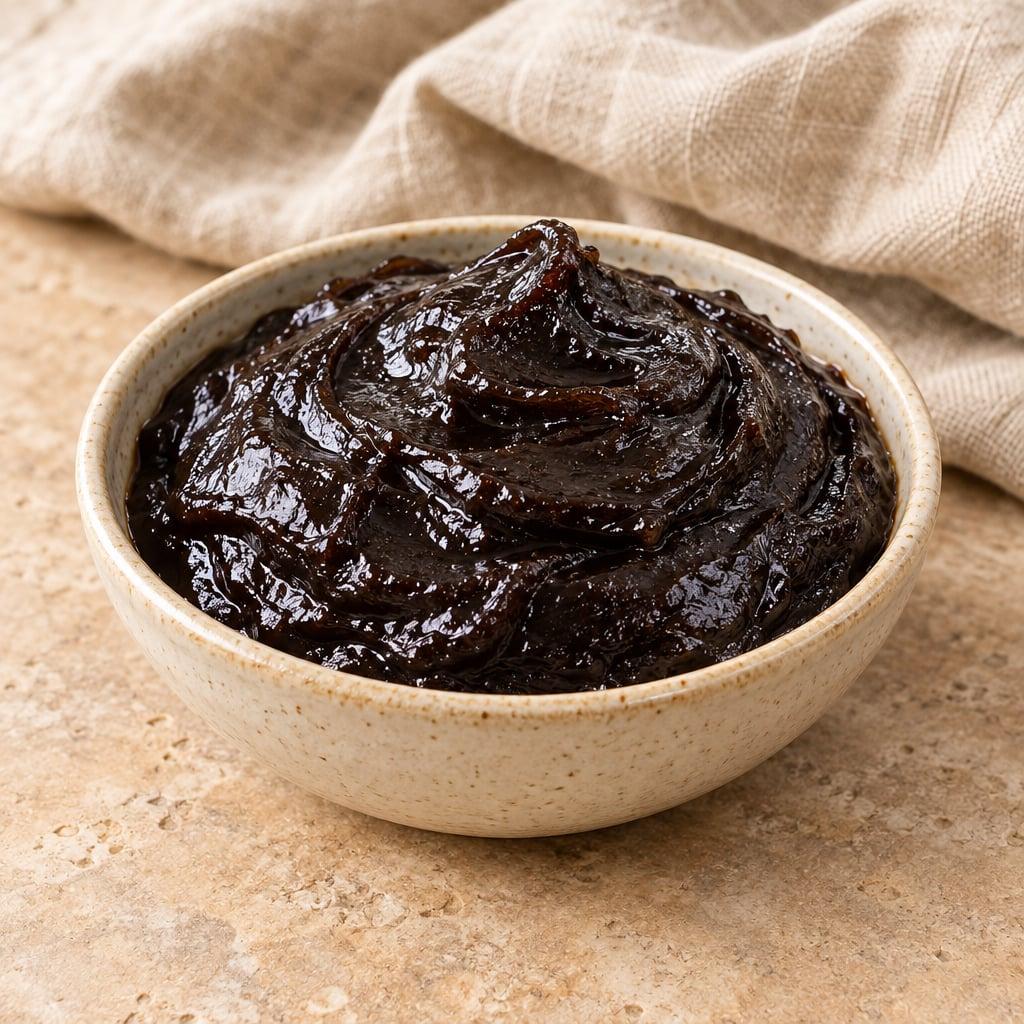
A thick, glossy, almost black paste of prawns cooked down with sugar and salt. It has the texture of molasses and tastes sweet before it tastes of shellfish. It is not belacan, the dry fermented shrimp block, and the two cannot be swapped.
Origin
Penang and the north of Peninsular Malaysia, and Singapore. The name is Hokkien, and the paste belongs to the Chinese kitchens of those port cities. East Java makes a close relative called petis udang, used in rujak and with fried tofu.
Flavour
Sweet, deep and savoury, like a shellfish caramel, with a faint burnt-sugar bitterness. Much less pungent than belacan.
How it is made
Prawns, or their heads and shells, are boiled to an extract, which is strained and reduced with sugar and salt, often with a starch, until thick and black.
How to use it
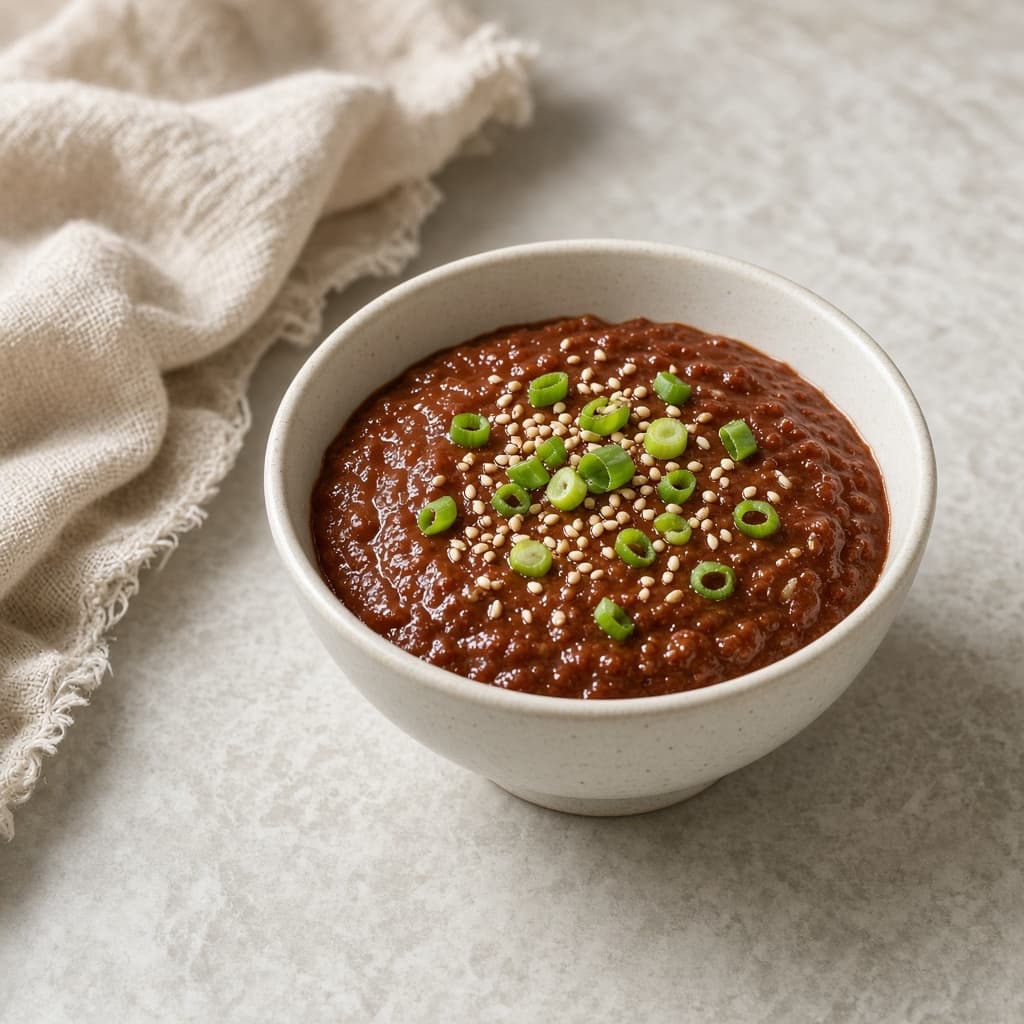
Loosen it with tamarind water, lime juice and sugar for a rojak dressing, or stir a spoonful into a bowl of Penang asam laksa at the table. Use it as it comes; it is already cooked and burns easily if fried.
Storage
Unopened jars keep a year in the cupboard. Once opened, keep it in the fridge, where it lasts several months. Some brands are thickened with wheat flour, so check the label if you avoid gluten.