Condiment
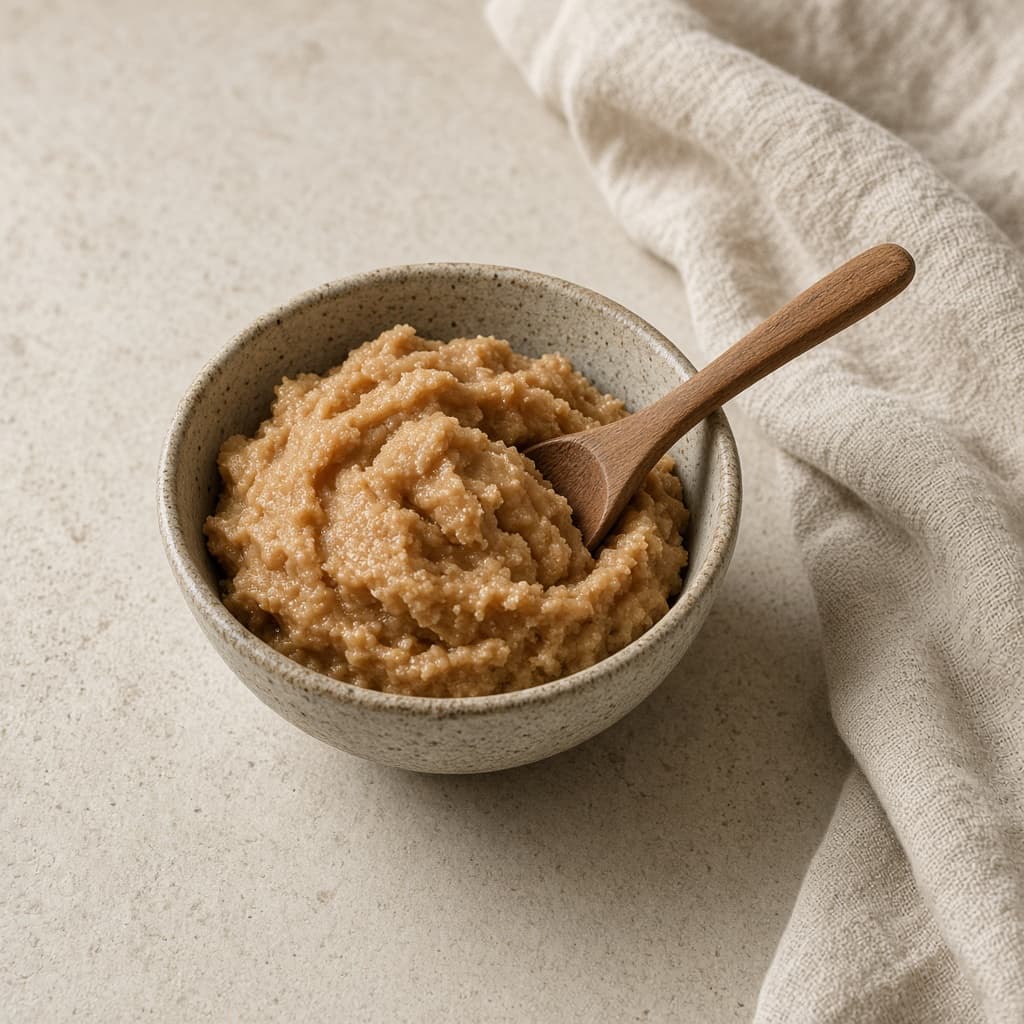
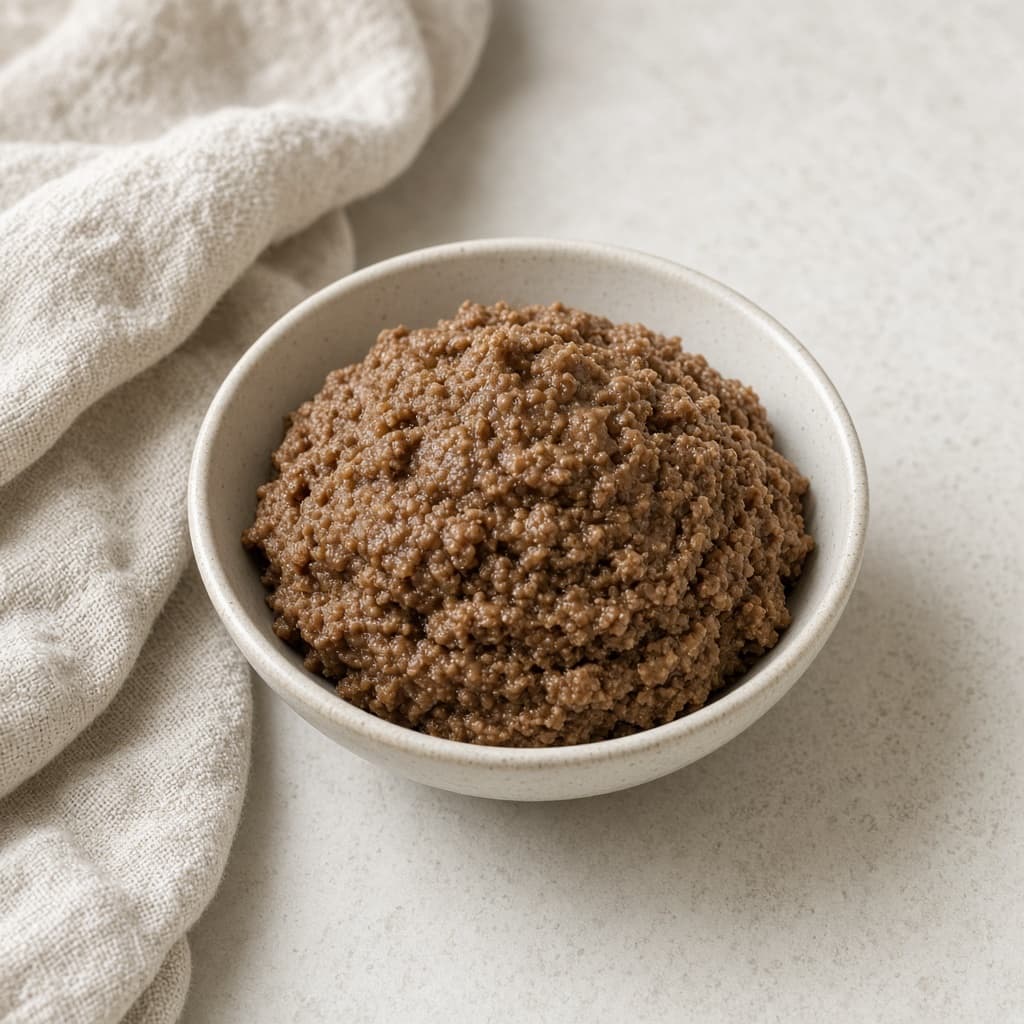
Doenjang
된장
Also called Korean soybean paste
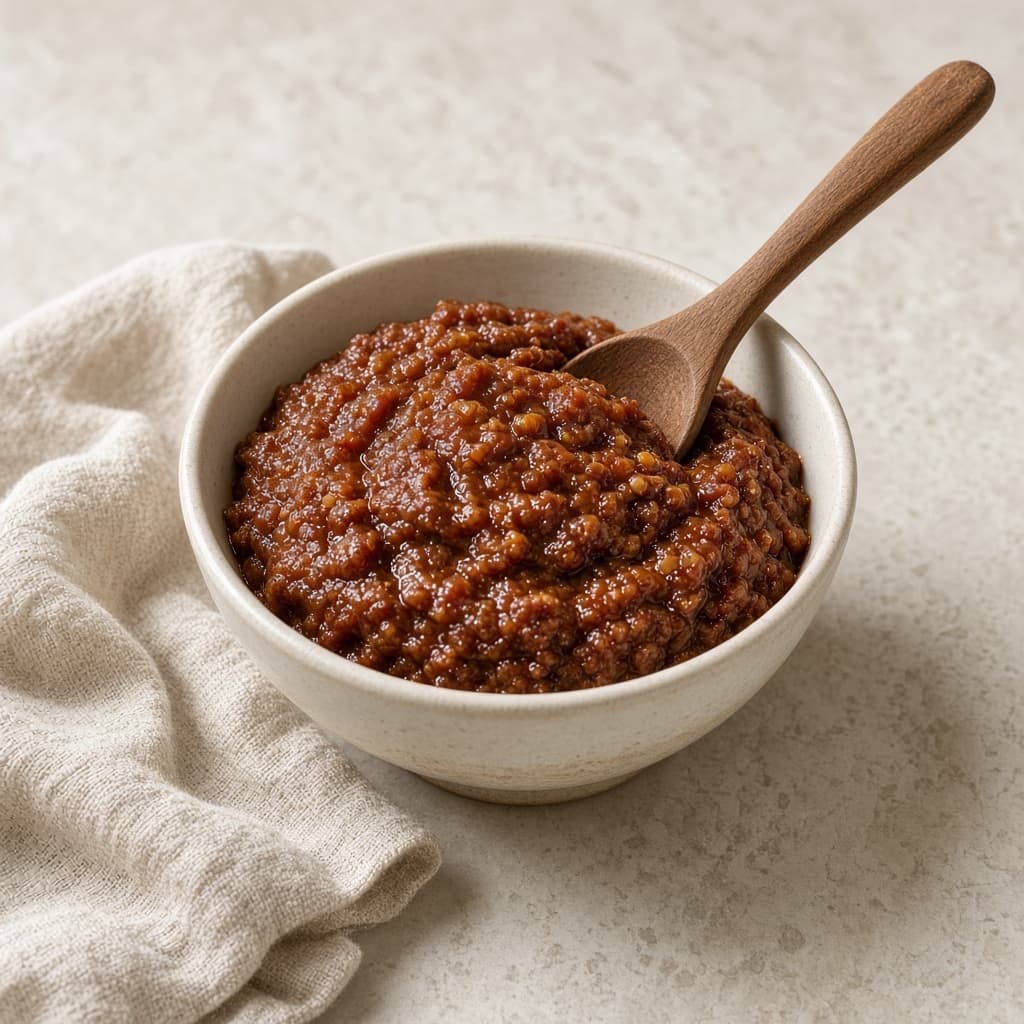
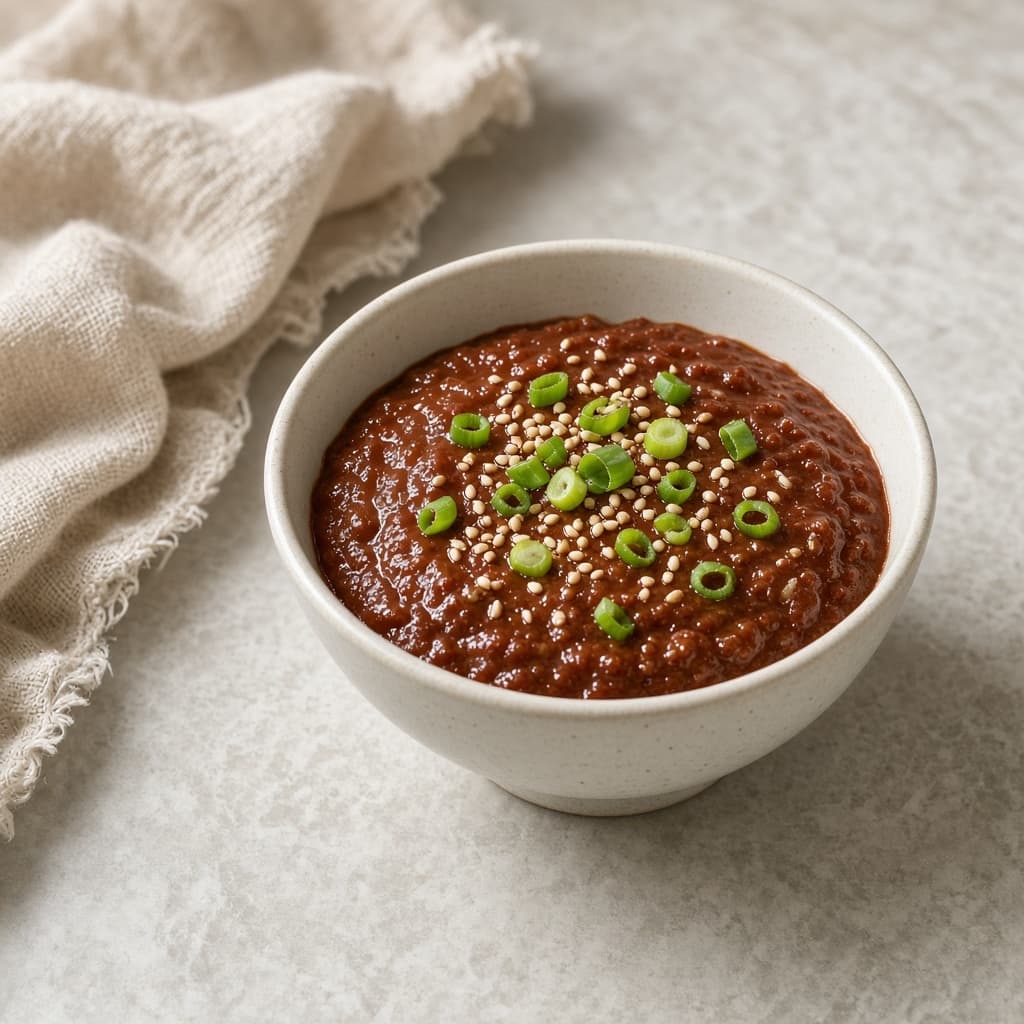
A long-fermented Korean soybean paste, coarser and funkier than most Japanese miso. It is the base of doenjang-jjigae and a savoury smear in ssamjang.
Origin
Korean home fermentation in earthen onggi, now also a factory tub. Related to other East Asian bean pastes but not a cup-for-cup stand-in for miso.
Flavour
Deep, salty, earthy, with a useful bitterness and a farmyard funk that cooks into warmth. Young doenjang is brighter; aged paste is darker.
How it is made
Cooked soybeans are shaped into meju blocks, fermented with wild moulds, then brined and aged. Salt is already high.
How to use it
Dissolve a spoon into simmering stock rather than frying it hard like chilli paste, though a brief sizzle in sesame oil is fine. Taste the stew before you add extra salt — doenjang is already a salt bomb. For jjigae, add it after the anchovy-kelp broth is made, then tofu, courgette and potato. A little thinned with water also dresses grilled vegetables. A film of dark liquid on a traditional tub is normal — stir it. Do not treat it as miso soup paste; the flavour is rougher.
Storage
Fridge after opening, surface pressed flat so it does not dry. It keeps for months if it still smells clean.
Recipes using it
Checking your allergy settings…