


Shogayaki
生姜焼き
Thin pork in a ginger-soy glaze — the teishoku plate that is weeknight dinner in a lot of Japanese houses.
Recipe by I Want Some Food · Reviewed by the editorial kitchen. Native name preserved: 生姜焼き.
0 people cooked this in the public kitchen yet. Kitchen-tested by I Want Some Food. Not a purchased rating.
- Prep
- 10 min
- Cook
- 10 min
- Rest
- None
- Total
- 20 min
- Difficulty
- Easy
- Spice
- No chilli
- Cost
- Weeknight budget$8–16 USD · indicative, not a store price
About
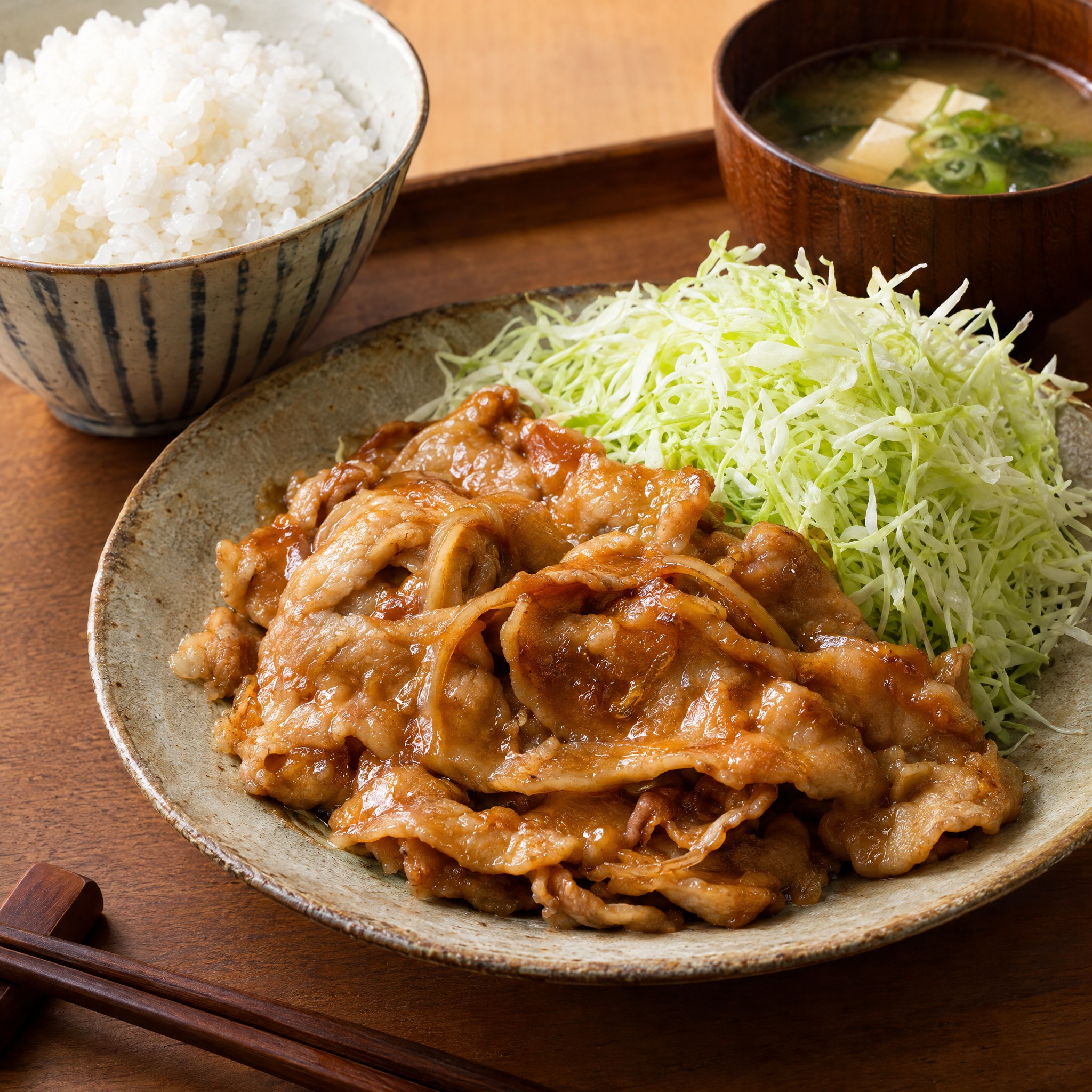
Shogayaki is sliced pork loin, quickly seared, then glazed with grated ginger, soy and mirin. It takes fifteen minutes. Cabbage shred and rice are not optional sides so much as the rest of the plate. If the pork is thick, you have made a different dinner. Grate the ginger last so it does not brown into bitterness in a bowl. If the slices are uneven, the thin end will dry while the thick end stays grey — bash it to an even sheet. High heat, then the glaze, then off: this is not a stew. Crowding steams the meat and you lose the fried edge that makes the ginger smell bloom. Slice against the grain after a brief rest if you started from a small roast. Serve the cabbage raw and cold against the hot pork or the plate goes one-note.
Ingredients
- Pork, thin loin or shoulder slices350 g
- Ginger, finely grated, plus juice22 ml
- Soy sauce30 ml
- Korean rice wine30 ml
- Sugar4.9 ml
- Onion (optional)½
- Cabbage, shredded, to serve150 g
- Rice, uncooked, to serve250 g
- Neutral oil15 ml
Scaling multiplies the written quantities. Baking still prefers a scale.
Steps
Step 1
Mix ginger, soy, rice wine and sugar.
2 minStep 2
Heat a pan until hot. Oil, then sear pork in a single layer, 1 minute a side. Add onion if using. Pour the sauce and toss 30–60 seconds until it clings.
6 minStep 3
Rice, a pile of raw cabbage, the pork and every drop of glaze.
Adapt this recipe
The canonical recipe stays intact. Personal versions are labelled. Serving changes are maths, not AI.
Adaptations · 0 / 15 used. Resets 10 October.
Substitutions
Pork loin → Chicken thigh slices
Works. Call it ginger chicken.
Tips
- A little grated onion in the marinade tenderises cheaper pork.
- Do not stew it. The word is yaki — grill/fry.
History & culture
Home teishoku: rice, miso, pickles, this pork. Also the bento that reheats without dying. This is the teishoku protein that tells you someone intended a balanced tray: pickle, rice, soup, a pile of shred. Bento makers like it because it still tastes of ginger the next day, unlike a fried cutlet. Homes keep a jar of the glaze logic in their heads — soy, mirin, ginger — and change the ratios without writing them down. That quiet competence is the culture more than a restaurant name.
Ginger-fried pork is 20th-century home cooking that became a set-meal standard. Once thin pork became a supermarket default, a ginger glaze was a fast way to make it taste like a cooked meal. Set lunches in cities needed a protein that did not require a grill chef. The dish scaled because it is short. Food writers who reach for an ancient court origin are padding. The useful history is twentieth-century home economics and the rise of the divided tray.
Traditional
Provenance: Editorial adaptation.
Questions about this recipe
Answers taken from this dish's times, amounts, swaps and tips — not a chatbot.
How long does Shogayaki take?
20 min all in — 10 min prep, 10 min cook. Cook and rest follow the method. Leftover storage and optional extra waits are not included.
How many does it serve?
The recipe is written for 2 plates. Scale the ingredient list on the page if you are cooking for a different number.
How hard is it?
Easy.
How spicy is it?
No chilli.
What allergens should I watch?
This recipe is labelled for Soy. Labels are informational — check the packets in your kitchen. This is not medical advice.
Does it fit a diet?
The published recipe is labelled Gluten-free, Dairy-free, Nut-free.
What does it cost to cook?
Weeknight budget — about $8–16 USD, as a grocery budget for this recipe, not a restaurant price.
What equipment do I need?
Frying pan.
How much salt do I put in?
This recipe does not list salt as its own ingredient. Saltiness comes from Soy sauce — 2 tbsp. Taste at the end rather than adding a number we did not write.
How much soy sauce?
2 tbsp of Soy sauce.
How much sugar?
1 tsp of Sugar.
What can I use instead?
Pork loin → Chicken thigh slices. Works. Call it ginger chicken.
Any tips from this recipe?
A little grated onion in the marinade tenderises cheaper pork. Do not stew it. The word is yaki — grill/fry.
Can I use an air fryer?
This method is not written for an air fryer. The core technique on the page still applies.
Similar dishes
Checking your allergy settings…