


Yakitori
焼き鳥
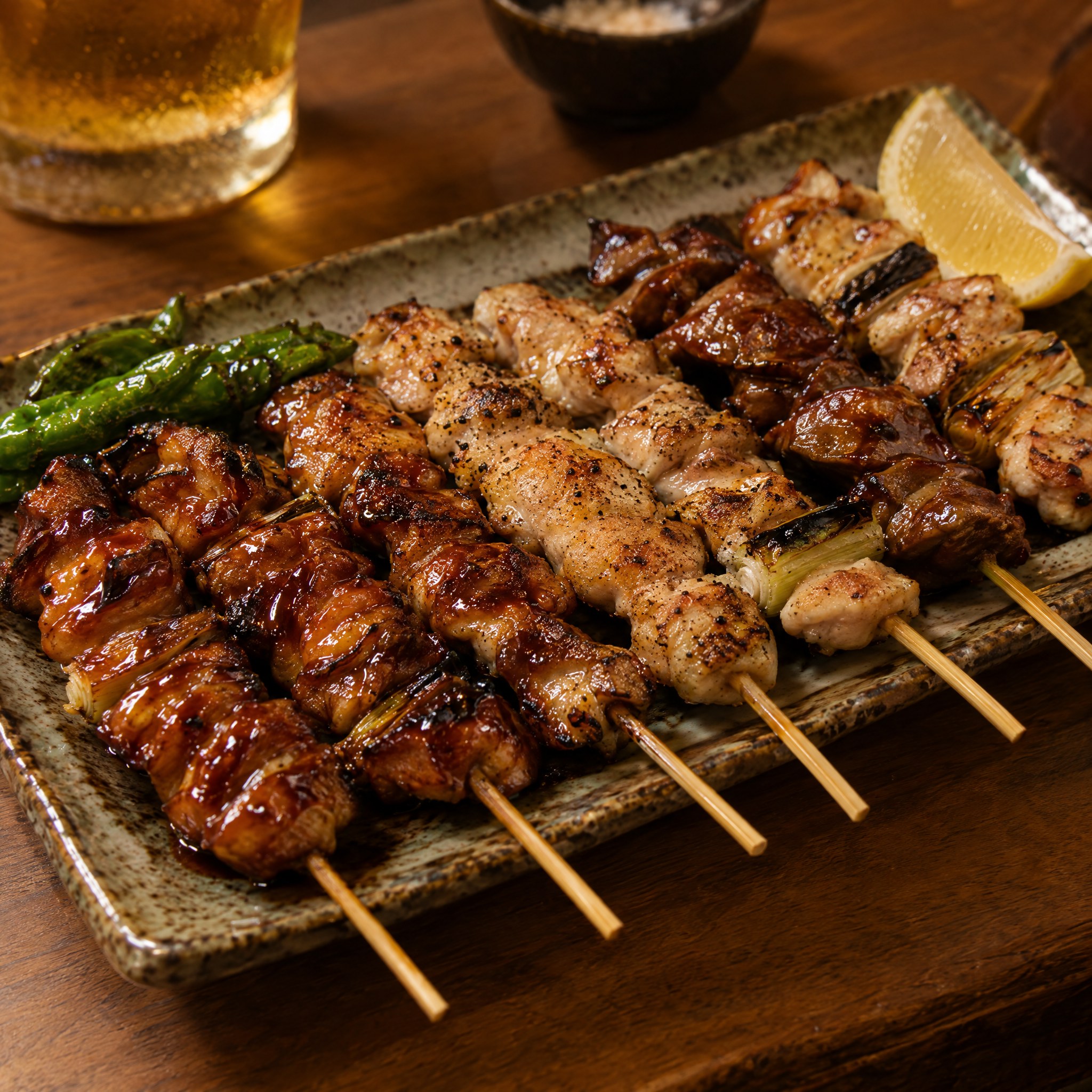
Chicken on a stick, salted or lacquered in tare, cooked hot — a bar snack that is also dinner.
Recipe by I Want Some Food · Reviewed by the editorial kitchen. Native name preserved: 焼き鳥.
0 people cooked this in the public kitchen yet. Kitchen-tested by I Want Some Food. Not a purchased rating.
- Prep
- 20 min
- Cook
- 15 min
- Rest
- None
- Total
- 35 min
- Difficulty
- Easy
- Spice
- No chilli
- Cost
- Weeknight budget$8–16 USD · indicative, not a store price
About
Yakitori is chicken grilled over charcoal in Japan and over whatever is hot at home. Salt (shio) or a soy-mirin tare. Thigh is kinder than breast. You do not need every organ cut to call it yakitori — you need the sear and the tare not to burn. Soak wooden skewers or they become incense. Pat the chicken dry or you steam it in its own moisture. Tare painted on too early burns to bitter varnish because of the sugar; salt-only pieces can take harder heat. Leave a finger of space between cubes so smoke can move. Rest the cooked skewers on a rack, not in a heap, or the glaze turns sticky and the skin softens. If you only have a gas grill, preheat until the bars are fierce and work in batches.
Ingredients
Ingredients
- Chicken, boneless thigh, bite-size600 g
- Spring onion, white parts cut to skewer with the chicken4
- Salt2½ ml
- Neutral oil4.9 ml
Tare
- Soy sauce59 ml
- Korean rice wine30 ml
- Sugar15 ml
Scaling multiplies the written quantities. Baking still prefers a scale.
Steps
Step 1
Simmer soy, rice wine and sugar 3 minutes until glossy. Cool. This is tare.
5 minStep 2
Thread chicken and spring onion onto soaked skewers. Salt lightly.
10 minStep 3
Grill or pan-grill over medium-high, turning, 8–10 minutes. Brush tare in the last 2 minutes so the sugar does not charcoal.
10 minWatch: Tare burns. Salt-only skewers can take more heat.
Adapt this recipe
The canonical recipe stays intact. Personal versions are labelled. Serving changes are maths, not AI.
Adaptations · 0 / 15 used. Resets 10 October.
Substitutions
Thigh → Breast
Pull it sooner. Breast dries.
Tips
- Negima is chicken and leek. That is the usual home order.
- A little remaining tare is for dipping, not for drowning.
History & culture
After-work counters, standing bars, and festival stalls. Home yakitori is a grill pan and a window open. A yakitori-ya is a social machine as much as a kitchen: smoke in the clothes, a counter seat, a progression from simple salt cuts toward richer ones. Home cooks rarely reproduce that sequence, and they do not need to. What they can copy is the idea of one well-seasoned bite at a time, eaten standing at the bench while the next skewer hits the pan. Festival versions are messier and sweeter. Both count.
Skewered grilled chicken is old; the modern tare-and-binchotan bar is a 20th-century city habit. Grilled fowl on sticks appears wherever there were cheap cuts and open fire. What is recent is the specialised bar, the language of named parts, and the export of 'yakitori sauce' in bottles that taste more of treacle than of reduced soy. City electrification and postwar poultry farming made chicken the default, not a luxury. Older stalls were less tidy about species and more honest about smoke.
Traditional
Provenance: Editorial adaptation.
Questions about this recipe
Answers taken from this dish's times, amounts, swaps and tips — not a chatbot.
How long does Yakitori take?
35 min all in — 20 min prep, 15 min cook. Cook and rest follow the method. Leftover storage and optional extra waits are not included.
How many does it serve?
The recipe is written for 3 plates. Scale the ingredient list on the page if you are cooking for a different number.
How hard is it?
Easy.
How spicy is it?
No chilli.
What allergens should I watch?
This recipe is labelled for Soy, Wheat. Labels are informational — check the packets in your kitchen. This is not medical advice.
Does it fit a diet?
The published recipe is labelled Dairy-free, Nut-free.
What does it cost to cook?
Weeknight budget — about $8–16 USD, as a grocery budget for this recipe, not a restaurant price.
What equipment do I need?
Frying pan, Tongs.
How much salt do I put in?
The recipe lists Salt at ½ tsp.
How much soy sauce?
4 tbsp of Soy sauce.
How much sugar?
1 tbsp of Sugar.
What can I use instead?
Thigh → Breast. Pull it sooner. Breast dries.
What should I watch for?
Tare burns. Salt-only skewers can take more heat.
Any tips from this recipe?
Negima is chicken and leek. That is the usual home order. A little remaining tare is for dipping, not for drowning.
Can I use an air fryer?
This method is not written for an air fryer. The core technique on the page still applies.
Similar dishes
Checking your allergy settings…