

Rose tteokbokki
로제떡볶이
The creamy, pink, extremely 2020s cousin of street tteokbokki — still Korean, just wearing a dairy jacket.
Recipe by I Want Some Food · Reviewed by the editorial kitchen. Native name preserved: 로제떡볶이.
0 people cooked this in the public kitchen yet. Kitchen-tested by I Want Some Food. Not a purchased rating.
- Prep
- 10 min
- Cook
- 20 min
- Rest
- None
- Total
- 30 min
- Difficulty
- Easy
- Spice
- Medium heat
- Cost
- Weeknight budget$8–16 USD · indicative, not a store price
About
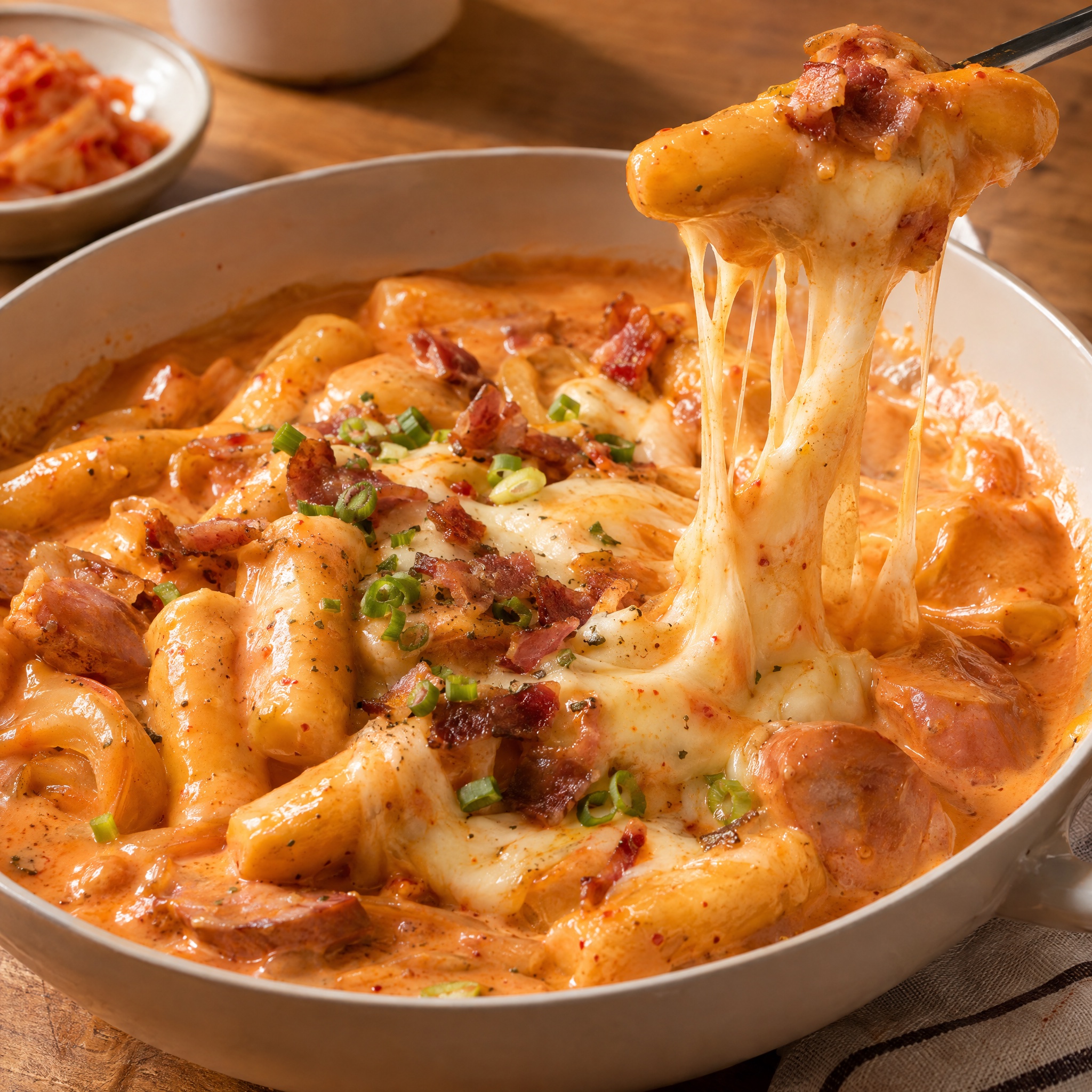
Rose tteokbokki is what happens when gochujang meets cream and a little cheese. It is a restaurant and delivery dish, not a grandmother dish. That does not make it fake. It makes it modern Seoul. Keep the rice cakes chewy and the sauce glossy-pink, not a pasta Alfredo with a dab of chilli. Cook the gochujang base first, then take the pan off a hard boil before cream and milk go in or the sauce will split into orange oil. Mozzarella is last, just long enough to stretch, not long enough to turn into rubber strings. The cakes still need a chew; if they are soft before the dairy goes in, you have over-simmered. Done is glossy pink, not a beige Alfredo with a teaspoon of chilli.
Ingredients
- Garaetteok, soaked400 g
- Gochujang22 ml
- Gochugaru4.9 ml
- Soy sauce15 ml
- Garlic, minced2 clove
- Cream150 ml
- Milk80 ml
- Melting cheese, shredded mozzarella80 g
- Water200 ml
- Neutral oil4.9 ml
Scaling multiplies the written quantities. Baking still prefers a scale.
Steps
Step 1
Soak the rice cakes until flexible. Drain.
15 minStep 2
Warm oil and garlic in a wide pan. Stir in gochujang, gochugaru and soy, then the water. Add rice cakes and simmer 6–8 minutes.
8 minStep 3
Lower the heat. Stir in cream and milk. Simmer until the sauce is pink and clings, 3–4 minutes. Do not boil hard or the cream splits.
4 minStep 4
Scatter cheese, cover briefly to melt, add spring onion. Serve immediately.
Adapt this recipe
The canonical recipe stays intact. Personal versions are labelled. Serving changes are maths, not AI.
Adaptations · 0 / 15 used. Resets 10 October.
Substitutions
Cream → Evaporated milk plus a knob of butter
Less lush, still pink.
Mozzarella → A processed cheese slice
More Korean-delivery, less pizzeria.
Tips
- A few boiled ramyeon noodles in the same pan is the 'rabokki rose' move.
- Taste salt after the cheese — processed slices are already loud.
History & culture
Korean cooks have been putting cheese on dakgalbi and ramyeon for years. Rose sauce is that instinct applied to tteokbokki. Eat it as a share plate with fried dumplings if you want the full late-night table. Hongdae-style rooms and delivery apps treat it as a share plate next to fried mandu. Teenagers and office workers order it the same way they order cheese dakgalbi — as late-night food, not a holiday stew. Home versions appeared after the restaurants, not before. Spice-shy tables use it as a gateway to tteokbokki; chilli people still want the red cup beside it.
The name borrows Italian 'rosa' cream-tomato thinking. The chilli is still Korean. We treat it as a modern adaptation, not a traditional stew. Rose sauce on rice cakes is a twenty-first-century restaurant and delivery trend, borrowing the Italian 'rosa' cream-tomato idea and keeping Korean chilli. It is not a grandmother pot. Cheese on dakgalbi and ramyeon in the 2000s and 2010s prepared the palate. Date it as modern Seoul shop food and do not invent a court lineage.
Modern adaptation — Cream and mozzarella are the point. If that bothers you, cook ordinary tteokbokki instead.
Provenance: Editorial adaptation.
Questions about this recipe
Answers taken from this dish's times, amounts, swaps and tips — not a chatbot.
How long does Rose tteokbokki take?
30 min all in — 10 min prep, 20 min cook. Cook and rest follow the method. Leftover storage and optional extra waits are not included.
How many does it serve?
The recipe is written for 2 plates. Scale the ingredient list on the page if you are cooking for a different number.
How hard is it?
Easy.
How spicy is it?
Medium heat.
What allergens should I watch?
This recipe is labelled for Soy, Wheat, Milk, Fish. Labels are informational — check the packets in your kitchen. This is not medical advice.
Does it fit a diet?
The published recipe is labelled Vegetarian, Nut-free.
What does it cost to cook?
Weeknight budget — about $8–16 USD, as a grocery budget for this recipe, not a restaurant price.
What equipment do I need?
Frying pan.
How much salt do I put in?
This recipe does not list salt as its own ingredient. Saltiness comes from Gochujang — 1½ tbsp; Soy sauce — 1 tbsp. Taste at the end rather than adding a number we did not write.
How much gochujang?
1½ tbsp of Gochujang.
How much gochugaru?
1 tsp of Gochugaru.
How much soy sauce?
1 tbsp of Soy sauce.
What can I use instead?
Cream → Evaporated milk plus a knob of butter. Less lush, still pink. Mozzarella → A processed cheese slice. More Korean-delivery, less pizzeria.
Any tips from this recipe?
A few boiled ramyeon noodles in the same pan is the 'rabokki rose' move. Taste salt after the cheese — processed slices are already loud.
Can I use an air fryer?
This method is not written for an air fryer. The core technique on the page still applies.
Similar dishes
Checking your allergy settings…