Condiment
Chunjang
춘장
Also called Korean black bean paste, jjajang paste
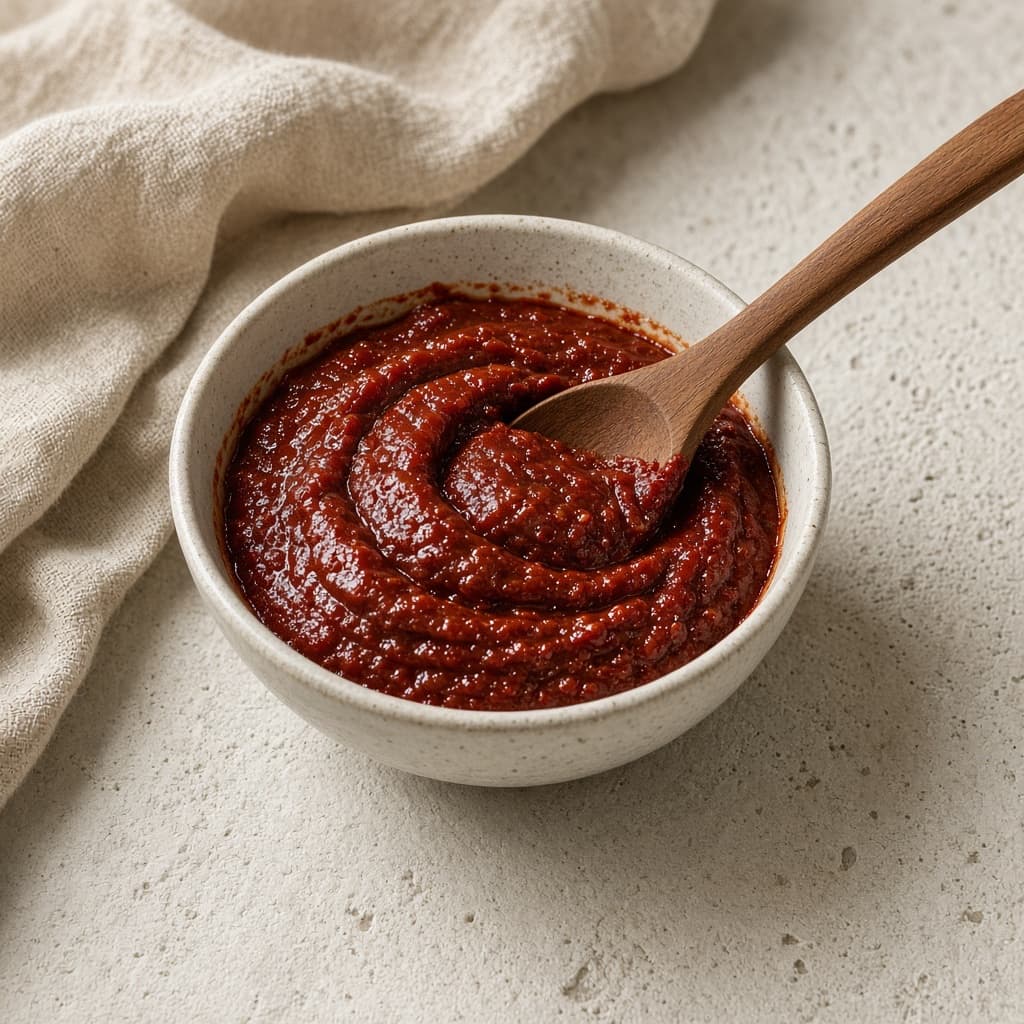
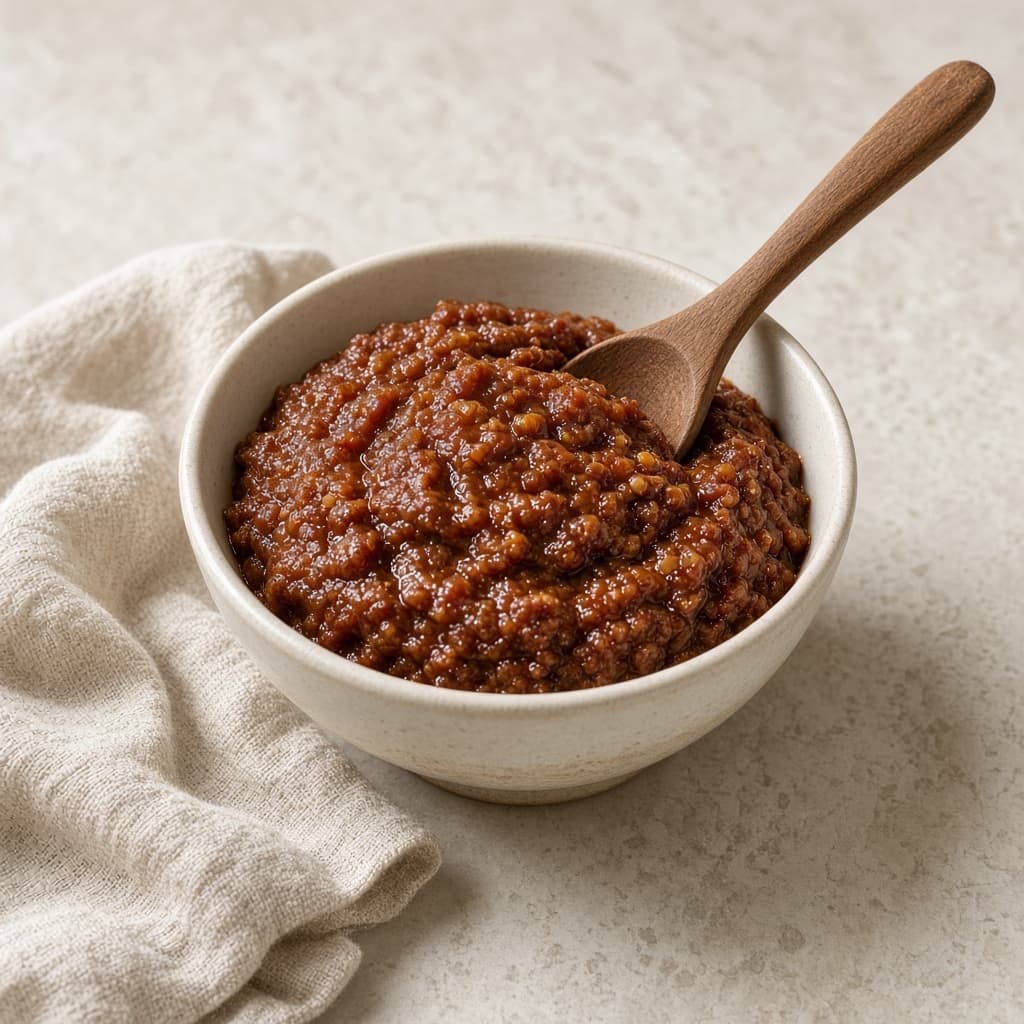
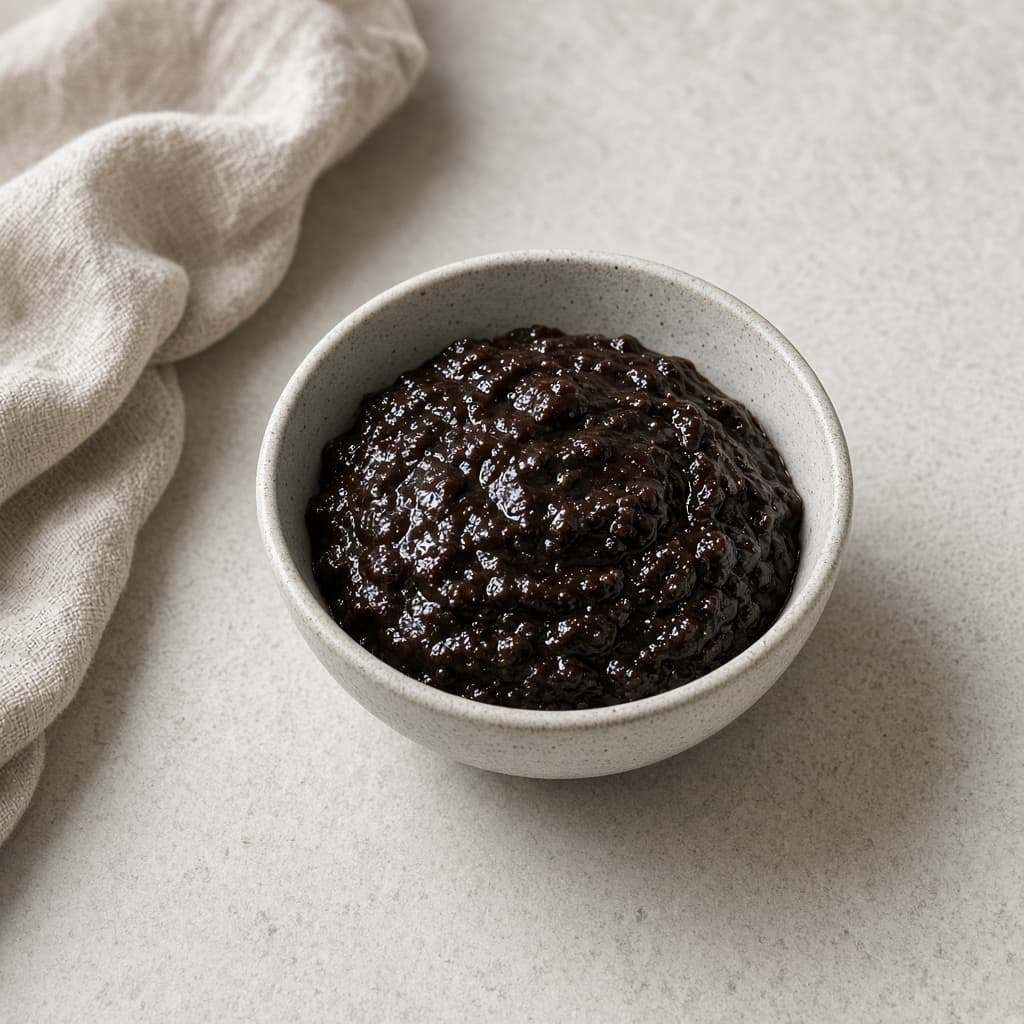
A Korean black-bean paste, roasted then fermented, that becomes the glossy sauce of jajangmyeon once you fry it. It is darker and more bitter-sweet than doenjang or hoisin.
Origin
A Chinese-style fermented bean paste that became Korean in the jajangmyeon kitchens of Incheon and beyond. The tub on a Korean grocer’s shelf is the local roast.
Flavour
Bitter-sweet, roasted, salty, with a chocolate-savoury depth after it hits hot oil. Raw from the tub it tastes harsh. Sugar in the pan is part of the balance.
How it is made
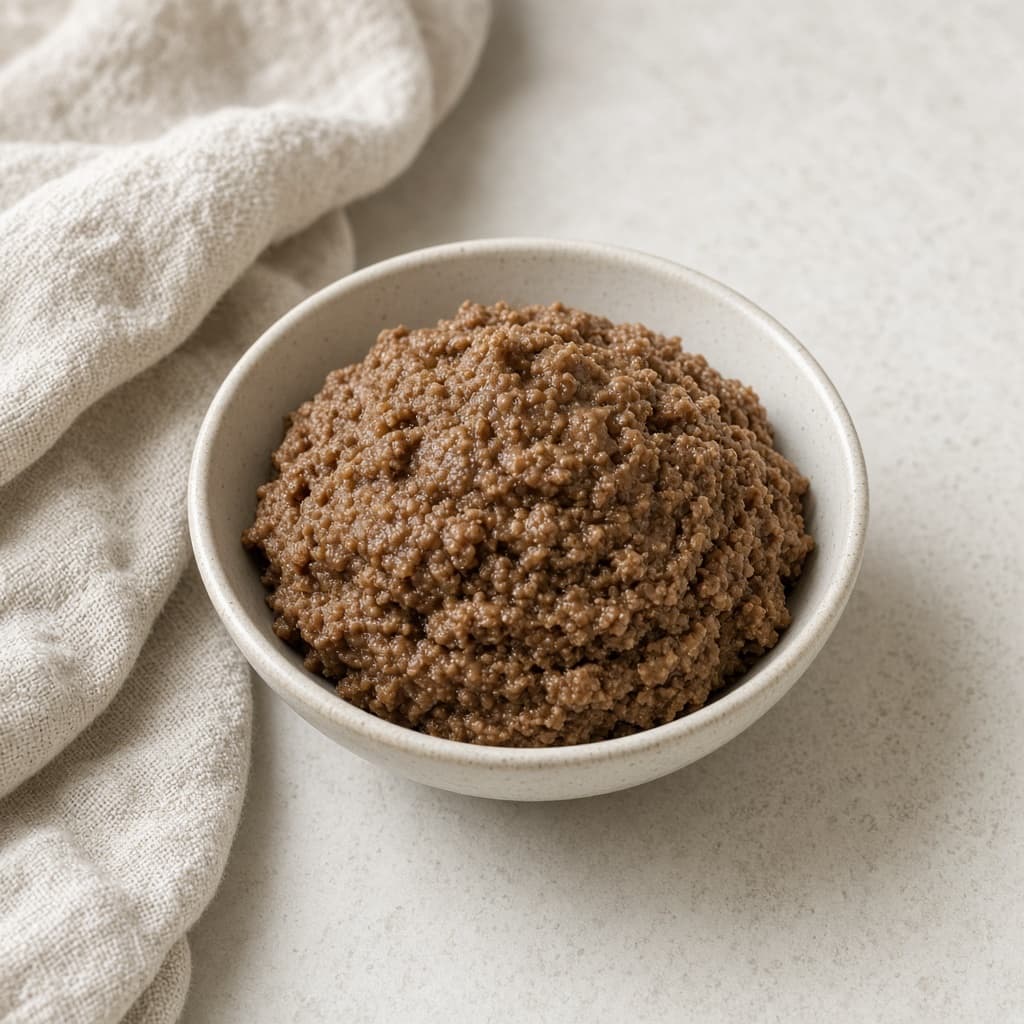
Black soybeans are fermented, then roasted or fried so the paste darkens. Commercial chunjang is already salty and thick. It is not Chinese sweet bean sauce.
How to use it
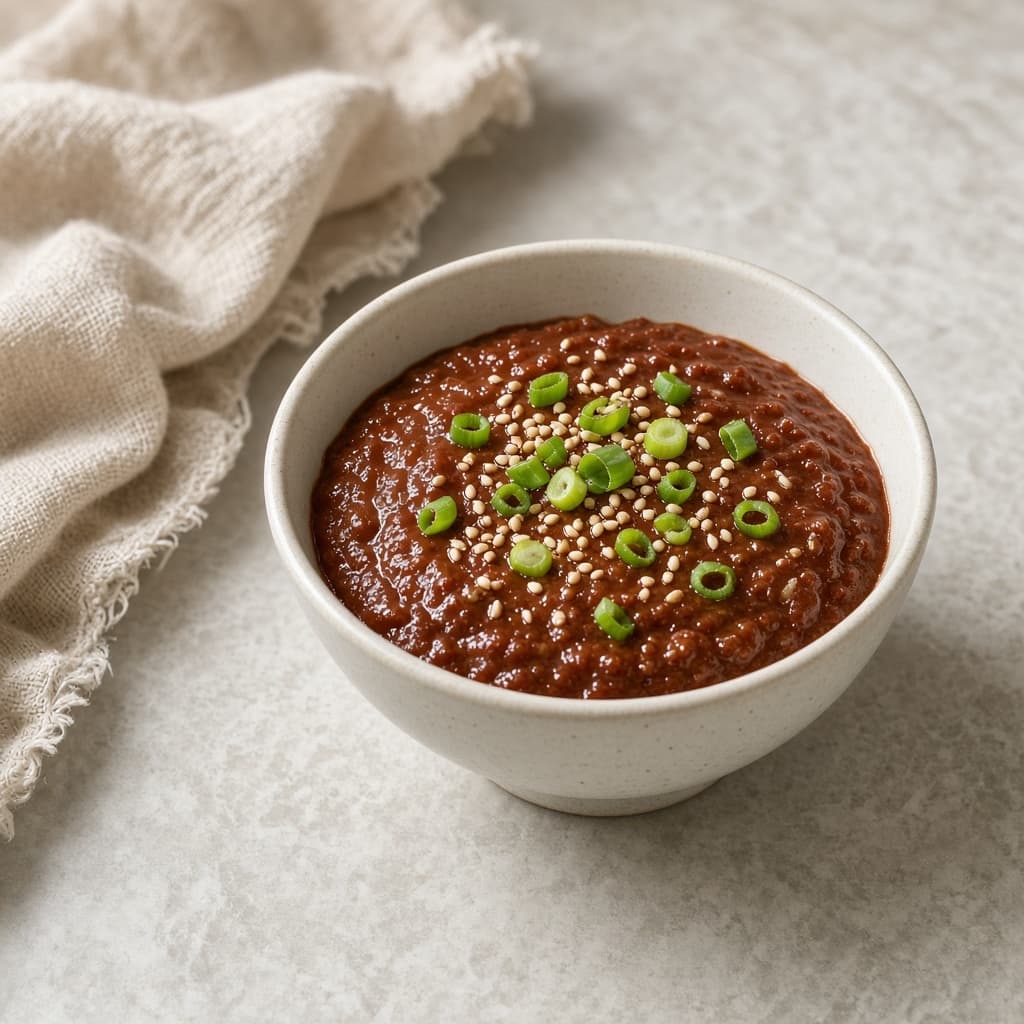
Fry a generous spoon in oil until the raw edge goes and the kitchen smells of roast beans — that step is not optional. Add diced pork, then onion, cabbage and potato, then water, and simmer until the sauce turns glossy. A pinch of sugar and a starch slurry finish the coat on the noodles. Taste before salting. Do not dump the paste into water unfried. Serve over boiled wheat noodles with cucumber matchsticks.
Storage
Fridge after opening. It keeps for months.
Recipes using it
Checking your allergy settings…